Desertcart purchases this item on your behalf and handles shipping, customs, and support to Romania.
🖨️ Stick Smart, Print Sharp, Pop Off Perfect!
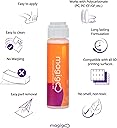
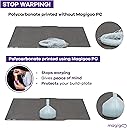
Magigoo MPC2018 is a specialized 3D printer adhesive designed exclusively for polycarbonate filaments. Compatible with multiple build surfaces including Buildtak, PEI, glass, Kapton, and flex plates, it ensures strong adhesion during printing and effortless release after cooling. With a long-lasting formula supporting over 100 prints per application and an odorless, easy-to-clean gel, it’s the professional’s choice for warp-free, high-precision 3D prints.


| Asin | B07JN8SQ7Y |
| Best Sellers Rank | #12,459 in Industrial & Scientific (See Top 100 in Industrial & Scientific) #134 in 3D Printer Accessories |
| Brand Name | Magigoo |
| Color | MPC2018 - Glue |
| Compatible Material | Flex Plate / PEI / Buildtak / Kapton, Glass |
| Container Type | Tube |
| Customer Reviews | 4.5 4.5 out of 5 stars (288) 4.5 out of 5 stars |
| Global Trade Identification Number | 05350583999945 |
| Included Components | instructions, product |
| Item Form | Gel |
| Item Package Quantity | 1 |
| Item Weight | 80 g |
| Manufacturer | Thought3D- FOB- MTVAL-MO2016 |
| Material Type | Magigoo PC - Polycarbonate |
| Model | MPC2018 |
| Other Special Features Of The Product | Specifically built for polycarbonate filaments, works on various surfaces, ensures firm adhesion when hot and easy removal when cool |
| Part Number | MPC2018 |
| Specific Uses For Product | 3D Printing, Model Making |
| Unit Count | 1.69 Fluid Ounces |
| Viscosity Level | Medium to High |
| Volume | 50 ml |
| Water Resistance Level | Not Water Resistant |
User
Just works!
Got the magigoo for PC because I wanted to try printing polycarbonate, initially tried printing on my bare PEI bed and it was a complete no go. My bed only gets up to 110c and the PC was not sticking at all, literally just lifting off the plate super easily and prints failed during the first layer.Followed the directions for this magigoo and started my print, got absolutely fantastic adhesion and my print came out great! It was easy to remove from the cooled bed as well. I also did not clean my bed after applying this, it helped a subsequent PETG print stick very well and no issues removing that print from the bed.
User
absolutely perfect for heated PEI beds + polymaker PC max
I have a prusa mk2 with a heated PEI bed. I've tried forever to print with polycarbonate (in particular polymaker PC max). The biggest problem was bed adhesion. Nothing would stick well...other than buildTak, but buildtak would adhere TOO well, so much so that it was nearly impossible to remove the print without ripping chunks of buildtak off with the print. This is obviously not sustainable because buildtak is expensive.Enter magigoo for pc. Holy crap. This stuff is magic. Even with buildtak, as much as it was impossible to remove the print, would still have problems with adhesion on corners of my print and lift/warp on long prints. Not so with magigoo. The entire print, no matter how long or tall or wide stays stuck the entire time, so no warping or lifting. And yet, it pops right off with minimal fuss after the print has cooled.I use the goo on the heated pei bed using built-in polymaker pc max settings in the prusa slicer.
User
Works with Bambu High Temp PEI Plate
Bambu recommends printing PC on their engineering plate with a glue stick. That said I found a thick coating of their glue stick is required otherwise the part breaks free during printing.But reading the Magigoo manual it suggests using their liquid glue on PEI. Additionally, I found online recommendations of using Bambu's high temperature PEI build surface with Magigoo.In fact I found the high temperature plate with Magigoo PC works without any issues. A light coating of the liquid glue is all that is required and there is zero warping even with large surface area prints of thin parts.I'm sold. Would buy this again though given how little is required it might take me some time to use it up.
User
The Best thing for Adhesion and Easy Removal
When I first started 3D printing every print was impossible to remove from the bed. No matter what I did it stuck to the bed and I had to pry and pry to get it off. I started using this glue and it's made a huge huge difference.People suggest all kinds of weird things (like hairspray which makes a huge mess overtime) to get your prints to stick and come off after printing. This stuff goes on clean and easy, becomes a little tacky when the bed is warm, and holds the print well. After the print is done I let the bed cool down and the print comes right off. You have to put it on when the bed is cold, and remove the print when the bed is cold for it to work best. Be patient and it will work wonders.The bottle looks small and it might seem expensive for the size, but it will go far. I'm 1/3 of the way through the bottle after using it for a month. I've printed dozens of items in the time, covering the entire bed each time. Most of the time I remove it after a print with 70% isopropyl alcohol to get a nice clean bed before each print and reapply. The manufacturer does indicate you can use a single application for several prints, which I have confirmed is true. But I'm OCD about keeping my bed clean so I clean and reapply after most prints, and I still likely have 100 or more prints left worth of glue. If you're more frugal with it than I am then you'll definitely get more prints.Shake it well before each use. When you apply turn it upside down (obviously) with the sponge side on the plate. Push down gently as you move the bottle around to release the glue, and make a nice even thin layer of glue. Sometimes a quick push is all you need to get the sponge wet and then you can just rub the glue around until it's covered the area you need. The reason I mention this isn't to state the obvious, but the sponge does get some wear and tear on it after a while. Fortunately, the manufacturer realized this and there is an extra sponge that comes with it.If you're having problems with either adhesion or removal BUY THIS RIGHT NOW!!! Skip the cheap glues (5 sticks for $5 deals), the hairsprays, and the other weird tricks and just buy this.
User
Good adhesion with PC MAX and generic nylon on garolite
I like this stuff but it is rather expensive. I've found it works good with regular PLA on PEI. I was delighted to see it substantially improve bed adhesion with the functional nylon gears I make. All my printing was done, including the PC MAX, on a garlolite sheet in an enclosed printer. Before, with those same conditions, my nylon prints would ALWAYS have some measure of warping with glue stick. With this stuff I was able to eliminate my rafts for a super smooth bottom and also get super flat gears. It worked great with my PC MAX too, but I can't comment on whether it was absolutely necessary as I didn't print without it for fear of ruining functional parts made from expensive filament.
User
Great product for successful prints
This is a great product and I highly recommended it. I have tried another well known (and expensive) brand but this works as advertised. The important thing to remember using this product is to read and follow the supplied directions. The first time you use it you need to press the foam applicator down to pierce open the fluid and to get it to flow to the applicator sponge. Then while moving it on the build surface GENTLY squeeze the sides to get the flow even on the surface. I am using this on Borosilicate glass and it has worked great each and every time. A little goes a long way. I will be trying the other formulas for other materials since this one has worked so well.
User
Really impressive I was surprised.
I was sure this would just be expensive glue sticks and not worth the money... However, it worked really really well. The only difference between my rats nest and the flawless part I woke up to was using the Magigoo or not–same gcode. That part I produced with PC came out nicer than I think I've ever made a part before. The part also came off the sheet like I set it down there the night before. Pretty amazing.I truly believe in this stuff and I need that trust when using such an expensive plastic like PC for my home printer.
User
No better than glue sticks for printing ABS
Did not work well on a glass plate while printing ABS. Same spaghetti mess as glue stick adhesion failures. The only thing that works for me using ABS on a glass plate is an ABS slurry. Easy to make
User
Cumple con su función
Después de haber intentado imprimir de 1000 maneras con Policarbonato, este ha sido el único producto con el que he podido hacer que la pieza se adhiera perfectamente a la base de impresión, ni con la típica laca nelly, 3dlac, dimafix, no había manera. El único punto en contra es el precio, por un botecito bastante pequeño el precio es bastante caro.
User
Colle nickel
Impec pour impression type pc, pc/abs sur bed lisse
User
Great bed adhesion not only for PC, but for ASA as well.
Great for PC prints. Used it with Bambulab PC-FR on P1S. Fantastic.Used it with Polymaker ASA. Wow, just wow. Almost 15h print of a large part without a single adhesion issue. And there was tension in the material. It released as soon as the build plate cooled down.The price is high, but it will last. Besides if a 500+ g PC/ASA print fails than the return will be even faster
User
Actually Works!
I stayed away from these products for a long time thinking that they were just glorified glue sticks but that is simply not the case. We work in an indoor, shared industrial space and required something that wasn't a spraying fumes and worked for polycarbonate. It seems expensive for the amount that you get but it actually works better than any other PVA adhesive we used before, and it does go a long way. I haven't tested how far one application goes since we rely on a high success rate for our parts but so far 5 seperate prints seemed to all succeed and stick down well. Also worked for pla but the pla adhesive they sell is have the price and probably the way to go for that material
User
Ottimo
Ottimo prodotto che da il meglio se utilizzato correttamente. Piatto freddo, stendere il prodotto , accendere il piatto a 50 gradi e rimuovere l'eccesso con un panno che non lascia fibre. Ripetere l'operazione due o tre volte e poi il piano è pronto e utilizzabile per parecchie stampe. Se ne mettete troppo a piatto caldo oltre a problemi di offset rimane poi attaccato al pezzo. A mio avviso è da utilizzare solo con piani lisci sia in pei che acciaio o vetro, è inutile su piani ad alta rugosità. Il pezzo in policarbonato se avete fatto tutto bene si dovrebbe staccare a piatto freddo facilmente senza nessuno sforzo. Questo comportamento è dovuto principalmente al ritiro .
Trustpilot
1 month ago
2 weeks ago