
Desertcart purchases this item on your behalf and handles shipping, customs, and support to Romania.
📖 Unlock the haunting beauty of a literary legend—don’t miss out on this timeless classic!
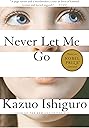
Never Let Me Go is a vintage, used edition of Kazuo Ishiguro’s Nobel Prize-winning novel, acclaimed as a modern classic and a top contemporary literature bestseller. With over 42,000 reviews averaging 4.1 stars, this atmospheric coming-of-age story explores deep themes of friendship and identity, making it a must-have for discerning readers and collectors alike.


| Asin | 1400078776 |
| Dimensions | 5.14 x 0.71 x 7.98 inches |
| Isbn 10 | 9781400078776 |
| Isbn 13 | 978-1400078776 |
| Item Weight | 2.31 pounds |
| Language | English |
| Print Length | 304 pages |
| Publication Date | March 14, 2006 |
| Publisher | Vintage |
User
These characters are far from sheep...
A few years ago I reviewed the 2005 film `The Island' and in my review I mentioned that the initial concept was stunning and that the direction that concept could have taken was really one of two ways; either a thinking man's intellectual film or a `no holds bar' action film. `The Island' was the later (and a really good one at that), but I really would have loved to see the concept fleshed out thoroughly to become something more engrossing and poignant.The novel, `Never Let Me Go', by award winning author Kazuo Ishiguro is exactly what I was craving.What I love so much about `Never Let Me Go' is that it is far less about the actual `cloning' concept and more or less an astute and extremely effecting portrait of adolescence and young adulthood. While yes, the main idea of humans being cloned for their eventual `donations' is always hanging over our heads as we read this engrossing novel (so engrossing that I read it in two sittings), it really becomes a secondary character, leaving open the way for the true meat of this novel to shine forth. This is a beautifully detailed (although never demandingly so) portrait of life and the coming of age realizations that come with it.Told from the eyes of young Kathy (her protagonist reminds me of Benjamin Button in that she is really just our eyes into the lives of those around her), `Never Let Me Go' tells of three friends (Kathy, Ruth and Tommy) who grow up at somewhat of a boarding school named Hailsham. They grow up with the knowledge (although they rarely understand completely) that they have a specific course in life to follow. After they complete their school they will start their training to become carers (somewhat like nurses) before they get their notice that their donations will begin, where their bodies will serve the greater good of society, or humans.After that they wait to complete, or die.What Ishiguro's novel so marvelously does is create a sense of normalcy that is something completely unexpected and ultimately more moving. One might think that a concept like this would be ripe with `oh no we are going to die', thus making this something rather one-note and distancing it from the reader. Instead of placing divisions between these `clones' and the reader, Ishiguro makes each of the characters human. Instead of focusing on their impending doom (it is always there, but never the focal point) it focuses on their present life. They form friendships, relationships, aspirations, loyalties; everything that you and I form. They form attachments to songs, they enjoy visiting the city, they enjoy intimacies with one another. Ishiguro makes them just like you and me, and so when they are forced to face their mortality it doesn't feel like something far fetched or inhuman. Their eventual demise feels like a natural and heartbreaking death of a friend or relative because, thanks to Ishiguro's brilliant writing, these characters are not clones but humans.You can feel it as if it were you going through the pain.I also wanted to make mention of the writing style used here. I really found this commendable because of the small detail used to really take you inside the minds of these characters in each stage of their life. I initially found the writing to feel slightly amateurish and really felt that I was going to begin to dislike the novel, but as the pages turned I realized that this was so smart on Ishiguro's part. You see, when the novel opens Kathy is taking us back to the early years of her life at Hailsham, and she is merely eight years old. Ishiguro really makes her age and mindset so real to us, giving us conversations and actions that seem amateurish until you put it into perspective. His writing style makes subtle yet powerful shifts as Kathy grows up and discovers more about herself, her friends and her fate.Stunning; really, truly stunning.
User
It's almost time for me to let go
This is one of those books that I've "always meant to get around to." Knowing that the cinematic release is imminent is what finally moved it to the top of my towering TBR pile. I'm delighted to have finally read the novel, and I definitely enjoyed it, but I can't help feeling just a bit let down. I've been hearing raves for years, and my expectations were pretty high.I don't even know what to say about a book that has already garnered hundreds of reviews. It's got a plot that supposedly has a big reveal, so I want to be careful what I write, but that was also part of the problem for me. What was supposedly the big secret was obvious to me from the beginning, either because I've unconsciously picked up chatter over the years, or, um, it was just obvious.Anyway, it's a story told in reflection by Kathy, our 31-year-old first-person narrator. She's reflecting on the events of her life, thus far. The first lengthy section of the novel details her upbringing at an unusual British boarding school. There she formed the relationships that were pivotal in her later life, most notably with her best friends, Ruth and Tommy. She continues relating the events of her life after her schooling, and the continually evolving relationships she had with her friends as she slowly learns more about the world they're living in.That was sufficiently vague. The story is interesting, disturbing, and very, very thought-provoking. There were a few problems I had, but I want to emphasize that despite minor complaints, I thought there was real brilliance to this book. My biggest problem was that every single scene, some of them very emotional, was related by Kathy. And her recounting, in hindsight, was always somewhat flat and removed. An example, "...for a while things were okay between us. Maybe, looking back, there was an atmosphere of something being held back, but it's possible I'm only thinking that now because of what happened next." It was literally a case of being told, not shown. Instead of being directly in a scene, we get everything through the prism of Kathy's eyes. It wasn't that she wasn't a sympathetic character, but somehow I had trouble channeling her emotional connection to the events of her life. I sort of got sick of her deadpan voice, and the constant foreshadowing got a bit old, too.And my other complaint is related. Mr. Ishiguro is renowned for his beautiful prose. I have no doubt his reputation is justified, and I look forward to exploring more of his work in the near future. However, he so skillfully and consistently narrates in Kathy's voice, that all poetry is lost. That simply isn't who she is, and she tells her story in a straightforward and utilitarian manner.It's the haunting nature of her story (to us, if not to her) that is so powerfully effecting. I had a friend tell me that he loved the novel up until the ending, but then felt it was a let-down. My feeling was the opposite. Had it gone any other way, I might have been disappointed. There was so much in this book to digest, I'm not sure that I've taken it all in yet. I'll look forward to the film to spark further discussion, contemplation, and debate.
User
A Promising, Beautiful, Yet Perpetually Frustrating Novel
Nearly 600 reviews here for Never Let Me Go. What can I possibly add to the discussion?A few things.*** Mild spoilers ahead ***First, I love Ishiguro. He's an outstanding writer. The Remains of the Day is perhaps the greatest novel about unrequited love ever written in the English language. But even Ishiguro is a master at only a few themes. Simply put, his best works are about characters who are unable to break free from their predestined paths. They can be constricted by Victorian manners (such are the protagonists in Remains of the Day), or they are constricted by an inescapable understanding that they will will live very short lives (as the protagonists in Never Let Me Go). The idea to break free and escape never occurs to any of these charaters in Ishiguro's finest works. England might as well be a maximum security prison - a giant gray Alcatraz. And no matter what, none of his characters dare lose their dignity.Never Let Me Go is not science fiction, nor is it a dystopia novel (like 1984). The best way I can put it is that it is a brilliant short story or novella, expanded to novel length if for no other reason than to let the reader soak-in the sterile, gray environments the protagonists inhabit. The novel is written as a free form memoir, with a terribly irritating literary device. The narrator, Kathy H., has a habit of getting ahead of herself, telling us of a crucial turning point or event, but forces herself to backtrack in order to set-up the next major point (usually expressed as "I'll return to that later" or "more on that later"). And when she does divulge the details of this major turning point, it is usually a creepy, awkward conversation between her and one of her two closest friends, Tommy or Ruth. It becomes quite clear that these characters have a radically isolated and skewed worldview. For them (or at least Kathy H.) major events are not graduations, or moving to a new residence, or even death. No, major events are spilling secrets and making the occasional error of saying too much or being too harsh towards one's somewhat distant friend. In other words, they are totally old school British schoolchildren in a bubble. These schoolchildren inhabit an alternate England - one that has advanced science far greater than the real postwar UK.Never Let Me Go has scenes from this alternate England that you may never forget. The empty rural roads and service stations where Kathy H. finds peace driving her car. The perpetually gray skies. The refuse and trash collecting in the trees and barbed wire in a field somewhere in the east. The casual, passionless relationship the characters have with sex and death. The stiff upper lip attitude of wanting to make it to one's fourth 'donation'. It really is a brilliant work if you accept the argument that it is a dystopian story that avoids going into any details of the dystopia.In other words, this is not Children of Men. The Europe in this novel might be in the midst of a serious public health crisis, but Never Let Me Go neither hints at one nor explains what it might be. Or Europe might be so prosperous, so technologically advanced, that the creation of these children might have seemed as natural as any advancement in a First World society. Ishiguro gives nothing away, expect for a key line about how science advanced so quickly after 1946 that there 'was no time' to consider the morality or logic of those advancements. In other words, England had become a well mannered monster. By 1996, England was consuming living, breathing, beautiful children as easily as stocks were traded on the FTSE. These children will be throughly educated, grow up, experience two years of independent, sexually liberated life, and then work to fulfill their predetermined destinies. And this England, as you might expect, seems quietly proud of that achievement, despite having 'no time' to ponder the consequences. Because, I suspect, more important things in English society must be maintained. There are cricket matches and afternoon tea parties to attend, after all. Carry on, you English. I am certain Ishiguro is attracted to that theme given the similarities to 20th century Japan's adherence to honor, dignity, and constrained mannerisms.That alone is highly disturbing and original. And while I suspect Ishiguro was inspired by Dolly the Sheep in 1996, others with more sinister agendas have already looked to this novel for ideological ammunition. Opponents of embryonic stem cell research and abortion see parallels in this novel. They see how a society, with good intentions of advancing health and science, can destroy perfectly good lives. The difference they cannot escape, however, is that the children in this novel are not in a lab or in a uterus. But I am just rubbed the wrong way when I see 'Antis' flocking to a book by a secular British man as a source for their petty arguments.But as Kathy H. might say, let me return to what I was saying about the novel itself.I feel like such a picky reader when I complain that this could have been a novella or short story. As great and elegant a writer as Ishiguro is, even he has no serious justification for the length of this work. There is much creepiness and some suspense, but no tension. Rather it is a largely atmospheric work. At least the book gives us two amazing sequences, the road trip to Norfolk, and Tommy's moment of rebellion and passion (which may very well reflect the frustration of many readers of this book). Even a quiet, introverted student like Tommy has to let it all out when he (and we) discover that we were told so much and at the same time, so very little.But there is a glimmer of hope - the 2010 movie directed by Mark Romanek. Not only will the story line be tighter, it might play better in the medium of cinema, despite offering no answers as to what happened to this alternate world.And of course, that is Ishiguro's point. This novel is intended to make us think about our real world and our lives. For succeeding at that, I give him tons of credit. For reprising his themes of people locked in their manners, bubbles, and fates, I also bestow him much credit. But for stretching it to 287 pages, I feel I must deduct stars.
User
We Are The Clones
This book was not finished with me when I was finished with it.When I closed it, I would have rated it 4 stars. The tone is massively controlled, the story chilling, the surface perfectly developed. There is no overt passion in the tale, no histrionics under circumstances that justify them, no stated argument. Ishiguro's mastery of words and control of the page is so impressively beyond most writer's skill that four stars seemed required, but I felt distanced from the characters. The chill, the blandness of the characters' existence, was almost disappointing.But by then, the book was in my mind, and with a little time (I don't think quickly), the accomplishment seems nearly staggering. The lessons and insights are parallels for so many facets of society -- perhaps any society, not merely Western -- that the author's accomplishment seems so much more than the chill tale of cloning. The imagined society posits that cloning is a normal process in which clones are grown as an answer to medical need, and thus the children's life is seen by them -- and all but a few of their guardians (their lawmakers)-- as utterly natural. They go through each step of their life without rebellion. The closest they come is to eye a derelict boat, which is unable to sail away. Their acceptance of their fate is never questioned: they may want a deferral, but never think their eventual end is avoidable. The only characters who truly suffer are the guardians at Hailsham -- and we are told that Hailsham was unique. The conflict within the book is that the children assume they have souls and the larger world assumes they do not. Hailsham is a experiment to prove the existence of a spark of the divine, to prove a soul--and it fails. If Hailsham fails, how can any of us prove that we are unique, valuable, worth preserving? Isn't that the reason for Art? If Art does not do it, what can?My ruminating took me to the existential literature of the late 1950-60s, where writers began what we now call 'railing against the machine'. 'Never Let Me Go' becomes a parable for nearly any circumstance where we accept, without particular thought, the circumstances of our lives. The underlying consideration here, though, is larger.With Ishiguro's book, we come to realize how the banal doesn't disguise horror -- it simply does not consider it. The parallels become endless: fascism -- or any convinced movement or system of belief (Tea Party or Al Qaeda) where the underlying premise is unquestioned by the faithful. It need not be an extreme doxology, or marginal belief system. The acceptance of and submission to a fixed and certain set of beliefs is the horror. Social certainty allows inhumane, soulless behavior. In this there is a link to 'Remains of the Day,' Ishiguro's perhaps more accessible effort on much the same theme.Ishiguro is not the first to identify the ability of a society to make evil banal (someone, I can't remember who, made the same comment about Naziism) but I can't think of anyone who brings that chill so completely into the bones of the reader.This is a 5 star book based on my criteria of technical skills (the author's control is astonishing and becomes part of the message), thematic complexity, and whether or not it moves me. That last is completely subjective, but it took me days to warm back up. Highly recommended.
User
What Does it Mean to be Human?
Ishiguro is a fine writer; it is a pleasure to read one of his books just because of the quality of the writing, if nothing else. And while this one might not be everyone's cup of tea, it's hard not to marvel at his skill and to wonder what else you've been missing. The novel is suffused with an elegiac quality that seems to grow naturally out of the story. It is told by Kathy as she looks back at her early life with friends Ruth and Tommy at Hailsham, an elite English boarding school for students who, we come to realize, are quite different from students at most other schools. I won't say specifically how, although the revelation is not so much a bolt of lightning as a gradual dawning. Indeed, it is no great secret, and the matter-of-fact way in which the novel introduces and expands on it reinforces how "natural" these students' lives have become, both for them and for the larger society. The three friends drift apart sometime after they leave Hailsham, but they are later reunited through circumstances specific to their special nature, and it is this that occasions Kathy's reminiscing. It is an absorbing book. It is in addition (though not primarily) a criticism of scientific hubris. We know how to do something, therefore we should do it, or so goes the thinking, too often crowding out any proper consideration of consequences or collateral damage. Or of ethical issues, which will always arise but often too late to put the genie back in the bottle. But there is no aspect of science or policy touching human life, including attempts to do something supremely positive and beneficial, that does not raise ethical issues. I would love to have seen this developed further, but of course that would have changed the narrative arc and probably made the novel less effective because more heavy-handed, which it decidedly is not. This is not a criticism. My only criticism is that there is something just a bit Wizard-of-Oz-ish at the end (going to seek information and favors from the erstwhile wise and distant one, and finding that that person can't really do much for you), something a little bit cinematic when the explanations come pouring out. It seems almost too planned, though I don't know how we could have learned what we needed to learn otherwise while retaining Kathy's voice as narrator. The big question for anyone reading the story (BIG SPOILER HERE--YOU MAY NOT WANT TO CONTINUE IF YOU ARE PLANNING TO READ THE NOVEL) is: Why do the students--not just the three main characters, but all of them--accept their fate when they know the truth? Why don't they rebel, make a fuss, or run away? They all come to see at some point that their purpose is to donate and die. Why not flee and melt into society? Duty? Fear? Resignation? An inability to think of options? Any of these possibilities is chilling, as is the most likely one--that they have been so successfully conditioned that this option isn't even considered. That might be the most disturbing part of the story. Ishiguro doesn't hit the reader over the head with it, though. Rather, he allows it to work its way into your consciousness as you wonder at what appears to be an inevitable acceptance. It is much more effective that way, and much more disturbing. Much of the pain in the novel comes not from the "students" realizing what they are and how truncated their lives are, but from the more aware and kindly of the "creator" race coming face-to-face with the reality of the world they have created, with its cures and its cruelties, and realizing the toll it takes on beings not so different from themselves (despite their best efforts at self-deception), and therefore the toll it takes on all humanity--on the very idea of humanity.
User
No spoilers in this review
This tour de force almost defies categorization. Equal parts dystopian thriller, bildungsroman, penetrating psychological portrait, love story, and psychosocial examination, it is told through the context of a parallel universe. The harrowing truths of these children's lives are revealed elaborately yet with deceptive simplicity by Ishiguro. The reader isn't jolted by the science fiction aspect but rather by the emotional intensity of the exquisitely controlled narrative's unfolding. I have rarely read a book of speculative fiction that is this superbly nuanced. You could knock me over with a feather by the end of the story.In the rural British countryside resides Hailsham, a privileged and insular boarding school with wild fields, ponds, and fences demarcating boundaries from the outside world. The story is narrated in three parts by thirty-one year-old Kathy, who reminisces about herself, Ruth, and Tommy, three friends who met there as children. It reads like a chronicle or diary, with Kathy's alchemy of naturalness, naiveté, and sublime powers of observation reminiscing almost like an open letter. As the novel opens, Kathy is reflecting on her life as a "carer" and recapitulating the many events that brought the three of them together, split them apart, and united them again.At Hailsham, the children work diligently to produce qualifying pieces of art to get chosen for Madam's mysterious gallery. Tommy struggles to find his creativity and hold his temper, while Ruth's opinionated and ruthless decisions often overrule those of the peacemaker, Kathy. Their friendship is built on the firmament of secrets, lies and a sheltered upbringing by circumspect teachers, or "guardians." When one of these guardians deigns to reveal more than is customary to the students, she is dismissed. The children grow up learning the truth by degrees about their future lives as "carers" and "donors." Information is smuggled into lessons in a crafty way that ultimately makes them feel like it was something that they have always known."This might all sound daft, but you have to remember that to us, at that stage in our lives, any place beyond Hailsham was like a fantasy land; we had only the haziest notions of the world outside and about what was and wasn't possible there."I went into this novel knowing nothing about the chilling facts of the story. I recommend that you know as little as possible, also, in order for the impact to be consummate and undiminished. Kathy's intimate tone is (ironically) oblique, giving the mournful narrative an edge and anxiety that accumulates and teases the reader through to the bittersweet conclusion.The finale left me breathless and sobbing, and I continue to revisit the rich themes of this bleak but unexpectedly inspiriting story. What makes us human? What gives us a soul? What is the meaning of an individual life? This moving, compassionate story offers germane insights, and for this reader, will never let me go.Addendum: After finishing the book, I watched the movie trailer. Wow--talk about spoiler spoiler spoiler. It highlighted just about everything that is wrong with Hollywood. What the trailer does is bluntly give away what Ishiguro masterfully reveals gradually, by suggestion. That is what makes Ishiguro such a genius in this work. The movie trailer felt absurdly like it was undermining the beauty of the book by dismantling the exalted subtlety of the narrative and replacing it with obvious and heavy-handed cues. My fear is that the movie will fail to be vigilantly discreet and will instead induce horror conspicuously.
User
Wonderfully unique
Ishigiro's Never Let Me Go is beautifully written and the character development is excellent. I did not put this book down and read it in several hours. It's a wonderful example of modern literature and completely unique in the fact that we read the most unspeakable horror and swallow it up, wide-eyed and alarmed, all the while amazed that something so terrifying can be written so poetically.This is not a horror novel by any means! This is an examination of a certain aspect of our culture and how we can all be indoctrinated to accept it.I don't want to re-outline the entire plot, since so many reviewers have already done so. What makes this story so powerful is how understated it is. We watch these children grow from childhood to adulthood, always knowing how their lives will unfold. Cloned from their "models", they know that they will eventually be harvested for their vital organs. This is their purpose, and it is never questioned. Ever. Sometimes certain events or things will cause the protagonists to stop and almost reconsider their destinies, but they fail to consider it fully and go on with their lives as they've been taught to. Notably, there is an abandoned boat towards the end of the book. Kathy, Ruth, and Tommy make their way to the dock to peer at this ticket to freedom. Kathy notes the cabin size and condition and it's clear they could take that boat somewhere and be free. They don't. They don't even discuss it. They just watch it sitting there. Kathy and Tommy drive all over the English countryside-- it's clear they have their physical freedom. They drive to clinics to visit other donors, to stores to shop, cafes to relax in, and hospitals for pre-donation testing. There are no doors or bars holding these people in. They are conditioned from day one to live their lives knowing they will one day donate and "complete". Nobody they know has done otherwise. There are no rumors about anyone refusing their preordained destinies.Herein lies the books strength and its weakness. Throughout the novel, I thought it seemed as if it was leading up to a more climactic event. And, it did and didn't. The climax was a bit anticlimactic and the characters brought in to meet with the two heroes seemed flat (while empathetic) and lacking depth. The horror this meeting could have evoked was felt more fully through the use of Tommy's hopeful art, through some of the thoughts Kathy had and immediately disregarded. It seemed as if more could have and should have been done with that rather than this macabre meeting with the two former school administrators.Yet, at the same time, maybe this is the novel's strength. Freedom is hinted at, yet not taken. There is no prison, yet they are prisoners of society and their own minds. There is love, but maybe the passion is lacking because they know subconsciously there is no future. And, Kathy has seen her friends complete. She knows what's coming after donation number 4 for the man she loves. She changes the subject when he brings the subject up. She dismisses it because it's too difficult to openly discuss it. We know this and they know this. And, although this might be the book's strength, I do yearn for this discussion. I'm left without real closure and I want them to wake up.This is heartily recommended.
User
Plot revealed slowly, can be frustrating. Worth it in the end.
Never Let Me Go is told in the first person narrative and this establishes a kind of intimacy between Kathy and the reader. Only when Kathy offers up information or explanations of what is happening in her life and her world, does the reader have the ability to see the plot and recognize the twisted sci-fi story that is unfolding. Kathy almost speaks in code and slowly reveals to the reader in bits and pieces what is occurring in her life and the value of her relationships. It is not until the very end that everything falls into place and the reader can see the whole picture. This was book was fabulous.The plot, although revealed over the course of the entire book, was fantastic. At first I was aggravated as I felt I understood nothing that Kathy was explaining, but I grew to enjoy my planned ignorance, feed off the craving for more information and celebrate my gradual realization. The story was told in a continual series of flash backs and references to the present that jumped back and forth repetitively. Some parts I lost patience with the long winded set-ups to random stories and anecdotes, but the desire to know what was going to happen always drove me to continue on.I would hate to ruin the plot for anyone who choose to read it, because coming to understand the plot is the purpose and journey of the entire book. However, if you don't care... here is the story. Kathy, Ruth, and Tommy, the three main characters, are from a school set up to raise clone children for the sole purpose of harvesting their organs for other people. The students are sheltered and brainwashed into accepting their roles as donors and never rebel against their purpose in life. There is a bit of a love triangle, but it is so real and raw that it reflects reality rather than a romantic love story. Kathy has feelings for Tommy and vice-versa, but Kathy holds back as Ruth and Tommy have a relationship despite Ruth's crude attitude and indifference. Not until after Ruth has apologized for keeping the two apart and finished her donations does Kathy and Tommy get together. It is a shame as Tommy is almost finished with his donations as well, and the two have little time to enjoy their relationship. Kathy and Tommy go in search of answers about their lives and come to find the reason for their creation and the inevitability of their early deaths. The acceptance of their donations and completion of their live is eerie and questionsable, but the characters never falter. The last few pages show Kathy reflecting upon her life, relationships, and her own donor completion.I greatly enjoyed this and can't wait for the movie adaptation. Ishiguro has other famous and award winning books and I look forward to reading them as well.
User
tragically Beautiful
Perfect, lyrically written prose with a plot and characters who will rip your beating heart from your sobbing body! This explodes the best and worst of humanity. Profoundly moving and thematically challenging this is a must read novel. Like Frankenstein it critiques the lack of scientific responsibility of humanity and the consequences of this selfishness. Like Blade Runner it convinces us that our creatures are,in fact, more human than human.Beautiful! An attempt to write the soul.
User
Ottima descrizione
Ottimo acqusito
User
Good
Good reading
User
Made me so sad!
Read it after being recommended to me and i just loved it, those last chapters were so heartbreaking
User
日本のドラマを見て
原作がカズオ イシグロと知らずにドラマを見て、ドラマの方も興味深かったので、原作をぜひ読んでみたいと思いました。実はずっと読んでみたかった作家。なかなか機会がなくて、やっとでしたが、とにかくどんどん読み進めてしまう、とても引き込まれる作品でした。他の作品もぜひ読みたいと思いました。話の内容は重たい部分も多いのですが、個人的には著者の英語表現がすごく好きでした。
Trustpilot
2 weeks ago
1 day ago
1 week ago
2 weeks ago