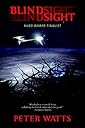
Blindsight (Firefall, 1)
Product ID: 2051344
Desertcart purchases this item on your behalf and handles shipping, customs, and support to Romania.
desertcart.com: Blindsight (Firefall, 1): 9780765319647: Watts, Peter: Books Review: Hard Sci-Fi with brilliant characterizations - 'Blindsight' is a hard sci-fi novel well written enough for everyone to enjoy. Unique characters keep the mood while detailed descriptions set the atmosphere. First let me introduce you to the eclectic cast: Theseus - a ship with AI whose "body parts" (such as hatches) have reflexes. She's the Captain of the expedition. Siri Keeton - Half of Siri's brain was removed when he was young, a dramatic cure for epilepsy that left him incapable of emotions such as empathy. Through observation, he can almost psychically predict the actions and thoughts of others. He's known as a Synthesist. Isaac Szpindel - The crew's biologist, a mostly human looking cyborg Susan James - The crew's linguist with surgically induced multiple personality disorder (known as The Gang, including Susan, Sascha, Michelle (Meesh) the Synesthete, and Cruncher) Major Amanda Bates - The crew's "security", a professional soldier who's career defining moment involved consorting with the enemy. She shaves her head. Jukka Sarasti - A sociopathic, genetically engineered vampire with the ability of conjoined intelligence with the Captain. Robert Cunningham - Another biologist, also a cyborg, who doesn't use pronouns and chain smokes. After an event called Firefall on Earth, when thousands of probes fell from the skies, Theseus was sent out into space to follow the trail back to the source of the probes. The crew comes out of "the crypt" where they have been kept inert and death-like for the trip, near Big Ben - a failed disc-shaped, black star. Orbiting Ben's chaotic field is an alien vessel unlike anything ever seen before. Then the ship makes contact, speaking their language and calling itself the Rorschach. Susan and "The Gang" communicate with Rorschach until, unbelievably, Susan cuts off communication, announcing that it's not a sentient presence they are speaking with. So what exactly is Theseus and the crew dealing with? Sarasti, working with the Captain, decides to send the crew over to the alien ship though from every aspect they have viewed it from, the Rorschach seems uninhabitable, uninviting, and possibly unfriendly. What they find, or what they don't find, will keep you reading right up to the very end. Between Scramblers, vampires, constructs, and AIs, the crew has their hands full. The story is told in first person by Siri, and though it sometimes seems to slide to a different POV, its simply Siri using his talents as a Synthesist to project their thoughts through translating their speech and behavior. Believe it or not, Watts makes the concept work. There's even a first person glimpse from Theseus's POV. Siri also uses flashbacks to his relationship with his ex-girlfriend Chelsea to give us deep glimpses into who and what he has become after his childhood surgery. Within the book, intriguing issues of sentience and intelligence are brought up. What defines sentience or consciousness for that matter? Free thought? Self-awareness? Speech? Higher brain? Brain stem? Reproduction? What separates a dandelion from a human? The story is rich and complex without losing any entertainment value, even when delving deep into these subjects. The book is 362 pages, with acknowledgments following. There's also a section titled Notes & References, covering vampirism, human sight, "telematter", sun types (the "superJovian") Scrambler anatomy and physiology, Sentience/Intelligence, and misc notes. This section includes bibliography footnotes. I think it would be fantastic if they made a movie from this book. I highly recommend it, whether you're a fan of hard sci-fi or not. Enjoy! Review: Love It, Hate It, with a Great Conceptual Twist - I really want to give this books 3.5 stars ... it's got a lot of short-comings, but maybe not all of those are entirely objective. And in the end, the plot twist and the science based mind, uh, screw, make it a very interesting novel, so I begrudingly upped the rating on this book. First, the bad: this is one of the densest, hardest to like books I've read in quite some time. The author seems to delight in needlessly upping the reading level on this book ... for example, there was a word I can't remember, and I've never seen before, that basically means "to give birth". Given how obscure and/or specialized this word must be (my Kindle tagged it as "ZOOLOGY"), I can only imagine the author must have had a Thesaurus at hand during the writing of this book. And some of the scenes get especially muddled with uncommon or rarely used jargon-ish words, so much so that at times it took me a minute or two to read through one paragraph due to having to look up a word in each sentence. There are times when, yes, a very technical or obscure term was warranted; there is, afterall, a lot of bleeding edge science talk in this book. At other times, when merely commenting on general events, the use of these words borders on pretentious. Second, editing is the next worst thing about this book. At times, the scene descriptions are aggravatingly obtuse. I found myself having to re-read ... and in some cases, re-re-read, events to understand what actually happened. Sometimes it's just a case of not enough detail. Other times it's that the author uses so many metaphors, and at times, metaphors on top of story-specific metaphors, that it was like peeling apart an onion and ... oh God, I just made a meta-review or something. Anyway, the author's style in this sense is on and off ... at times it's atrocious, and at others, it's just clever and creative. Final negative aspect: this is a space sci-fi book, but the author somehow found it necessary to re-invent the concept of the vampire. Yes, THOSE vampires. On the one hand, I have to give it to the guy: he presents possibly the most scientific, believable accounting of how vampires could actually exist I've ever read, bar none. He even explains why Crucifixes (or specifically, sets of intersecting lines) would be problematic for them. But on the other hand ... why? Why was this necessary? We know of lots of real-world animals with genes or biological tricks that allow them to survive near-lethal environments, or go into an "undead" state to conserve resources (the original reason for vampires as something to do with making people survive long treks through space, rather than doing the cliched cyrogenic thing). In fact, the author even expounds upon this at the back of the book, relenting that he kind of did the vampire thing just to be original. Well, it was original ... but also very non sequitor. But the thing that brought the whole story back around for me was the mystery and horror of the alien artifact in this story. Let me put it this way: if you've read Michael Crichton's "Sphere", it's a lot like that, but amped up and thrown into space. The plot twist surrounding the nature of the artifact is brilliant, and really I can't say much more without potentional spoilers, but the resulting intellectual exploration of humanity versus non-humanity ... brilliant. Let me just say it blew my mind. I can forgive the rest of the book's shortcomings just based upon the last third of this book. It's hard to get into ... like, really hard. The author doesn't make it a very approachable book, and part of that is needlessly throwing around high-concepts of a sci-fi future without providing a whole lot of needed context (if you have to provide a half-dozen explanations at the back of your book, chances are you were a little too dense with your concept presentation). However, I would urge you to push past the first few chapters ... or 10 ... of the book. If you can keep track of a lot of jargon, ignore some vague descriptions, and stick with it, this book is pretty good.
| Best Sellers Rank | #552,556 in Books ( See Top 100 in Books ) #43 in Hard Science Fiction (Books) #75 in First Contact Science Fiction (Books) #8,362 in Science Fiction Adventures |
| Book 1 of 2 | Firefall |
| Customer Reviews | 4.2 4.2 out of 5 stars (7,785) |
| Dimensions | 5.5 x 0.96 x 8.25 inches |
| Edition | First Edition |
| ISBN-10 | 0765319640 |
| ISBN-13 | 978-0765319647 |
| Item Weight | 11.2 ounces |
| Language | English |
| Print length | 384 pages |
| Publication date | March 4, 2008 |
| Publisher | Tor Books |
S**Y
Hard Sci-Fi with brilliant characterizations
'Blindsight' is a hard sci-fi novel well written enough for everyone to enjoy. Unique characters keep the mood while detailed descriptions set the atmosphere. First let me introduce you to the eclectic cast: Theseus - a ship with AI whose "body parts" (such as hatches) have reflexes. She's the Captain of the expedition. Siri Keeton - Half of Siri's brain was removed when he was young, a dramatic cure for epilepsy that left him incapable of emotions such as empathy. Through observation, he can almost psychically predict the actions and thoughts of others. He's known as a Synthesist. Isaac Szpindel - The crew's biologist, a mostly human looking cyborg Susan James - The crew's linguist with surgically induced multiple personality disorder (known as The Gang, including Susan, Sascha, Michelle (Meesh) the Synesthete, and Cruncher) Major Amanda Bates - The crew's "security", a professional soldier who's career defining moment involved consorting with the enemy. She shaves her head. Jukka Sarasti - A sociopathic, genetically engineered vampire with the ability of conjoined intelligence with the Captain. Robert Cunningham - Another biologist, also a cyborg, who doesn't use pronouns and chain smokes. After an event called Firefall on Earth, when thousands of probes fell from the skies, Theseus was sent out into space to follow the trail back to the source of the probes. The crew comes out of "the crypt" where they have been kept inert and death-like for the trip, near Big Ben - a failed disc-shaped, black star. Orbiting Ben's chaotic field is an alien vessel unlike anything ever seen before. Then the ship makes contact, speaking their language and calling itself the Rorschach. Susan and "The Gang" communicate with Rorschach until, unbelievably, Susan cuts off communication, announcing that it's not a sentient presence they are speaking with. So what exactly is Theseus and the crew dealing with? Sarasti, working with the Captain, decides to send the crew over to the alien ship though from every aspect they have viewed it from, the Rorschach seems uninhabitable, uninviting, and possibly unfriendly. What they find, or what they don't find, will keep you reading right up to the very end. Between Scramblers, vampires, constructs, and AIs, the crew has their hands full. The story is told in first person by Siri, and though it sometimes seems to slide to a different POV, its simply Siri using his talents as a Synthesist to project their thoughts through translating their speech and behavior. Believe it or not, Watts makes the concept work. There's even a first person glimpse from Theseus's POV. Siri also uses flashbacks to his relationship with his ex-girlfriend Chelsea to give us deep glimpses into who and what he has become after his childhood surgery. Within the book, intriguing issues of sentience and intelligence are brought up. What defines sentience or consciousness for that matter? Free thought? Self-awareness? Speech? Higher brain? Brain stem? Reproduction? What separates a dandelion from a human? The story is rich and complex without losing any entertainment value, even when delving deep into these subjects. The book is 362 pages, with acknowledgments following. There's also a section titled Notes & References, covering vampirism, human sight, "telematter", sun types (the "superJovian") Scrambler anatomy and physiology, Sentience/Intelligence, and misc notes. This section includes bibliography footnotes. I think it would be fantastic if they made a movie from this book. I highly recommend it, whether you're a fan of hard sci-fi or not. Enjoy!
A**Y
Love It, Hate It, with a Great Conceptual Twist
I really want to give this books 3.5 stars ... it's got a lot of short-comings, but maybe not all of those are entirely objective. And in the end, the plot twist and the science based mind, uh, screw, make it a very interesting novel, so I begrudingly upped the rating on this book. First, the bad: this is one of the densest, hardest to like books I've read in quite some time. The author seems to delight in needlessly upping the reading level on this book ... for example, there was a word I can't remember, and I've never seen before, that basically means "to give birth". Given how obscure and/or specialized this word must be (my Kindle tagged it as "ZOOLOGY"), I can only imagine the author must have had a Thesaurus at hand during the writing of this book. And some of the scenes get especially muddled with uncommon or rarely used jargon-ish words, so much so that at times it took me a minute or two to read through one paragraph due to having to look up a word in each sentence. There are times when, yes, a very technical or obscure term was warranted; there is, afterall, a lot of bleeding edge science talk in this book. At other times, when merely commenting on general events, the use of these words borders on pretentious. Second, editing is the next worst thing about this book. At times, the scene descriptions are aggravatingly obtuse. I found myself having to re-read ... and in some cases, re-re-read, events to understand what actually happened. Sometimes it's just a case of not enough detail. Other times it's that the author uses so many metaphors, and at times, metaphors on top of story-specific metaphors, that it was like peeling apart an onion and ... oh God, I just made a meta-review or something. Anyway, the author's style in this sense is on and off ... at times it's atrocious, and at others, it's just clever and creative. Final negative aspect: this is a space sci-fi book, but the author somehow found it necessary to re-invent the concept of the vampire. Yes, THOSE vampires. On the one hand, I have to give it to the guy: he presents possibly the most scientific, believable accounting of how vampires could actually exist I've ever read, bar none. He even explains why Crucifixes (or specifically, sets of intersecting lines) would be problematic for them. But on the other hand ... why? Why was this necessary? We know of lots of real-world animals with genes or biological tricks that allow them to survive near-lethal environments, or go into an "undead" state to conserve resources (the original reason for vampires as something to do with making people survive long treks through space, rather than doing the cliched cyrogenic thing). In fact, the author even expounds upon this at the back of the book, relenting that he kind of did the vampire thing just to be original. Well, it was original ... but also very non sequitor. But the thing that brought the whole story back around for me was the mystery and horror of the alien artifact in this story. Let me put it this way: if you've read Michael Crichton's "Sphere", it's a lot like that, but amped up and thrown into space. The plot twist surrounding the nature of the artifact is brilliant, and really I can't say much more without potentional spoilers, but the resulting intellectual exploration of humanity versus non-humanity ... brilliant. Let me just say it blew my mind. I can forgive the rest of the book's shortcomings just based upon the last third of this book. It's hard to get into ... like, really hard. The author doesn't make it a very approachable book, and part of that is needlessly throwing around high-concepts of a sci-fi future without providing a whole lot of needed context (if you have to provide a half-dozen explanations at the back of your book, chances are you were a little too dense with your concept presentation). However, I would urge you to push past the first few chapters ... or 10 ... of the book. If you can keep track of a lot of jargon, ignore some vague descriptions, and stick with it, this book is pretty good.
J**N
A Masterpiece of Hard Scifi
This book changed my life. It broadened my intellectual horizons. It made me think about minds in a fundamentally different way. It is so dense with ideas that I can still draw inspiration or interesting thoughts from it. It is a difficult read. But it is a rewarding read. And it is a read which you can return to, and notice new things. It will not hold your hand. It will do its best to *put you there*. And that means you will be listening to scientific terminology, spoken by posthumans, filtered through a post-human interpreter. One of the most interesting ideas in the book is: none of the dialogue is actually spoken as written. The first person narrator and unforgettable protagonist, Siri Keeton - his duty aboard the ship is the *translate* what the post-humans are babbling to each other, in multiple languages, logic diagrams, and many other means of communication besides. What you're reading is a transcription to be sent back to the baselines on earth - unmodified humans. Us. Every facet of this novel exists for a reason. It's all calculated. It's brilliant. I am in awe. I read this years ago, and I am still in awe.
C**E
Could have been a great read, but (for me) it wasn't. I finished the book though, something I don't do anymore these days if I find a story not interesting enough. Blindsight is engaging at times and ver clever, I enjoyed the biology, but half the book is really slow and very confusing (for me) which made it hard to finish it. For my taste it could have been half as long and would have been better. It felt like the book was trying to transmit some epic feelings or something like that half the time but it was just long and tiring.
H**R
Unbedingt lesen! Das gehört zum Anspruchsvollsten und Besten, was man an Science Fiction zurzeit lesen kann. Nach diesem Buch, möchte man meinen, kann in dem Genre nichts mehr so sein wie es vorher war. Zumindest in jener Art Science Fiction nicht, in der es um die Begegnung mit ausserirdischen, intelligenten, fühlenden Lebensformen geht. Denn dieser Science Fiction hat sich im Grunde immer schon nur ein einziges Problem gestellt: Wie kann man etwas beschreiben, das uns, unseren Sinnen, unserem Denken und Fühlen vollkommen fremd ist? Und vollkommen fremd heisst ja nichts anderes als dass wir uns sein Wesen nicht vorstellen, seine Motive, seine Logik nicht verstehen können - so es denn, und das ist selbst bereits eine eigentlich nicht haltbare Voraussetzung, einen sinnlich erfahrbaren (dreidimensionalen) Körper hat und über ein Analogon dessen verfügt, was wir Fühlen und Denken nennen und als Ursachen des Handelns zuzuschreiben pflegen. Und wenn das Andere, Fremde keinen unseren Sinnen zugänglichen Körper hat, kein Aussen, in dessen Inneren sich, neben dem Stoffwechsel mit dem Aussen, ein Prozessieren des mit Organen aussen Wahrgenommenen stattfindet, das wiederum zu einer Einwirkung auf das Aussen führt; wenn diese Andere, Fremde nicht mit einem gleichartigen anderen Anderen, Fremden kommuniziert oder wir dieses Kommunizieren nicht festzustellen vermögen, wie erst sollten wir dann imstande sein, selbst mit ihm zu kommunizieren? Geben wir's zu: Wohl wissend, dass all das eigentlich nicht klappt, dass man also das wirklich Fremde gar nicht beschreiben kann, haben wir uns immer mit einer im Grunde anheimelnden zweitbesten Version von Aliens zufrieden gegeben, ganz gleich ob es sich dabei um einen Schleim, die Ausserirdischen in 'Star Trek', an denen nur die im Laufe der Staffeln immer besser werdende Maske ihres Kopfes ausserirdisch war, das ozeanische Wesen aus Lems 'Solaris' oder das Alien aus 'Alien' gehandelt hat. All diese Aliens, selbst wenn man uns nur einen Fetzen davon präsentiert hat, waren stets vorstellbar. Das, womit es die Protagonisten in Peter Watts' verstörendem Buch zu tun bekommen, ist es nicht mehr. Diese Aliens sind da, das schon, aber nicht für uns, denn sie sind imstande, Eigenschaften der neurophysiologischen Beschaffenheit des Menschen so auszunutzen, dass wir sie nicht wahrnehmen können. Und der grossen, blauäugigen Hoffnung all jener, die nie daran gezweifelt haben, dass man eigentlich sogar noch mit Fieslingen wie solchen aus 'Mars Attacks', erst recht aber mit überlegenen und gewiss friedfertigen Intelligenzen wird kommunizieren können, sei die Entzifferung der Alien-Sprache auch noch so schwierig, dieser Hoffnung wird in diesem Buch eine Enttäuschung bereitet, wie sie radikaler nicht sein kann: Es ist bereits die blosse Tatsache, dass Menschen kommunizieren, indem sie Signale aussenden, die diese Aliens als Aggression auffassen. Da hilft es auch nicht, die weisse Fahne hinauszuhängen oder zu beteuern, dass man keine bösen Absichten hegt. Das Kommunizieren selbst ist schon ein feindseliger Akt. Woraus umgekehrt die Ungeheuerlichkeit folgt, dass mit einem anderen intelligenten Wesen zu kommunizieren heisst, ihm so lange Schmerzen zuzufügen, bis man das Sprechen vom Schreien unterscheiden kann. Es war an der Zeit, dass ein derart kompromissloses Buch geschrieben wurde und uns ein für allemal die Gemütlichkeit vergällt, mit der wir die wohligen Schauer der unechten Schrecken genossen haben, die uns die Feld-Wald-und-Wiesen-Aliens aller bisherigen Science Fiction einjagten. Denn die Science dieser bisherigen Science Fiction war eben selbst eine beschränkte: Meist Physik, meinetwegen auch Astrophysik und Astronomie, mit einer Prise Chemie und in neueren Zeiten auch Biologie, dazu, spätestens seit William Gibson, auch Kybernetik. Was bei all dem ausgespart wurde, war die, genau genommen, unendlich viel komplexere Wissenschaft von uns selbst. Mit 'Blindsight' von Peter Watts trägt Science Fiction endlich zumindest dem Konstruktivismus und der Neurowissenschaft Rechnung. Deshalb auch ist sein Buch eigentlich eine in einen Roman verpackte Abhandlung über das menschliche Bewusstsein und die Frage, ob dieses denn als Errungenschaft der Evolution zu begreifen sei oder nicht vielmehr als schwerer Ballast gelten müsse, dessen sich zu entledigen nur Selektionsvorteile bringen würde - jedenfalls wenn unsere Spezies solchen Aliens begegnen würde, wie sie dieses Buch trotz aller Unbeschreiblichkeit natürlich doch, irgendwie, beschreibt. Diese Aliens nämlich, obzwar unzweifelhaft intelligent, haben keines: Kein Bewusstsein! Und das macht sie, in diesem Buch, den Menschen so unendlich überlegen. Und gibt eben die Frage auf, ob es Intelligenz ohne Bewusstsein geben kann. Und wenn es schon Bewusstsein gibt, was dann sein Zweck wäre, da es doch augenscheinlich unser grösstes Manko zu sein scheint. Watts hat dazu allerlei Einschlägiges gelesen und dem Buch einen vorzüglichen Anhang beigegeben, eine Art bisweilen schnoddrig kommentierter Bibliographie, die den Stand der Debatte zum Zeitpunkt des Erscheinens der Originalausgabe wiedergibt. Gespickt mit allem, was schick und exzentrisch ist in Neurophysiologie, Philosophie aber auch sonst der Science Fiction teuren Wissenschaften, ist 'Blindsight' alles andere als leicht zu lesen. Weil es in mancher Hinsicht eher ein Traktat denn eine Narration ist, ist die Stärke des Buches auch eine seiner Schwächen: Wer auf Spannung aus ist, die es hier auch gibt, und nicht zu knapp, bleibt trotzdem über lange Strecken ziemlich hungrig, weil er mit Diskursen, Gesprächen und inneren Monologen regaliert wird, die absolut zum Thema gehören, aber nicht unbedingt die Action vorantreiben. Obwohl die Provokation der Begegnung mit einer bewusstlosen ausserirdischen Intelligenz, die der Menschheit eben deshalb überlegen ist, weil diese durch das Bewusstein ausgebremst wird, kaum zu toppen ist, überfrachtet Watts seine Erzählung mit dem einen oder anderen Einfall, auf den er für meinen Geschmack gut hätte verzichten können: So ist mir nie wirklich aufgegangen, wieso es sich bei dem Kommandanten des Raumschiffes, das wir auf der Reise zu den Aliens begleiten, um einen Vampir handeln muss. Gewiss, der erwähnte Anhang des Buches bietet, augenzwinkernd, eine kurze Einführung in die Grundlagen der Vampirbiologie, der man entnehmen kann, dass die einst ausgestorbenen Blutsauger deshalb zurückgeclont wurden, weil auch sie in Hör- und Sehvermögen sowie überhaupt zerebral dem Homo sapiens haushoch überlegen waren. Doch für die Beweisführung von 'Blindsight' ist dieses Exemplar des Homo vampiris im Grunde ebenso entbehrlich wie die Tatsache, dass es sich bei dem Ich-Erzähler um einen so genannten Snythesisten handelt, den man, weil er als Junge an einer viralen Epilepsie erkrankte, mit einer radikalen Hemispherektomie behandelt, ihm also die Hälfte des Gehirns herausoperiert und durch Computer ersetzt hat, was ihn einerseits zu einer Art Beziehungskrüppel macht, andererseits aber, als lebendiges "Chinesisches Zimmer", in den Stand versetzt, Personen aus der Distanz heraus und ohne einen Funken von Verstehen zu beobachten, indem er / es aus ihrer "Topologie" mittels Algorithmen auf ihre wahren Motive schliesst. Man sieht, das Problem des Bewusstseins und die Vorteile seiner Umgehung hat Watts in 'Blindsight' gleich mehrfach behandelt und damit vielleicht ein wenig zu viel des Guten getan. Dabei fallen gleichwohl interessante Nebenstränge des "Zukunftsromans" ab. So die natürlich schief gehende Beziehung des Beziehungskrüppels zu einer "Neuroästhetikerin", einer Art Psychotherapeutin, die Pathologisches noch mit völlig aus der Mode gekommenen nicht-invasiven Mitteln behandelt. Mit ihr hat der als Kind ultra-invasiv Behandelte zum erstenmal "first person-", will sagen "echten" Geschlechtsverkehr, denn für gewöhnlich – wir befinden uns in den 80er Jahren dieses Jahrhunderts – ist nur mehr virtueller Sex angesagt, bei dem nicht mehr auf etwaige Wünsche der Partnerin oder des Partners Rücksicht genommen werden muss, es nicht mehr der Körper der oder des anderen ist, der genossen wird, und der vor allem ohne Mischung von Körpersäften abgeht. Das hätte eigentlich Stoff für eine kürzere Prosaform abgegeben, wie sie Watts, teils mit tödlichem Ernst – man vergleiche seine von seiner Website herunterladbare Sammlung 'Back to the Island and Other Stories' – ja auch beherrscht. Natürlich kann man gegen das Ganze einwenden, es sei nicht unbedingt ein neuer Hut. Tatsächlich gibt es ja eine zivilisationsmüde, sich gern auf die Evolutionstheorie berufende Strömung, die findet, wenn der Mensch nicht mit einem Bewusstsein geschlagen wäre, wäre doch vieles viel einfacher: Statt unseren Cortex mit Fragen wie den berühmten drei kantischen danach, was ich wissen kann, was ich tun soll und was ich hoffen darf, zu überfordern, würden wir in glücklicher Fraglosigkeit unseres Reptilienhirns schwelgen, das wir mit allen Wirbeltieren teilen und das sich dadurch auszeichnet, dass es stets und ausschliesslich dem Imperativ der Evolution: Überlebe!!!! gehorcht, also alle Antworten immer schon kennt. Dann hätte man es zum Beispiel endlich nicht mehr mit diesen Phantomproblemen von Gut und Böse, Schuld und Sühne zu tun. Man könnte sich ganz ungehemmt die Köpfe einschlagen. Man wäre ganz Kreatur. Wäre nicht dazu verurteilt, dauernd... denken zu müssen. Hätte keine Wünsche. Es gäbe keine Religion. Es gäbe keine Philosophie. Keine Kunst. Keine Literatur. Keine Sprache. Kurz, keine Kultur und folglich kein Unbehagen in der Kultur. Vor allem nämlich gäbe es kein Unbewusstes, denn ohne Bewusstsein wäre alles je schon unbewusst. In der Tat, an sich nicht unbedingt ein neuer Hut. An sich! In der Science Fiction aber schon. Das, worum es ihr ging, war, bis jetzt, immer da draussen. Im "Space" oder "Cyberspace". Jetzt ist es hier drinnen. Oder genauer: Science Fiction hat begonnen, sich damit auseinanderzusetzen, wie das, was da draussen ist, von dem bedingt wird, was hier drinnen ist. Es ist das Verdienst von Peter Watts, Science Fiction damit wieder auf ein Niveau gehoben zu haben, auf dem Texte des Genres zu lesen nicht allein Spass macht, sondern auch etwas zu denken gibt. Zum Schluss ein paar - für das Buch nicht massgebliche - Worte zur Übersetzung: Dies, wie gesagt, ist kein leicht zu lesendes Buch. Und es ist erst recht kein Buch, das leicht zu übersetzen war. Ich habe, weil mich sehr interessierte, wie diese Aufgabe gemeistert wurde, unmittelbar nach dem Original auch noch die unter dem Titel 'Blindflug' erschienene deutsche Übersetzung gelesen. Diese Übersetzung ist preisgekrönt. Und sie ist zweifellos gut lesbar - was bei dem Stoff einiges heissen will. Trotzdem bin ich nicht ganz überzeugt. Der eher subjektive Grund: Der deutsche Text hat (sich) mir nicht mehr erschlossen als der englische. Im Gegenteil, ich fand ihn passagenweise opak. Der englische kam mir, trotz mancher fachterminologischer Sperrigkeit, leichtgängiger vor, vielleicht weil er zugleich immer auch eine Umgangssprachlichkeit wahrt, die im Deutschen nicht immer getroffen wurde. Objektive Gründe für einen gewissen Vorbehalt liegen im Erstaunen über einige eklatante Missgriffe: So gibt die Übersetzerin das recht oft vorkommende englische "static" durchgängig mit "Statik" wieder. Gemeint ist stets so etwas wie ein Rauschen - etwa wenn etwas auf einem Bildschirm nicht deutlich erscheint, weil das Signal gestört oder nicht stark genug ist, um sich gegen den Hintergrund abzusetzen. Hin und wieder geht es auch um ein Störgeräusch, das etwas anderes überlagert. Mit Statik indessen hat das nicht das Geringste zu tun. Muss man dergleichen als eklatanten Fehler verbuchen, fallen an anderer Stelle unglückliche Übersetzungen auf. So wird das englische Wort "spike" durchgängig mit "Messspitze" wiedergegeben. In der Tat geht es um etwas, das – wie zum Beispiel ein sich veränderndes Magnetfeld – auf der Skala eines Messinstruments so etwas wie einen "Ausschlag" produziert. Der Akzent liegt aber nicht auf der Messung, sondern auf dem, was da gemessen wird: Eine Spannungsspitze, ein Spannungsanstieg, die plötzliche Zunahme einer Feldstärke. Leider wackelt die Übersetzung da und dort nicht nur im Hinblick auf Terminologien. Die Mutter des Ich-Erzählers befindet sich an einem Ort, den der Text als "Heaven", "Himmel", apostrophiert, womit eine Art virtuelles Refugium gemeint ist, in das sich, unter Aufgabe ihrer Körperlichkeit, immer mehr Menschen zurückziehen. Die Einwohner - oder das, was von ihnen als virtuelle Existenz bleibt - können in diesem "Himmel" besucht oder auch aus der Ferne kontaktiert werden. Eben dies tut der Ich-Erzähler, als er sich vor dem Start des Raumschiffes von seiner Mutter verabschieden will. In der Übersetzung liest man: "Meine neuen Inlays - eigens für die Mission angefertigt und erst vor einer Woche in meinen Kopf implantiert - klinkten sich in die Noosphäre ein und klopften am Perlentor an." Und dies steht im englischen Original: "My new inlays—mission-specific, slid into my head just the week before—shook hands with the noosphere and knocked upon the Pearly Gates." Warum um alles in der Welt lässt die Übersetzerin hier und überall sonst "Inlay" stehen, wofür sich doch (auch wenn der Autor nicht das englische Wort "implant" verwendet) eine Wiedergabe durch "Implantat" mehr als aufdrängt? Weil sie "slid" durch "implantiert" übersetzt hat? Die Implantate hätten doch, wie in den Steckplatz einer Computerplatine, die der Ich-Erzähler ja in der Tat im Kopf hat, "eingesteckt" oder "eingeschoben" worden sein können. Und wo klopften dann die Implantate an? Am "Perlentor"? Das ist nun nicht nur entweder völlig unverständlich oder unfreiwillig komisch, sondern in dem Kontext eine wirkliche Entgleisung. "Pearly Gates" heisst schlicht und einfach "Himmelstor" oder "-pforte". Und "Himmelstor" ist hier, wo es um den "Himmel" geht, auch die einzige Übersetzung, die passt. Ja, der englische Ausdruck geht auf die Beschreibung des "Neuen Jerusalem" im 'Buch der Offenbarung' zurück, wo es heisst, dass die zwölf Stadttore zwölf Perlen gewesen seien, jedes aus einer einzigen Perle gemacht. Aber es gibt nicht den geringsten Grund, in der Übersetzung der zitierten Stelle aus 'Blindsight' daran zu erinnern. Gleichwohl hat die Übersetzerin alles in allem einen guten Job gemacht, und es besteht kein Anlass, wegen der einen oder anderen nicht ganz so gelungenen Wortwahl (deren Kritik stets mehr Raum beansprucht als ihr eigentlich gebührt) über dem Buch von Peter Watts den Daumen zu senken. Auf Deutsch ist es ohnedies zurzeit (Juni 2013) nur antiquarisch erhältlich. Wer kann, das wäre mein Rat, sollte es auf Englisch lesen. Denn lesenswert, wie gesagt, ist es unbedingt.
F**A
------------------------------------------ Un roman de Science Fiction ------------------------------------------ Blindsight est un roman de hard SF spatiale écrit par Peter Watts en 2006 et nominé pour les Hugo. Il s’adresse essentiellement à des lecteurs férus de science, et certainement habitués à lire de la SF. Sous les apparences d'un roman de science-fiction, se cache en fait un essai sur la conscience. Ce questionnement constitue le cœur du livre. Mais Blindsight n'en reste pas moins un roman de science-fiction. À ce titre, il repose sur un scénario simple mais rythmé, des séquences d'action souvent explosives et des retournements de situation qui emmènent inévitablement l'équipage du Theseus de Charybde en Scylla. C'est un roman sombre. Que ce soit au niveau des technologies, du transhumanisme (thème cher à la hard-SF), de la conception des formes de vies possibles, etc... C’est un roman extrêmement imaginatif. Lovecraft avait écrit que l'imaginaire croit comme la surface d'une sphère dont le rayon est la connaissance scientifique. Blindsight un roman de hard-SF qui démontre que l'imaginaire, lorsqu'il s'appuie sur les sciences établies, est vaste. L'univers réel est bien plus créatif et diversifié que ce que l'homme seul n'arrive à concevoir. --------------------------------------------- Une réflexion sur la conscience --------------------------------------------- Le philosophe américain Thomas Nagel a écrit en 1974 un article resté célèbre, intitulé "What is it like to be a bat" (Quel effet cela fait-il d'être une chauve-souris ?). Brièvement, l'article propose une expérience de pensée pour arguer que l'expérience de la conscience ne peut se faire que par l'expérience subjective du monde. Dans Blindsight, Peter Watts propose une autre expérience de pensée, sous la forme d'un roman de science-fiction, pour explorer la sentience, la conscience, l'intelligence et questionner leurs développements conjoints. Pour se faire, il convoque à un premier contact avec une existence extra-terrestre tout un "freak show". Tout commence en 2082, lorsque quelques milliers d'objets artificiels d'origine inconnue quadrille l'atmosphère terrestre et s'y brûle aussi rapidement qu'ils sont apparus en émettant un signal sur une large portion du spectre électromagnétique. Quelques années plus tard le vaisseau habité Theseus est envoyé pour poursuivre une mystérieuse émission radio émise depuis une comète vers une destination inconnue. L'équipage du Theseus est composé d'un panel de transhumains artificiellement modifiés. - la narrateur est Siri Keeton. Suite à une opération chirurgicale subie dans l'enfance, Keeton est amputé de la partie du cerveau permettant l'empathie et toute forme d'expériences de vécu émotionnel. Avec quelques apports cybernétiques, cela fait de lui un "synthesist", ou une personne capable d'analyser objectivement les comportements de l'équipage et les situations rencontrées, et d'en faire le rapport vers la Terre. À travers Keeton, Peter Watts explore donc l'opinion des réductionnistes dans le débat sur la conscience : celle qui avance qu'on peut réduire l'expérience consciente à une succession de processus physiques et biologiques. - Le gang est la réunion schizophrénique de plusieurs personnalités distinctes dans le corps et l'esprit de Susan James, appelée par le gang "Mom". Il y a Susan, Michelle, Sasha et Cruncher. Le gang est en charge de l'aspect linguistique de la mission du Theseus. Le gang permet à Watts de compliquer l'expérience de pensée en questionnant l'expérience subjective du monde lorsqu'elle est vécue simultanément par plusieurs consciences. - Isaac Szpindel est le biologiste du groupe. Personnage amoureusement impliqué avec l'un des membres du gang, il représente le côté émotionnel des expériences vécues lors de la rencontre avec Rorschach, l'entité extraterrestre pourchassée par le Theseus. Son backup, Robert Cunnigham possède un profil très différent. Modifié pour pouvoir voir les choses en dehors de son corps, il représente en quelque sorte la conscience désincarnée. C'est lui qui va remettre en cause le niveau d'intelligence et de conscience de Rorschach, et tout ce qu'on entend habituellement par là. Il va aussi questionner la conscience de Keeton. - Amanda Bates et la composante militaire de l'équipage. Elle contrôle (ou plutôt tient en laisse) tout une armée de robots guerriers. Bates est une personnalité qui pense en dehors des clous, est n'est jamais dans la position où on pourrait l'attendre de la part d'une militaire. Elle est la seule qui fait des choix moraux. - Jukka Sarasti, commandant du Theseus. Un livre complet pourrait être écrit sur Sarasti. Il s'agit d'un vampire, génétiquement ressuscité et restreint dans ses pulsions (afin qu'il ne dévore pas tout l'équipage). Sarasti est le prédateur ultime. L'évolution de son espèce l'a doté d'une forme d'intelligence et d'un mode de pensée inaccessibles à l'humain. Il est l'exact opposé de Keeton. Sous ses dehors froids, il perçoit, ressent, et ne conçoit la conscience que par l'expérience radicalement subjective des choses, jusque dans la chair. Il est chez Watts l'équivalent de la chauve-souris dans l'article de Thomas Nigel, celle dont on ne peut saisir l'expérience de conscience. - Un dernier personnage intervient dans l'histoire : Rorschach, l'entité extraterrestre, que Peter Watts utilise pour faire une distinction radicale entre intelligence et conscience. D'autres personnages secondaires (la mère de Keeton, sa petite amie, son père) interviendront pour étayer les démonstrations de Watts à travers le roman. C'est à travers ce panel artificiel de personnages fabriqués comme des monstres, amputés, modifiés, trafiqués, que Peter Watts propose son expérience de pensée. Chaque personnage est le paradigme d'une position philosophique dans le débat, ce qui rend le discours de Watts très inventif et très riche. Et il y a tant d'autres choses encore dans ce livre, notamment sur la notion de "vision aveugle", ou sur les différents syndromes qui peuvent affecter la conscience de soi ou du monde, qu'il faudrait un livre pour en parler !
K**D
The book arrived in almost perfect condition. It had a major dent at the bottom of the spine.
M**R
I enjoyed the complicated rhythm of the story as it plants a stealth seed into the base of the cerebral cortex that indicates a preview into a far more interesting and ambiguous world of Vampires. That is not to say that this book was not wonderful in its fractured frenzy of perspectives but I found myself drawn back to the Vampire chum thrown into the water more than once. This book was written to setup the next in such a beautiful suckerpunch that left me truly blind sided.
Trustpilot
2 months ago
3 weeks ago