
Buy anything from 5,000+ international stores. One checkout price. No surprise fees. Join 2M+ shoppers on Desertcart.
Desertcart purchases this item on your behalf and handles shipping, customs, and support to Romania.
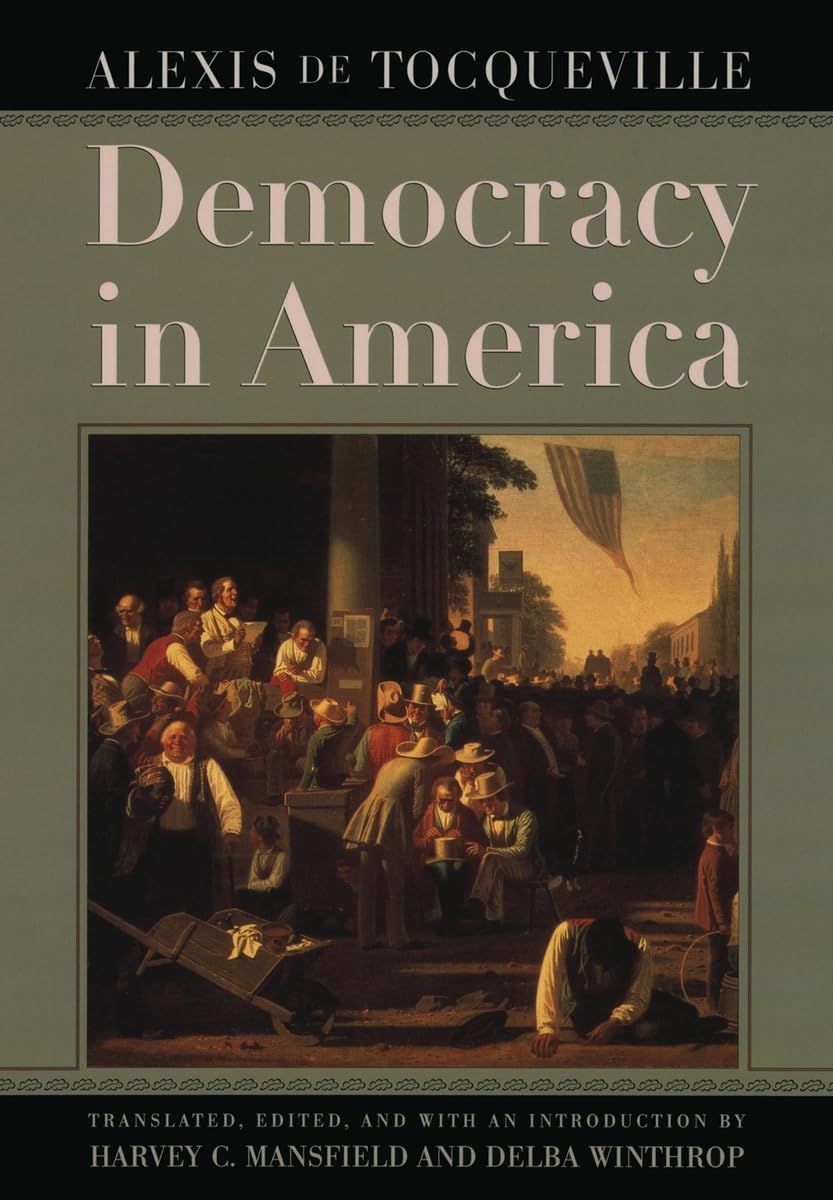
The most faithful and nuanced translation of the definitive work for understanding America Alexis de Tocqueville (1805-59) came to America in 1831 to see what a great republic was like. What struck him most was the country's equality of conditions, its democracy . The book he wrote on his return to France, Democracy in America , is both the best ever written on democracy and the best ever written on America. It remains the most often quoted book about the United States, not only because it has something to interest and please everyone, but also because it has something to teach everyone. When it was published in 2000, Harvey Mansfield and Delba Winthrop's new translation of Democracy in America โonly the third since the original two-volume work was published in 1835 and 1840โwas lauded in all quarters as the finest and most definitive edition of Tocqueville's classic thus far. Mansfield and Winthrop have restored the nuances of Tocqueville's language, with the expressed goal "to convey Tocqueville's thought as he held it rather than to restate it in comparable terms of today." The result is a translation with minimal interpretation, but with impeccable annotations of unfamiliar references and a masterful introduction placing the work and its author in the broader contexts of political philosophy and statesmanship. Review: Observations on American Democracy and Democracy in General - I marveled at Alexis de Tocqueville's trenchant insights into what made (makes) American Democracy what it is. Indeed, I think Tocqueville knew more about us than we do (partly a benefit of being a foreigner). But it's not just observations on American Democracy that we get in this indispensable book, but useful analysis between the democratic revolutions and societies in Tocqueville's native France and other countries, and the incessant contrasts the author makes between aristocratic and democratic societies. Tocqueville lived in a time in which the old orders of society (mainly aristocratic) were dissipating and hence his careful examination of the promises and problems that democracies posed for this country and others for his day and for the future. I can't possibly begin to touch on every issue Tocqueville discusses in this book, but I'll try to mention a few. For Tocqueville, America offered a unique opportunity for democracy to grow and flourish. He discusses the advantages of geographic location, the Puritan settlers in New England, the townships that developed, the formation of the states and the eventual Union formally established by the U.S. Constitution written in 1787. In addition to the external factors that evinced a democratic society, he gave careful attention to the interests, beliefs, habits and mores that united Americans North and South, East and West (though there were some obvious economic and social differences between these geographic segments). America did not possess a ruling class, and Tocqueville discusses what he called the equality of conditions that he saw in this county. Americans believed they were equal to each other, especially in regards to their ability to obtain wealth and prosperity. The people also viewed themselves as sovereign; they had representative leaders, but ultimately those leaders were and remain accountable to the people. Tocqueville is not hesitant to point out some bad sides to democracy, or at least potentially bad tendencies that could develop. Such topics as the tyranny of the majority, individual impotence in the face of democracy's dependence on the force of the public as a single body, lack of greater intellectual pursuits and accomplishments (though he admits this is a result of our busy lives and our desire to find quick answers and solutions). He seems to be most disappointed with the mediocrity that he sees as resulting when all things seem equal. The dangers of tyranny and despotism also linger. Tocqueville saw signs of potential future conflict, especially considering the presence of slavery. He envisioned a war between the races as very possible. He also discussed the effects of white settlement and their interaction with the Native Americans as well. His judgement seemed to be that the Native Americans were doomed once the white settlers arrived and started moving west. In addition to conflicts among people, he saw the growing concentration of power as almost inevitable. Our history has especially proven the growth of our national government. And there are so many other observations Tocqueville discusses on the future of democracy not only in this country, but for any democratic society. He had his fears and hopes. There are so many things I'm leaving out, but I was truly impressed with this man's astute observations on our form of government and our society in general and what some of the positive and negative sides to democracy were (and are). There are topics touched on that will cause you to immediately grasp how applicable they are to life today. A must read. Review: The best interpretation of Tocquevilleโs seminal writings on American democracy. - I am a Tocqueville fan so this is my third reading and version of โDemocracy In Americaโ and by far my favorite. I am still amazed at the relevancy of this Frenchmanโs ability in 1838-40 to visit America during Andrew Jacksonโs Presidency and see our country so clearly that this work remains as relevant now as it was then,180+ years ago but now projected into our country's future. The difference in this edition is that these two scholars did an extremely solid job of translating Tocquevilleโs original meaning into the most readable and understandable format thus far. The footnotes are equally as elucidating. It is nice that the two volumes have been placed together as one book โ but clearly indicate where the first one ends the second one begins. This way you are able to move between the two volumes without losing the essence of his commentary. Also, it is easier to catch the two year pause in Tocqueville's writing that he, personally, took to complete them. Nevertheless, this has always been โTHEโ seminal piece on American Democracy and remains even more so thanks to these talented interpreters. This is the piece worth reading and grappling with itโs pertinence today. To translate Tocqueville's words, "America is great because America is good. America will cease to be great when it is no longer good." These two sentences are the reason these two volumes remain as the singular, most important analysis of America, even today. Debbie Leister Delray Beach, FL


| Best Sellers Rank | #14,145 in Books ( See Top 100 in Books ) #6 in General Elections & Political Process #19 in Democracy (Books) #47 in History & Theory of Politics |
| Customer Reviews | 4.6 out of 5 stars 740 Reviews |
D**Y
Observations on American Democracy and Democracy in General
I marveled at Alexis de Tocqueville's trenchant insights into what made (makes) American Democracy what it is. Indeed, I think Tocqueville knew more about us than we do (partly a benefit of being a foreigner). But it's not just observations on American Democracy that we get in this indispensable book, but useful analysis between the democratic revolutions and societies in Tocqueville's native France and other countries, and the incessant contrasts the author makes between aristocratic and democratic societies. Tocqueville lived in a time in which the old orders of society (mainly aristocratic) were dissipating and hence his careful examination of the promises and problems that democracies posed for this country and others for his day and for the future. I can't possibly begin to touch on every issue Tocqueville discusses in this book, but I'll try to mention a few. For Tocqueville, America offered a unique opportunity for democracy to grow and flourish. He discusses the advantages of geographic location, the Puritan settlers in New England, the townships that developed, the formation of the states and the eventual Union formally established by the U.S. Constitution written in 1787. In addition to the external factors that evinced a democratic society, he gave careful attention to the interests, beliefs, habits and mores that united Americans North and South, East and West (though there were some obvious economic and social differences between these geographic segments). America did not possess a ruling class, and Tocqueville discusses what he called the equality of conditions that he saw in this county. Americans believed they were equal to each other, especially in regards to their ability to obtain wealth and prosperity. The people also viewed themselves as sovereign; they had representative leaders, but ultimately those leaders were and remain accountable to the people. Tocqueville is not hesitant to point out some bad sides to democracy, or at least potentially bad tendencies that could develop. Such topics as the tyranny of the majority, individual impotence in the face of democracy's dependence on the force of the public as a single body, lack of greater intellectual pursuits and accomplishments (though he admits this is a result of our busy lives and our desire to find quick answers and solutions). He seems to be most disappointed with the mediocrity that he sees as resulting when all things seem equal. The dangers of tyranny and despotism also linger. Tocqueville saw signs of potential future conflict, especially considering the presence of slavery. He envisioned a war between the races as very possible. He also discussed the effects of white settlement and their interaction with the Native Americans as well. His judgement seemed to be that the Native Americans were doomed once the white settlers arrived and started moving west. In addition to conflicts among people, he saw the growing concentration of power as almost inevitable. Our history has especially proven the growth of our national government. And there are so many other observations Tocqueville discusses on the future of democracy not only in this country, but for any democratic society. He had his fears and hopes. There are so many things I'm leaving out, but I was truly impressed with this man's astute observations on our form of government and our society in general and what some of the positive and negative sides to democracy were (and are). There are topics touched on that will cause you to immediately grasp how applicable they are to life today. A must read.
D**R
The best interpretation of Tocquevilleโs seminal writings on American democracy.
I am a Tocqueville fan so this is my third reading and version of โDemocracy In Americaโ and by far my favorite. I am still amazed at the relevancy of this Frenchmanโs ability in 1838-40 to visit America during Andrew Jacksonโs Presidency and see our country so clearly that this work remains as relevant now as it was then,180+ years ago but now projected into our country's future. The difference in this edition is that these two scholars did an extremely solid job of translating Tocquevilleโs original meaning into the most readable and understandable format thus far. The footnotes are equally as elucidating. It is nice that the two volumes have been placed together as one book โ but clearly indicate where the first one ends the second one begins. This way you are able to move between the two volumes without losing the essence of his commentary. Also, it is easier to catch the two year pause in Tocqueville's writing that he, personally, took to complete them. Nevertheless, this has always been โTHEโ seminal piece on American Democracy and remains even more so thanks to these talented interpreters. This is the piece worth reading and grappling with itโs pertinence today. To translate Tocqueville's words, "America is great because America is good. America will cease to be great when it is no longer good." These two sentences are the reason these two volumes remain as the singular, most important analysis of America, even today. Debbie Leister Delray Beach, FL
G**Z
A whole course on political science
It has been said that this is the best book about the US and the best book about democracy. Having just read it, I can say it is even more. Tocqueville reflects not only on the US or on democracy, but his comparative approach sheds light on the Europe of his times and before, on the nature of aristocracy and the inevitable democratic revolution which was on its way across the civilized world. Tocqueville was a realistic aristocrat, sometimes nostalgic for the "greatness" of yesterday, but bearing no illusions whatsoever about the feasibility of stopping democratic change. So, he sets to find out what is it about democracy that can work, and what its inherent risks are. And he decides to tour the grandest democratic experiment ever attempted by Man: the United States. What Tocqueville finds is a unique nation. Unlike most other nascent states in history, the English who moved to America found a huge land, practically devoid of people (and in those cases where it was inhabited, they were easily killed), where everybody could be a landowner. This, plus the particular ethics of the Puritans, the glorifiaction of hard work, thrift and virtuosity, provided for a prosperous, practical people (not necessarily tolerant, especially in religious affairs). Far away from kings and emperors, Americans developed a communal democracy. So far so good, Tocquevill really admires the basic qualities of the US. But this book is not a long eulogy of democracy. Tocqueville admits democracy is the best way to govern a modern society, but that does not mean he thinks it's perfect or endlessly beneficial. Democracy DOES poses risks: among others, the tyranny of the majority, the mediocrity towards which it impels mores; the loneliness of the individual, lost amidst an endless, faceless crowd. Even for some minor mistaken attempts at prophecy, Tocqueville's prescience adn long-term vision is simply astonishing. He was right about the merits of democracy; he was right about its shortcomings. If he would come to the present-day US, he would probably find much to celebrate (prosperity, technological progress, widespread access to education, health, etc), and much to deplore, precisely the mediocrity of democratic tastes (think music, literature, cinema, art. etc). Tocqueville's culture and knowledge are impressive, even more so considering how young he was when he travelled in the US. His style is conversational and straightforward, assertive but modest. The reader will find here a whole lot of wisdom and subjects to think about and it is simply one of the best books on politics and society ever written, one that is relevant todat as it was many years ago.
K**3
Great story, embalmed translation.
The subject matter is so marvelous and so apropos to current events that it survives this archaic "translation" into late 19 th century textbook obtuseness. If diagrammed the grammar of typical sentence would suggest an aerial image of the Mississippi delta, including (almost) the alligators. Hard to imagine an editor allowing the folly of interjecting footnotes smack dab in the middle of the text .... and the same type point. It may be, as the editor boasts, a verisimilitude: an English equivalent of mid-18th century French. But why? We are not French, and this is the 21 St Century ... buzzing along in hit-the-ground running 'Merica. 'Tis we who, one supposes, are the intended customers. I'll slog through it cuz the tale is extraordinary and the (original)author incredibly prescient. And it reminds me of my first adventures in reading: ancient tomes in my grandmother's library ... yes; 80+ years ago. Go ahead. Buy it. It's a romp. are the hoped for consumers, yes?
B**M
Deep wisdom and honest awareness of human nature
Wow. This is dense intellectually like a Donald Knuth textbook, but it's important to exercise our "brain muscles" to gather an appreciation for the timelessness of core socioeconomic factions, their tendencies, and the preventative steps that must be vigilantly and energetically maintained to retain a just, functional, and productive society.
J**Y
A Book Every American Needs to Read
Iโve always been fascinated by America, the American experiment, the American experience. In college, I found my place in the sociology, anthropology, political science and literature of the American people, values and ideals. My novels are born of the culture of merging, conflicting cultures we, as Americans, were born into, from my conviction that dealing with that experience is the challenge of being American. Only once before, in 1968, have I had the horrifying sense that the country was coming apart under the strain, a sense of the great experiment disintegrating. What has happened to us? Where did this disintegration into hate and violence, this contempt for our institutions begin and where is it taking us? From all of my early studies, the work that keeps coming to mind, as I look for answers is Alexis de Tocquevilleโs Democracy in America. De Tocqueville was a French aristocrat who hated tyranny and feared that democracy would disintegrate into tyranny of the majority. He understood, however that democracy was the future, so in 1831 he came to America in order to see it in action. To my mind, no student should graduate from high school in the United States without reading his observations and reflections on the American people, for we desperately need to renew our sense of not only the hope but the challenges of being an American and a commitment to support its survival as a democracy. De Tocqueville feared individualism and the abolition of the class system that, he believed, gave order and stability to the European nations. He believed that without that order, people would be forever anxious about where they belonged and would end up forever comparing themselves to each other. Forever insecure, their individualism would devolve into selfishness and each would end up alone. We should take a good look at ourselves in light of this fear. Has our insecurity, our need to know where we belong splintered us into rival groups where each gains stature by debunking the other? However, De Tocqueville also found in the Americans, an equality unknown in Europe and with a deep sense of community and civil order. He found a people committed to building a new world, to resolving together the problems that confronted them. He believed that the multitude of civic organizations would counter the dangers of individualism. The men, he thought, would forever strive to power and acquisition of wealth, but the mores, the โhabits of the heartโ carried by the women, would provide the civilizing force. He has a great deal to say about the role of religion in the New World and many other subjects, but this gives a taste of a perspective different enough to shake up the all-to-stale ideologies that have broken us into enemy camps. We have indeed joined civil action groups, but we have, since Trumpโs election, discovered the importance of unwritten mores, that undergird our common culture. That gives us the opportunity to regain our sense of belonging to a whole. His views on the role of women should spark lively conversations on individualism versus commitment for both genders as well as on the effect of the rampant greed of the eighties and nineties. De Tocqueville believed it is the โhabits of the heartโ that give the Americans strength. We need to rediscover those together.
E**.
Should be required reading for every U.S. citizen.
K**N
Essential reading
I will not, in the years I have left and given the unread stacks still holding down my bookshelves, read various editions of this book," so I cannot vouch for the Mansfield-Winthrop translation as compared to others. What I can say, however, is that while there are certainly many other essential readings, I don't believe one can even begin to understand the full arc of the American experience without having carefully read Alexis De Tocqueville's "Democracy in America." It is that important. It is that well-written. It is that insightful. I am sometimes astonished that I was able to earn a baccalaureate degree in political science from a public university without having read this book. It's as if statistical analyses of voting patterns and opinion polls (required) is somehow more germane. But then no one ever asked me to read The Federalist Papers either. I've had to read both these books on my own, which I must add I am happy to do. Pure joy.
C**N
Bien livrรฉ
Il m'a bien รฉtรฉ livrรฉ pour les cours mais je peut pas dire que je l'ai lus donc bonne chance a tous ceux qui doivent se taper ce truck.
B**A
What a work, what a translation
This is just superb from the beginning to the end.
J**E
My purchases exceded all expectations!
Both books are not the usual best seller variety and I was happy to find them on Amazon. Excellent and rapid service!
A**N
full of hate and bloodlust
I give this collection 5 stars. But dark stars, full of hate and bloodlust, burning in an ebony night, where the great ones lurk and the old gods await...
R**R
Five Stars
The old ones are behind the present government are'nt they?
Trustpilot
2 weeks ago
2 weeks ago