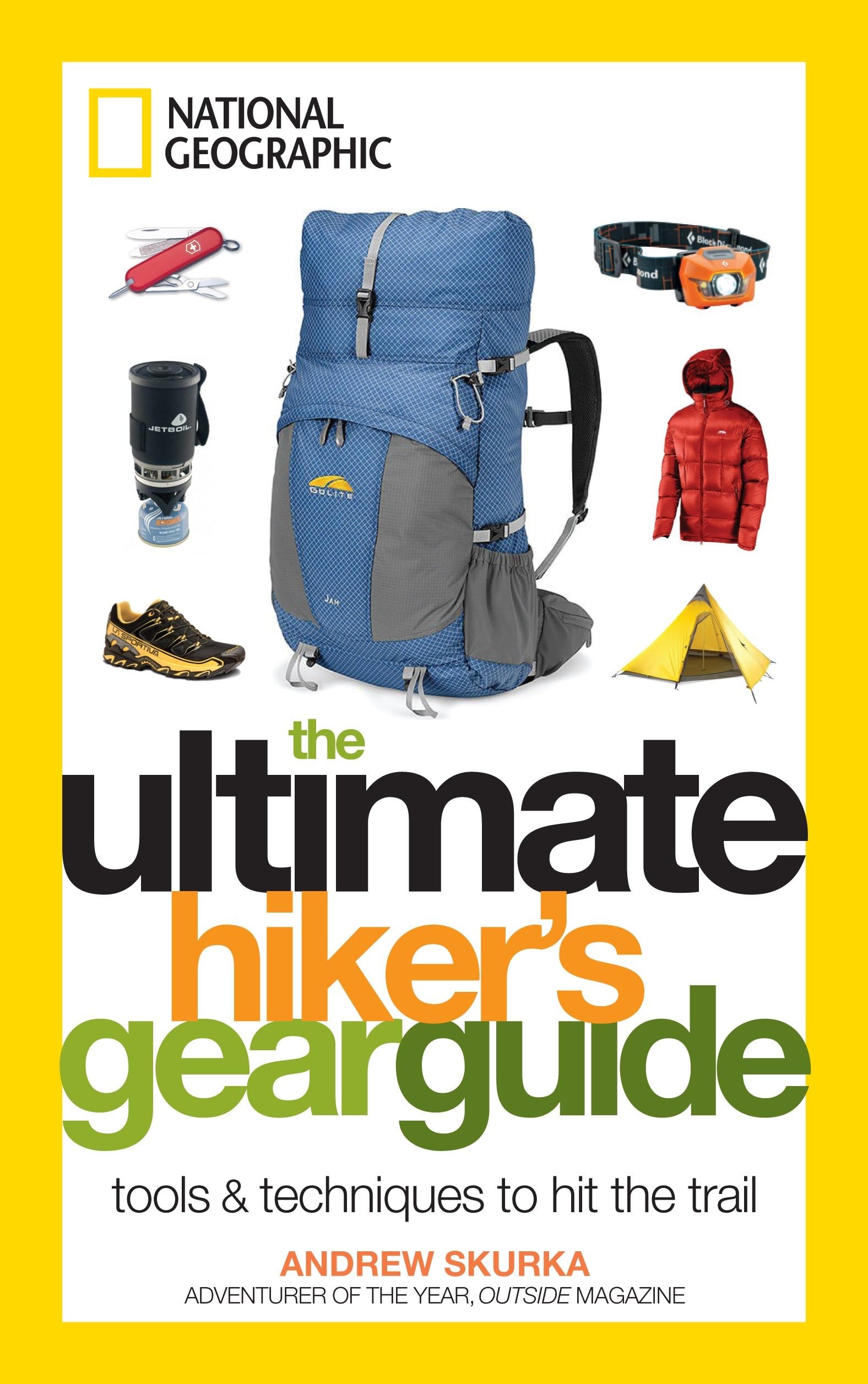
The Ultimate Hiker's Gear Guide: Tools and Techniques to Hit the Trail
Product ID: 713829
Desertcart purchases this item on your behalf and handles shipping, customs, and support to Romania.
The Ultimate Hiker's Gear Guide: Tools and Techniques to Hit the Trail
M**N
Worthwhile for both beginner and experienced hikers
I had my doubts when I first bought this book. My background is that I am an experienced hiker / hike leader (but not backpacker), long time avid reader of Backpacker magazine (and other relevant material), WFA graduate etc etc. I figured that the parts of this book that covered topics relevant to hiking would simply be review for me. I was wrong. While I was familiar with a fair amount of what is covered in the book, there was more than enough that I learned to make reading it worthwhile (and it is a fast reading book).This book should not be thought of as a complete guide to hiking, the only book you'll ever need. It concentrates on gear and clothing (hence its name). It will not teach you how to read/use a trail or topographical map or a compass, GPS, Wilderness First Aid, physical conditioning, and plenty of other types of knowledge that could be worthwhile to know when one is hiking or backpacking.One other reviewer thought that a lot of the text was like reading "techno babble" and yes, a fair amount of the text discusses the technical and practical attributes of various gear and clothing options. This is, after all, as the title says, a book about gear. Likewise, Consumer Reports doesn't simply say that item X is better than item Y, it also explains the issues that led to their ratings. I think that most people interested in learning about the various gear and clothing options for hiking/backpacking will find the level of "techno babble" to be both reasonable and worthwhile (but your mileage may vary). Overall I think the author is very very good at explaining in plain english the relevant technical aspects of the gear/clothing discussed. If you're making the gear/clothing decisions then the material in this book is quite relevant.The author has strong opinions about clothing and gear (he tends towards the ultra-light end of gear preferences) and at times will share them with the reader while he explains various gear and clothing options. While the author certainly has more experience than I do and is quite reasonable and logical with his reasoning about his preferences I believe that while some of his preferences may indeed be best for him, there can be excellent reasons why someone else (including me) could make different choices. Fortunately, the author is good at fairly discussing the various options even if he seems to have definite preferences.
J**H
Good for newcomers
For all of the attention this book got in the various forums I read, I was a bit disappointed. I am by no means an avid backpacker - most years I take one trip for one or two nights, about every third year the trip is 5-6 nights. This year is unusual as I am preparing for a 10-day trek in the mountains so I have spent several months reading everything I can and trying different combinations of gear.While the book is full of good information, it would be of much more use to someone who is truly just getting started in backpacking. Even with my very limited experience, I dont recall any "ah ha" moments or any suggestions that I made a point to try out. It all felt like stuff I already knew. In all fairness, I read Complete Walker III a few years ago and was similarly disappointed.There are a couple of things that I really like about the book: One is that it includes gear that is not sold as "backpacking" gear by the big box stores - items someone may already have that will work great and items from cottage gear manufacturers that newcomers may not have discovered yet. The other thing I really like is that it doesn't come out and say one type of item is better than another. Rather it presents a side-by-side comparison of several options and lists how good/poor each item performs for several criteria. Use the "Look Inside" feature and browse around the book to see one of these comparisons.
S**C
Teachings of a Master Hiker.
I have researched a lot of information on hiking, camping, and distance hiking over the past years and in my searches I happened to stumble across Andrew Skurka. This guy is one of the baddest ultra hikers I have come across. Starting out on the AT in 2002 Andrew quickly began honing his skills to become one of the worlds best.I came across his google talk and skills clinic concerning some of his many adventurous hikes and the skills developed and applied along the way. The Sea to Sea Route (from the Tip of Maine to the Tip of Washington State) that he solo hiked blew me away. I think it was 7200 miles or so. He averaged 33 miles a day hiking from sun up to sun down completing the unbelievable journey in 11 months.In this great manual he is walking me through all of the things that he has learned about gear, weather, terrain, environments, food, safety etc. It is packed with his approach to ultra light hiking, and the skills necessary to grow proficient and capable of the same. Of course he has a gift for such travel but the skills and knowledge that he shares will benefit even the novice to the most seasoned hiker. Put it like this ..."I am sure that after 33,000 hiking miles I can believe what Andrew has to say."This is a National Geographic constructed manual with beautiful illustrations and chock full of great personal stories that help to explain his perspective about gear to use in various hiking, and ultra light hiking scenarios. I am so glad that I found this great book. And thank you Andrew for writing it.I strongly recommend it.
Trustpilot
2 days ago
2 weeks ago