
DOWNLOAD THE APP


Customer Services
Copyright © 2025 Desertcart Holdings Limited
DOWNLOAD THE APP
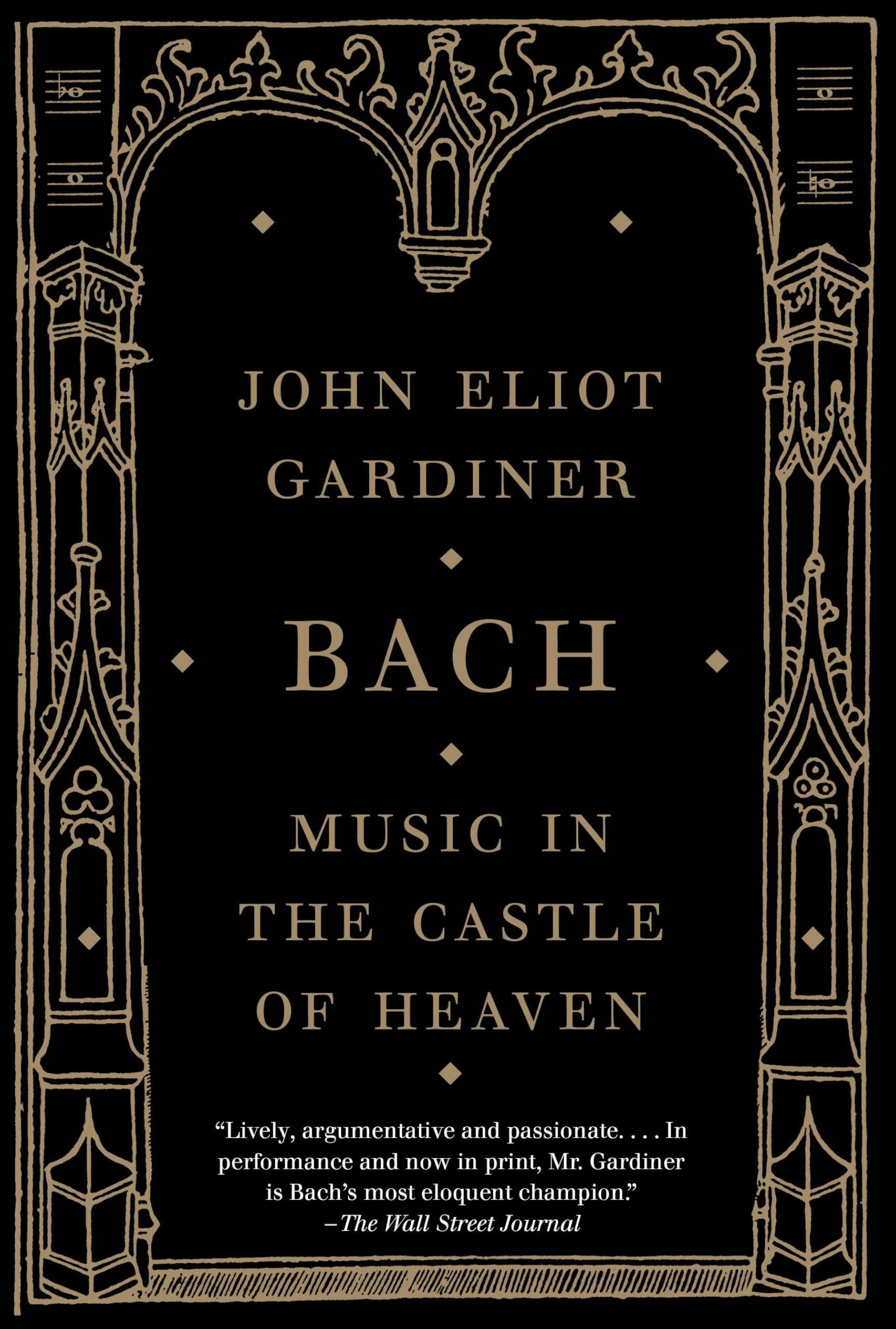
Bach: Music in the Castle of Heaven [Gardiner, John Eliot] on desertcart.com. *FREE* shipping on qualifying offers. Bach: Music in the Castle of Heaven Review: A Brilliant Musician with a Life as Complex as His Music - My grandfather was an organist. As a boy growing up in Slovenia, he practiced in every spare moment and in his teenage years was already directing music at his church. When communist forces showed up in his village to purge the ranks of able-bodied men my grandfather stood in line and watched men and boys loaded into the back of a military transport which would eventually deposit them in mass graves hidden in the woods and far from scrutiny. When he was finally at the front of the line he was briefly interrogated at gunpoint. “And you, boy, what is your occupation?” He answered confidently and honestly, “I am a musician. An organist. I play the music of God.” His inquisitor lowered his rifle and gestured him away. “Go, then. Go and play God’s music as if it were for your life and salvation.” This is precisely what my grandfather would do. He was hidden among the nuns at a local parish until he was able to escape Slovenia through miles-long crude tunnels in the mountains. Through displaced persons camps and further arduous travels, he continued to pursue his music however possible knowing that it not only granted a brief reprieve to those around him, but that his very life had been spared so that he might honor his God with his talents. He would spend years hidden away as a refugee in Gratz, Austria where he had access to a beautiful pipe organ and could play rapturous music in times fraught with violence. Eventually he would immigrate to United States and continue to play music as though it were the very basis of his salvation. I grew up lurking in the choir loft of his old San Francisco church where he would direct music for over 50 years. I was fascinated to watch his hands move like lightning switching from one manual of his organ to the next, pulling out stops, simultaneously directing the chorus of voices to his left with jerking flat-handed darts of his wrist between chords. His feet kicked out booming bass notes that rattled my chest. It was a beautiful harmony of dexterity, practice, and brilliantly written music (much of it composed by my grandfather himself). I loved the complexity, depth, warmth, and variety that he could conjure from a single instrument. In college, I took an introductory music history course and was thrilled when the teacher played Bach’s Fugue in G-Minor (BMV 578). In the few short minutes that the song played I was transported back to those days in the choir loft and to my grandfather sitting straight backed at his piano practicing Bach’s music again and again until it was perfect. But this short piece of music was so complex with overlapping melodies played in overlapping rounds with hands and feet. I was enraptured and eager to explore Bach’s music further. What started as a love of his organ works expanded as I came to appreciate his versatility. In Bach’s St. Matthew and St. John Passions I felt his brilliance on full display and suspected that he too may have found his salvation on a bench seat with his fingers poised over the keys of his organ which contained limitless possibilities. Turning to the book at hand, I was fascinated to learn more about the man himself. The book is impeccably and carefully researched--with somewhat scant biographical information, the author is careful to indicate what might be speculation and what is solid detail--for example extensive correspondence regarding remuneration, which was critically important for Bach (understandable for a man who fathered somewhere in the range of 20 children). Bach’s life was a struggle and his temper often taciturn, but his music transported him to another realm. His extraordinary talents as a performer actually scared a rival musician out of the city when a keyboardists’ duel was proposed. This book tends toward the technical at times and can get bogged down in financial details, but the author does well to keep the story moving along and it is fascinating to listen to the music Bach was composing while tracing the twists and turns of his personal life and career. Much like Bach’s music, this book has merit for its technical achievement alone. It is complex, composed with care, and has moments of pure beauty. Regarding Bach’s life, I am left with the impression of a man with an artists’ temperament who was driven to excel and gifted with mathematical and musical genius. The similarities to my grandfather are uncanny and reading this book helped me to connect not only with the life of this great composer, but also to my own story. B Oh, Bach also wrote an awesome little song about coffee: Ah! How sweet coffee tastes More delicious than a thousand kisses Milder than muscatel wine. Coffee, I have to have coffee, And, if someone wants to pamper me, Ah, then bring me coffee as a gift! Review: John Eliot in the Castle of Heaven - I do not mean to derogate from Sir John Eliot Gardiner's status as one of the great luminaries of the podium in our age--to say nothing of his status as a pioneer and perfecter of period performance practice--but in the end the capstone of his career might well turn out to have been in the medium of prose rather than musical performance! This is, quite simply, the most fascinating, engrossing, erudite and stunningly written work on the Leipzig Cantor available. Too bad it focuses primarily on his sacred music (I would love to have Gardiner's obiter dicta on many of the keyboard, chamber and orchestral works treated only tangentially here); but within that limited scope, Gardiner has achieved something quite remarkable: a work of musical historiography that manages to combine rigorous scholarship with philosophical acumen and literary flair. As a philosopher with a keen interest in the interface between aesthetics and religion, I particularly appreciated Gardiner's thorough understanding of the exigencies of church music within the Lutheran tradition, and his situating of tht tradition within the larger framework of Church history, scriptural exegesis and Christian spirituality. His effort to discern Bach's character and aspirations from his church music rather than principally from the documentary evidence (which is relaitvely meager) fixes the reader's (and listener's) attention where it must always begin and end--namely, with the scores themselves, as performed and heard. His charting of Bach's creative development, through the seasons and struggles of his career calls our attention anew to the status of the sacred music--particularly the Cantatas--as a kind of spiritual journal recounting the consolations and desolations of a fragile, fallible genius who also happened to be something of a mystic. For Gardiner, in the end, Bach's sacred-musical testament amounts to the bravest and most brilliant of stands against the depredations of our human condition at its most terrifying--and *for* the transcendence to the rapture of creativity fitfully but effectually points. I cannot recommend this work highly enough. Its pages will afford a fresh encounter with the composer, even if you have been studying his works and his commentators (as I have) for nearly a lifetime. But even more tellingly perhaps, you will encounter John Eliot Gardiner in a new way--as an accomplished writer and winsomely humane scholar.

| Best Sellers Rank | #162,924 in Books ( See Top 100 in Books ) #14 in Classical Musician Biographies #77 in Music History & Criticism (Books) #463 in Rock Band Biographies |
| Customer Reviews | 4.6 4.6 out of 5 stars (725) |
| Dimensions | 6 x 1.4 x 9.1 inches |
| Edition | Reprint |
| ISBN-10 | 1400031435 |
| ISBN-13 | 978-1400031436 |
| Item Weight | 1.96 pounds |
| Language | English |
| Print length | 672 pages |
| Publication date | March 3, 2015 |
| Publisher | Vintage |
P**F
A Brilliant Musician with a Life as Complex as His Music
My grandfather was an organist. As a boy growing up in Slovenia, he practiced in every spare moment and in his teenage years was already directing music at his church. When communist forces showed up in his village to purge the ranks of able-bodied men my grandfather stood in line and watched men and boys loaded into the back of a military transport which would eventually deposit them in mass graves hidden in the woods and far from scrutiny. When he was finally at the front of the line he was briefly interrogated at gunpoint. “And you, boy, what is your occupation?” He answered confidently and honestly, “I am a musician. An organist. I play the music of God.” His inquisitor lowered his rifle and gestured him away. “Go, then. Go and play God’s music as if it were for your life and salvation.” This is precisely what my grandfather would do. He was hidden among the nuns at a local parish until he was able to escape Slovenia through miles-long crude tunnels in the mountains. Through displaced persons camps and further arduous travels, he continued to pursue his music however possible knowing that it not only granted a brief reprieve to those around him, but that his very life had been spared so that he might honor his God with his talents. He would spend years hidden away as a refugee in Gratz, Austria where he had access to a beautiful pipe organ and could play rapturous music in times fraught with violence. Eventually he would immigrate to United States and continue to play music as though it were the very basis of his salvation. I grew up lurking in the choir loft of his old San Francisco church where he would direct music for over 50 years. I was fascinated to watch his hands move like lightning switching from one manual of his organ to the next, pulling out stops, simultaneously directing the chorus of voices to his left with jerking flat-handed darts of his wrist between chords. His feet kicked out booming bass notes that rattled my chest. It was a beautiful harmony of dexterity, practice, and brilliantly written music (much of it composed by my grandfather himself). I loved the complexity, depth, warmth, and variety that he could conjure from a single instrument. In college, I took an introductory music history course and was thrilled when the teacher played Bach’s Fugue in G-Minor (BMV 578). In the few short minutes that the song played I was transported back to those days in the choir loft and to my grandfather sitting straight backed at his piano practicing Bach’s music again and again until it was perfect. But this short piece of music was so complex with overlapping melodies played in overlapping rounds with hands and feet. I was enraptured and eager to explore Bach’s music further. What started as a love of his organ works expanded as I came to appreciate his versatility. In Bach’s St. Matthew and St. John Passions I felt his brilliance on full display and suspected that he too may have found his salvation on a bench seat with his fingers poised over the keys of his organ which contained limitless possibilities. Turning to the book at hand, I was fascinated to learn more about the man himself. The book is impeccably and carefully researched--with somewhat scant biographical information, the author is careful to indicate what might be speculation and what is solid detail--for example extensive correspondence regarding remuneration, which was critically important for Bach (understandable for a man who fathered somewhere in the range of 20 children). Bach’s life was a struggle and his temper often taciturn, but his music transported him to another realm. His extraordinary talents as a performer actually scared a rival musician out of the city when a keyboardists’ duel was proposed. This book tends toward the technical at times and can get bogged down in financial details, but the author does well to keep the story moving along and it is fascinating to listen to the music Bach was composing while tracing the twists and turns of his personal life and career. Much like Bach’s music, this book has merit for its technical achievement alone. It is complex, composed with care, and has moments of pure beauty. Regarding Bach’s life, I am left with the impression of a man with an artists’ temperament who was driven to excel and gifted with mathematical and musical genius. The similarities to my grandfather are uncanny and reading this book helped me to connect not only with the life of this great composer, but also to my own story. B Oh, Bach also wrote an awesome little song about coffee: Ah! How sweet coffee tastes More delicious than a thousand kisses Milder than muscatel wine. Coffee, I have to have coffee, And, if someone wants to pamper me, Ah, then bring me coffee as a gift!
J**S
John Eliot in the Castle of Heaven
I do not mean to derogate from Sir John Eliot Gardiner's status as one of the great luminaries of the podium in our age--to say nothing of his status as a pioneer and perfecter of period performance practice--but in the end the capstone of his career might well turn out to have been in the medium of prose rather than musical performance! This is, quite simply, the most fascinating, engrossing, erudite and stunningly written work on the Leipzig Cantor available. Too bad it focuses primarily on his sacred music (I would love to have Gardiner's obiter dicta on many of the keyboard, chamber and orchestral works treated only tangentially here); but within that limited scope, Gardiner has achieved something quite remarkable: a work of musical historiography that manages to combine rigorous scholarship with philosophical acumen and literary flair. As a philosopher with a keen interest in the interface between aesthetics and religion, I particularly appreciated Gardiner's thorough understanding of the exigencies of church music within the Lutheran tradition, and his situating of tht tradition within the larger framework of Church history, scriptural exegesis and Christian spirituality. His effort to discern Bach's character and aspirations from his church music rather than principally from the documentary evidence (which is relaitvely meager) fixes the reader's (and listener's) attention where it must always begin and end--namely, with the scores themselves, as performed and heard. His charting of Bach's creative development, through the seasons and struggles of his career calls our attention anew to the status of the sacred music--particularly the Cantatas--as a kind of spiritual journal recounting the consolations and desolations of a fragile, fallible genius who also happened to be something of a mystic. For Gardiner, in the end, Bach's sacred-musical testament amounts to the bravest and most brilliant of stands against the depredations of our human condition at its most terrifying--and *for* the transcendence to the rapture of creativity fitfully but effectually points. I cannot recommend this work highly enough. Its pages will afford a fresh encounter with the composer, even if you have been studying his works and his commentators (as I have) for nearly a lifetime. But even more tellingly perhaps, you will encounter John Eliot Gardiner in a new way--as an accomplished writer and winsomely humane scholar.
P**L
This is not a Deckle Edge paperback edition as stated in the Product Description.
A**M
Music in the Castle of Heaven - Amazon review At the risk of being superficial, there are three kinds of book. The first you never finish because they're patent rubbish. The second is the kind you need to read again a couple of weeks, months or years later because, no matter how good they seemed at the time, you realise they had made no lasting impression on you. You also want to reread the third kind, but this time because one reading was manifestly insufficient to explore all their marvellous riches. In my view, "Music in the Castle of Heaven" definitely falls into the last category. I'll start negatively. Two problems occurred to me as I was reading it. One is that it is full of the most erudite scholarship, but Gardiner appears not to be an academic of any kind. I can't find any articles by him in any scholarly journal, as opposed to ephemeral ones like "Gramophone" - and then only discussing his own recordings. Academic scholarship is a discipline acquired through years of intensive training in the minutiae of finding, using and referencing primary and secondary source material, usually involving the acquisition of some pieces of stiff paper with impressive-looking letters on them. Does Gardiner know what he's doing, or is he actually at sea when pronouncing with such apparent confidence on a forbiddingly wide variety of topics including the Thuringian principalities in the aftermath of the Thirty Years' War and the state of education in Lutheran Germany in general and in Leipzig in particular, with throwaway references to an eclectic assortment of resources, including both the latest scholarship and primary sources by Bach himself and his contemporaries? My worst quibble in this respect is his short list of abbreviations for his main sources. To learn that "BD" means "Bach-Dokumente, Vols. I-III" is all very well, and I can guess from the title that it's a collection of contemporary documents regarding the composer, but if I wanted to get hold of this thing I would need the sort of detail (like publisher and year of publication) that books of this sort usually provide in extensive, and often themed, bibliographies. Unfortunately Gardiner's list of abbreviations is as close as we get to one of these, so both chasing up sources and further reading means wading through the mass of reference footnotes, which are at best are in rough thematic order by chapter. If I remembered a particular author he'd quoted, I'd have no way to find it in a paper version. Thank goodness for my Kindle, on which I could search the name. If I had remembered it in the first place, of course, or remembered it correctly. And if it wasn't an author like Christoph Wolff, who he quotes 36 times. That's as negative as I'm prepared to get on that score (excuse the pun). I doubt if Gardiner is a stranger to handling sources and to critical analysis. His own extensive work with the repertoire of his two period instrument groups, the English Baroque Soloists and subsequently the Orchestre Révolutionnaire et Romantique, will doubtless have equipped him at least adequately for this task, and the present book's methodology will simply be an extension of that kind of endeavour. I am therefore prepared to take what he says on trust, especially as regards details. Some historians might possibly want to qualify aspects of his broad-brush treatment of Germany in the generation before Bach, or even the general musical scene there during Bach's lifetime, but conclusions like "...the quasi-scientific thoroughness with which he [i.e. Bach] later constructed his music cannot have been imbued in him as a schoolboy by anything approaching a Rationalist or an Enlightened education" seem to flow quite naturally from his preceding analysis. Once he gets to the level of the layout of St Thomas' School in Leipzig, I know of no account to equal his. This kind of detail often leads to "wow!" moments, such as this gem from Chapter 7: "Bach's composing room (Componirstube) was directly adjacent to the quinta classroom. The noise at times must have been deafening, impossible to screen out even for someone with his formidable powers of concentration". It was in this ludicrous environment that Bach churned out his glorious cantatas weekly, to say nothing of the stupendous Passions - the greatest body of sacred music of at least the last 300 years, bar none. Countless touches like this enable Gardiner to bring the composer to life, at least as much as the paucity and the formality of the surviving documents will allow. He indulges in some degree of speculation, but usually makes it clear when he does, such as his ruminations on whether the young schoolboy Bach was what we would call a thug, or on the (perhaps related?) existence of "psychological scars" left on the young composer by both his parents' early deaths (and maybe of the well above-average mortality rate of 60 per cent of his 20 children before they reached the tender age of three)? Gardiner is certainly nothing if not both erudite and eclectic, whatever his subject. Several times during the course of the narrative he grounds Bach's religious worldview firmly in its Lutheran context, more specifically in Luther's own writings. He does the same for the musical context, and reveals as a consequence the brilliance with which Bach used his unparalleled musical genius for theological, exegetical ends. Gardiner doesn't wear his eclecticism on his sleeve, but it's telling when he does use it. The Bach clan emerged from the murderous chaos of the Thirty Years' War clinging to music "for survival" - a situation Gardiner compares in a footnote with the South African apartheid-era jazz sextet The Blue Notes, including a quote by its drummer Moholo on music as the fruit of oppression. To hear this in the context of the Bach family in that era throws a certain aspect of our hero's upbringing into sharp relief. What did he hear from the previous generation about the horrors they had been through? Would it have been similar, one wonders, to the stories and attitudes with which Germans and Chinese, say, who had lived through World War Two imbued their descendants? And how would this have affected that next generation's perspective? How much of this did Bach impart to his own children, especially CPE, JC and WF? And how much of it, if any, influenced his musical commentary on his cantata, Passion and Mass texts? This extensive backgrounding of Bach leads to some very interesting questions, some of which find answers. He outlines the history of opera from Peri and Monteverdi through to Bach's own time, tracing its decline from its idealistic origins to its debasement as a star vehicle by 1700. This ties in with the question of why Bach was never involved with opera, unlike the other members of his "class of '85" (or thereabouts - as well as Handel and Scarlatti, Gardiner includes Rameau and Telemann). It turns out to be a near-run thing, but he decided, unlike his more cosmopolitan contemporaries, to remain relatively parochial. One wonders if he didn't regret it in succeeding decades. On the other hand, Gardiner gives us a parallel history of an "alternative" music drama, untrammelled by what had become rigid conventions that worked against, rather than for, drama. Tracing its course through Schütz and Purcell to Handel's oratorios, one gathers from Gardiner's extended panegyric that Bach's sacred cantatas are among the most truly dramatic music to have appeared in the previous 150 years - certainly more so than his secular equivalents, the Coffee and Peasant Cantatas. If you're looking for a definitive biography of Bach, this isn't it, nor does Gardiner claim that it is. In fact, he doesn't even like the term "biography" for his work, preferring "portrait". He is quite upfront about exactly what the relevant evidence is, and consequently about what conclusions it does and doesn't permit. In that respect, it outshines all the biographies I've read of my favourite author, Jane Austen, who suffers from a similar problem, if to a lesser extent: a lack of documentation. Perhaps the present work's closest relative as far as this goes is Deirdre Le Faye's Jane Austen: A Family Record (2) , a "documentary biography" that ostensibly eschews commentary and speculation, limiting its scope to that of its sources. For Austen lovers it's a real boon, but it can come across as quite dry, as a comparison with JEG's evident passion for his subject makes clear. It's this balance between passion and fidelity to the sources that, among other things, grabs me about his work. He goes no further than Le Faye, and certainly doesn't succumb to the temptation to "fill in the blanks", which just about any biographer I've read falls prey to, especially those of such a contentious subject as Richard Wagner. JEG never allows his enormous enthusiasm to carry him away on this point. I came away from his work feeling that I had the most comprehensive picture of the composer's personality that the relevant sources would admit, while freely acknowledging that that's as far as we're likely to be able to go. At least, that is, until the relevant stuff in former Soviet bloc archives comes to light. That's something else Gardiner - along with Bach lovers everywhere - looks forward to. An example he adduces is of an unfinished trio sonata by Bach's son W.F. with corrections by his dad that surfaced in Kiev in 1999. Perhaps some scholar will take JEG's point, start rummaging around similar archives in Eastern Europe and stumble across, say, a volume of correspondence revealing just what Bach's Lutheran audience in the Leipzig churches made of his weekly cantatas - or perhaps even a score of a hitherto lost cantata itself. Now those would be real finds! His account doesn't treat Bach's last decade and a half in anything like as much detail as the previous period, except of course as it concerns the Mass in B Minor. Gardiner's practical involvement has been overwhelmingly with the vocal and choral sacred music, and this emphasis is very clearly reflected in the book. If you're an instrumentalist, you'll look in vain for detailed accounts or analyses of his `cello suites, the Art of Fugue or the bulk of the organ music - the Toccata and Fugue in D minor isn't so much as mentioned! On one level this book functions as a sort of listening companion to the sacred vocal works. And here's where that term "overwhelming" comes in again. I'm a musician and a devout Bach fan (I've recently conducted the Missa in B Minor, i.e. the Kyrie and Gloria of the Mass), but even I had to return to scores and YouTube clips to keep up with his highly detailed discussions of individual cantata movements. Fortunately, it seems that you can find the scores of the cantatas on IMSLP and recordings on YouTube. (Regarding the latter, I'm being a bit cheeky - I should be referring you to Gardiner's own record label, Soli Deo Gloria, on which you will find the complete cantatas directed by his truly!) In fact, it's the Leipzig cantatas that constitute the core of this book. Bach set himself a huge task when he took up his Leipzig post (or rather posts): he would write complete annual cycles of weekly cantatas, each one topped by a Passion for Holy Week. For the first couple of years or so he stuck to this, and its this labour of love - quite over and above his job description - which is the basis of his reputation for sheer hard graft combined with unparalleled genius. Gardiner charts in detail how he elaborated the concepts of his first annual cycle in his second, and how the Passions fell behind his self-imposed schedule. Even Bach couldn't keep up! It's a riveting story, for musicians and laymen alike. That brings me to the second of my problems with this book. Gardiner's descriptions of individual movements are superficially in the same class as those quite inadequate liner and programme notes which attempt - and without exception fail - to describe what you can hear perfectly well for yourself, assuming it's not just the writer enjoying the sound of their own verbal rant more than the music it's supposed to be depicting. You know the sort of thing: "...the music rises to an anguished, shuddering cry before ending in a soft whisper of despair blah blah blah". Every time I came across a description like this when I was young, I was struck by the failure of the music to live up to this hyperbole. (I subsequently discovered the sole exception, and thus my favourite composer: Richard Wagner, whose music invariably makes such descriptions seem anaemic rather than the other way around.) Of course, my (mis)use of programme notes of this type was my fault, and is something I've long learned to ignore. But such of Gardiner's descriptions as "a huge upward sweep for the basses" "[a]bruptly the orchestra screeches to a halt on a diminished seventh" and "an anguished chromaticism evoking the bubbling stream and the drop of water denied to the parched rich man" (all these are from his discussion of Cantata No.20, "O Ewigkeit, du Donnerwort", in chapter 9) would seem to be just the same kind of attempt to (quite unnecessarily) translate sublime music into words whose histrionic expression could best be rendered by a Tchaikovsky or a Richard Strauss - or, with huge upward sweeps, Bruckner. It's late Romantic composers like those, not Bach, who make orchestras "screech to a halt". But that, I believe, would be to mistake Gardiner's point. Remember that he has shown how firmly Bach's religious makeup was planted in the prevailing Lutheranism, and how intimately his music followed suit. The music to Bach's cantatas and Passions function as sermons whose point cannot be rendered in words. By describing their effect in relation to those words, Gardiner illustrates this. He compares Bach's sacred cantatas to those of Telemann, which definitely pale in comparison. Their music remains no more than a demure and "fitting" accompaniment to his texts. Basically, it stays out of the way. Bach always enriches the words he sets, often by subverting or even directly contradicting them, always to make a very specific point. And it's the effect of that point that Gardiner is seeking to convey with his florid descriptions. These function as implicit (and occasionally explicit) attempts to recreate what Bach's congregation would have heard - or at least those who were listening rather than indulging in the social to-ing and fro-ing that preceded the sermon. Seen in that light, these descriptions function in some sense as the sort of verbal equivalent of a liturgical reconstruction like Paul McCreesh's with the Gabrieli Consort and Players of Cantatas 65 and 180 among other works. It puts Bach's music into its context, or at least lets us into the psychology of the contemporary listener, for whom the biblical, hymn and poetic texts would have been far more meaningful and far more immediate than they are for most of us, and also for whom music was rarer, and thus more arresting, than it is for us, for whom it's wallpaper. They would have had to go to specific places at specific times to hear what we can hear at the push of a button. Consequently, they may very well have heard the orchestra "screech [dramatically] to a halt" in a way that we, attuned as we are to late Romantic musical hyper-realism, might miss. So here's the bottom line for me: this book will be hugely useful to two kinds of reader. If you equate CPE Bach's Kenner and Liebhaber as professionals and amateurs respectively (without using the latter term pejoratively), the former will benefit from the whole book, while the latter can skip over these sections in which the musical discussions and terminology makes their eyes glaze over and concentrate on the ones that deal with Bach's character and on the personal and historical background. The former should note, however, that there is a bare minimum of musical quotations, so scores are essential. Final note: the Kindle version has copious illustrations, and navigation works both to and from footnotes. It's as good as any Kindle adaptation I've seen.
C**N
This is not a book to be merely "read", it's a book to be experienced with the music. Presumably people who read this book will already have some, if not most of the works mentioned in the book, but just in case, what you need to get the most out of the book is; - The Cantata Pilgrimage set (56CDs) - Christmas Oratorio - St John Passion - St Matthew Passion - Mass in B Minor - YouTube for looking up other music mentioned All these works are discussed in depth in the book, and listening to them before, and after reading the corresponding chapters is truly enlightening. I gained a deeper appreciation for Bach's music through this book. Like all good books, though eager to continue to see what discovery came next, I was also sad to see the journey come to an end. It's a truly moving biography of Bach the man, and his work, by one of the most gifted interpreters of his music currently living. Now I'm hoping Sir John can write us a biography about Handel. I'd buy it in a heartbeat. : )
H**P
I recommend!
M**I
The best updated biography of Bach. Very much focused over singing compositions than instrumental. Made me discover a lot of wonderful things. Highly recommended.
Trustpilot
2 weeks ago
2 weeks ago