
DOWNLOAD THE APP


Customer Services
Copyright © 2025 Desertcart Holdings Limited
DOWNLOAD THE APP
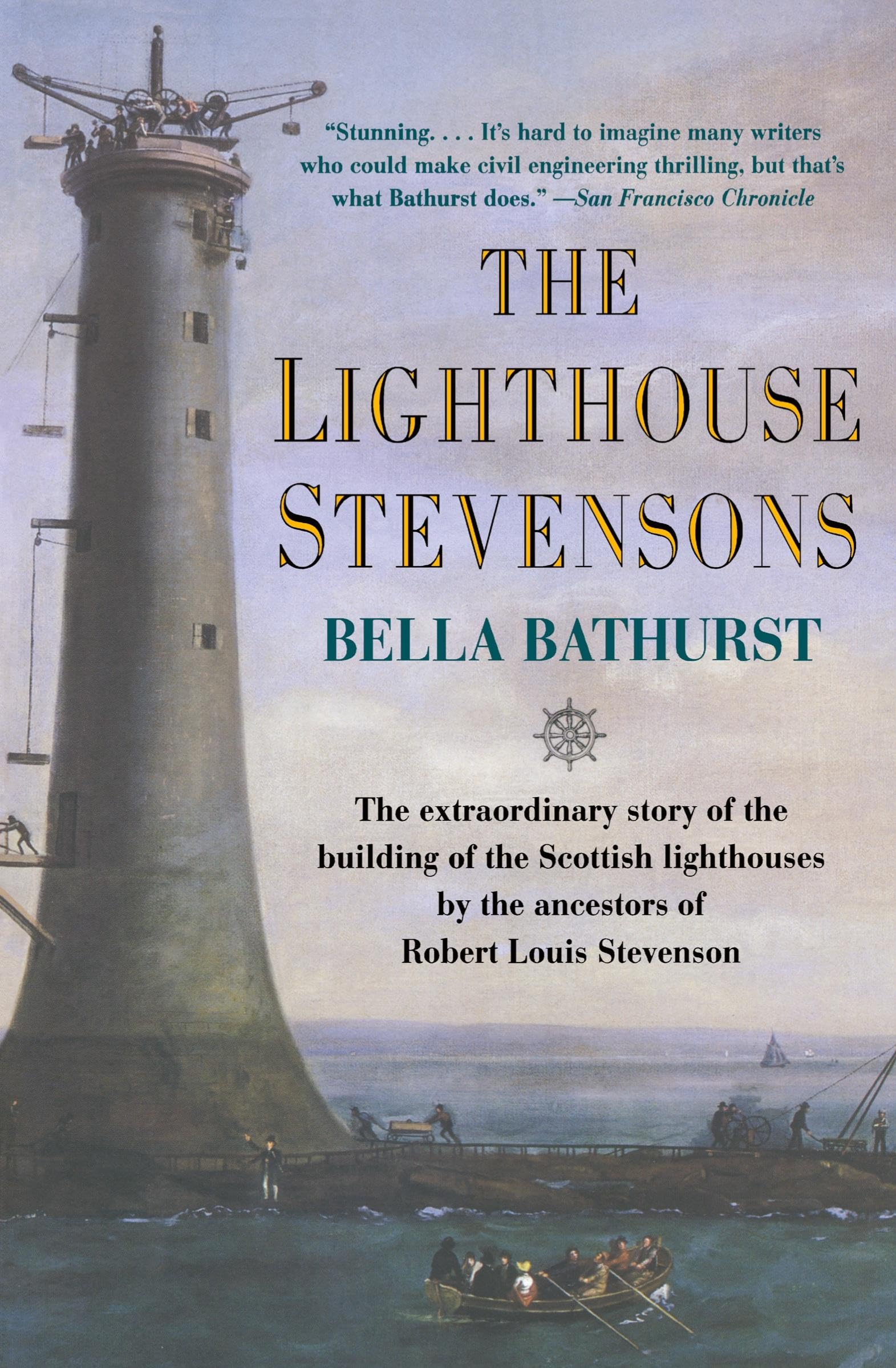
The Lighthouse Stevensons
B**T
The Other Scottish Enlightenment.....
Bella Bathurst is a bit of a conjurer. In just over 260 pages, she has managed to provide a lot of fascinating, exciting and even quirky information concerning the construction of the Scottish lighthouses, plus well-crafted biographical portraits of members of four generations of the Stevenson family. She gets the reader hooked immediately, interestingly enough, by writing about someone who was not even a member of the Stevenson clan - Captain George Manby. Manby, around 1805, came up with a method of keeping rowboats afloat in heavy seas, to be used in conjunction with a "rescue line" tossed out to foundering ships which were close to shore. In conjunction, these would be used to rescue seamen before their ships sank and they drowned. This didn't appeal to the people called "wreckers," who depended upon booty from the sunken ships for their livelihood. In their view, it was better to let crew members drown - after all, they might put up a fuss concerning the theft of the ships' cargo. When, in 1807, the naive Manby let some wreckers take him out on a boat so he could test the seaworthiness of his new and buoyant rowboats, the wreckers intentionally capsized the boat - hoping to drown Manby, who couldn't swim. (Fortunately for Manby, he managed not to drown.) This anecdote ties into the rest of the book, because when the Stevenson family started building lighthouses, the wreckers weren't too thrilled with that development either. So, a lot of the people in the seaside communities didn't exactly put out the welcome mat. Not only that, but the Stevensons' had to put up with "press gangs" trying to shanghai workers so they could man merchant and military ships. Part of this book reads like an adventure tale - with the workers battling the mighty forces of mother nature on remote spits of land that were sometimes 10-15 miles off of the Scottish coast. The workers, at some locations, would have to be transported daily from the mainland - fighting against seasickness and terrific winds and rain. They would sometimes be marooned on the desolate pieces of rock where the lighthouses were being constructed, as savage storms would blow for days or even weeks on end. There is even an Egyptian flavor to the construction - as huge blocks of carefully carved and smoothed stone are transported and painstakingly put together. Each block had its own unique place in the puzzle, and the margins for error were slight- 1/8 of an inch per stone in some cases. This was a case of bullwork being combined with fine craftmanship - all being done under atrocious climatic conditions. It is a tribute to Ms. Bathurst's writing and organizational skills that, even with all of this activity swirling through the pages, we don't lose sight of the Stevensons. We see the patriarch, Robert Stevenson, with his formidable work ethic, energy, and devotion to public duty. Even in his late seventies he was still going, by ship, all along the Scottish coast, on long inspection tours of "his" lighthouses. Religion is also a part of this story - in particular, the Scottish belief in a stern, no-nonsense God: On one project Alan Stevenson, one of Robert's sons, made his men work on the Sabbath days. Later on in life Alan came down with a neurological disorder (which the author speculates was muscular dystrophy). Alan was convinced that God was punishing him for his sins. He tried to atone through prayer and through whatever work he was still able to do. When the disease went into remission, Alan thought he was finally being forgiven. When he got worse, he thought he wasn't doing enough to earn God's forgiveness. This makes heartbreaking reading. The writer, Robert Louis Stevenson (known as Louis), also enters into the story, as his father, Tom, wanted him to continue in the family tradition. Louis made some youthful efforts to accomodate his father but, although engineering and lighthouses were in the blood, this life wasn't for him. We'll never know if this was engineering's loss, but it was certainly literature's gain. When they weren't dealing with 100 mile-per-hour winds and, sometimes, 200 foot waves, the Stevensons also found time to build roads, bridges, harbors, breakwaters, etc. In the preface, Ms. Bathurst says that she didn't attempt to write a definitive biography of the Lighthouse Stevensons, but she hoped the book "will be seen as a kind of taster for the subject, and that anyone wanting to search further will be able to do so." This reader, for one, found this remarkable book to be very tasty indeed.
B**S
A cool read about a quirky family.
I enjoyed this book as a leisure read. I liked that the author talked a little bit about everything. It was cool to read about the origins of civil engineering in Scotland. The struggle of the Stevensons to be practical in honing their engineering skills all the while suppressing their inner artistic inclinations was most fascinating, especially when reading about Alan Stevenson. I would seem he was a rare blend of both and artist and engineer. He designed lighthouses with both practicality and beauty. For example, the hyperbolic curve of his lighthouse designs. Crucial to the stability of the structure, but also aesthetically pleasing. I liked that the author discusses early engineering as a trade, and as both an art and a science. Engineering was never a university degree until later on in history, and most engineers were hard working people who liked to tinker with sh*t to make it better. And people thought they were weird and backwards, not smart and intelligent as people now view engineers.in a day and age when everyone wants to compartmentalize and specialize EVERYTHING, Victorian engineering seems to acknowledge the special advantage of someone who possesses a logical and yet artistic thought process. In my opinion, the two are symbiotic and neither one should be separated from the other. After all, over 200 years later and the lighthouses built by a dude who also wrote poetry, played music and kept the company of artists is pretty bad a$$. (oh and he was fluent in six languages too...)I recommend this book to people with eclectic interests or who are looking for a book about how art and science coexisted to make the world a better place as opposed to being compartmentalized and pitted against each other in a battle for significance.I gave the book 4 stars because the grammar and editing for the book was a bit sketchy and interrupted my flow when reading.
T**S
Great non-fiction
The Stevenson family should be held in hi esteem. Very descriptive of their efforts And results over many generations. Great reading.
A**R
Factual and ultimately surprising!!
Lighthouses have never intrigued and Robert Louis Stevenson has always been fairly interesting; but the combination of the lighthouses and the Stevensons is riveting, surprising, and totally wonderful
S**R
OK......
Took me a LONG time to read this book...It is very dry reading...Had some interesting information, but could only ready about 15 minutes then had to stop.....JMHO.....
R**L
Well-researched, articulate, intriguing
An obscure point of well-earned Scottish pride, with multiple cultural references, made for fascinating reading. Intelligent, articulate, well-documented.
M**S
An enjoyable read
I found this book to be a fast and informative read. I am neither a lighthouse enthusiast nor a Stevenson literary junkie but still managed to enjoy my time spent reading the book.I can see where this blend of biography, history, and engineering would be too thin to please serious lighthouse fans, literary historians, or marine engineers.However, for the general reader, the book succeeds nicely in combining a selected history of the Stevenson family, their works for the Northern Lighthouse Board, and the family's impact on Robert Louis Stevenson.It is an interesting account of the difficulties overcome in the creation of some of Scotland's most magnificent lighthouses. The author knows how to turn a fun phrase which adds to the reading a bit of an Easter egg hunt for bon mots.The typographical errors previously mentioned have been corrected in the paperback edition.
P**E
Direct dependents of Stevenson family who built lighthouses around Scotland
Sadly most family members who spoke about relatives who built most of first lighthouses are gone. Thankfully the St Andrews Society informed us about the detailed book. So proud how they accomplished building these lighthouses during unstable weather and non available supply elements. Truly a interesting read.
Trustpilot
1 week ago
5 days ago