
DOWNLOAD THE APP


Customer Services
Copyright © 2025 Desertcart Holdings Limited
DOWNLOAD THE APP

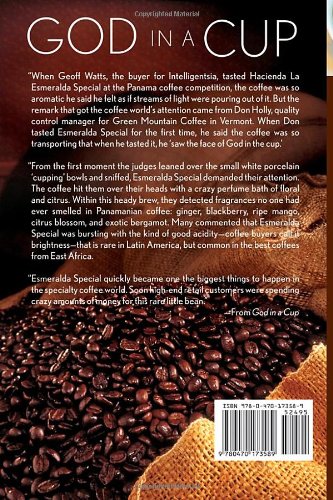
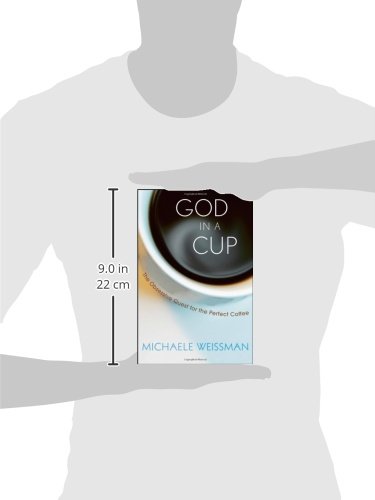
God In A Cup: The Obsessive Quest for the Perfect Coffee
W**.
Educational and fun read, but lacked a bit of focus.
WARNING: "ranty" review ahead. Stop reading if you are easily annoyed/insulted, or if you drink instant coffee; go find a black sharpie and dip it in hot water instead. I assure you it tastes better.I am often taken aback by the degree of apathy some people display regarding their coffee choices. For being such a popular drink (and the world's 2nd most traded commodity, after crude oil) its place in the long, daily train of consumer considerations ranks somewhere between passive and unenthusiastic, and this, fellow reader, is very telling...But before you roll your eyes and accuse me of being a coffee snob, please ask yourself the following: when you go to a bar, do you just ask for any beer or wine? Or when you go to the butcher, will any choice of meat do? How about cheese? Do you care if it's Muenster or Swiss or American that goes in your Sandwich? Maybe you don't care if it's bottled blue cheese on your pasta? If this sounds like you, please stop. If it's not, then why is it OK to behave that way towards coffee? Do you know where it comes from or the process by which it ultimately ended in your cup?For a culture that places so high a premium on individual expression and freedom, I find that very little of it is exercised when it comes to coffee. The latitudes here seem to straddle the all too familiar choices of Dunkin's or Starbucks or Wawa or worse, the many flavors of creamer that "smooth things out". Maybe Folgers or Maxwell House for the value conscious. But that's about it.Ok. Fine. These are all completely safe choices, but my point is that as a worldly consumer one can do much better than the pedestrian options listed previously. Popular American coffee culture is, by and large, surprisingly insular despite being deeply entrenched in the DNA of an axis of dissemination of all things "trendy" and innovative.Now, I am not saying one should start shelling out a fortune for specialty coffee and start studying the different methods and ratios and blends with the zeal of a sommelier (nor am I suggesting you start wearing skinny jeans, tattooing yourself or piercing your various appendages), but it is entirely within the province of the average American to elevate their relationship with coffee, and by extension their view of coffee as a complex commodity, to places beyond the mundane, insipid, pre-packaged, just-get-me-through-the-day status it currently holds. In other words, coffee can be more than just warm caffeine. And all it takes is very little effort.For my part, I'd like to think that I have been successful in re-wiring my friends and co-workers to start appreciating the subtleties in coffee and for introducing them to brewing practices that can turn a chore into a short moment of contemplative office Zen. It is also quite rewarding when I sneak in a new single origin coffee without warning and watch them sip once, knit their eyebrows in a bit puzzlement, sip twice, and then ask me, "hey, where is this one from? Tastes Kenyan!" Yes, not all coffee tastes the same.This book is, in a sense, about the guys that are trying to accomplish the above but on a massive scale. It is about small, regional roasters, about coffee farmers in places long exploited by multinationals, and about a relatively new approach to sustainability and fairness that seeks to transform the business, starting with the little guy.At times the author meanders a bit, making the story feel disjointed and unfocused, but overall I came away better informed about Third Wave specialty coffee, its various playgrounds and players, and the magnitude of the effort they've undertaken.At its conclusion, I couldn't help but feel a bit saddened, though. As these smaller shops expand and become more profitable and visibly disruptive to the major players, it is inevitable that big money will lure some of these operations to the pocket of big corporations whose governing responsibility is profitability above all. This is the way of Blue Bottle Coffee, now owned by NESTLE. And believe me, they have started to take notice (just google: "Hip coffee is big business").Though the future of specialty coffee and its farmers is decidedly uncertain (read the book), today the industry is still strong and surging in popularity. Which is good news as it will hopefully infuse it with a new wave of hard-working, caring luminaries like the ones in the pages of Weissman's book, willing to continue to improve the quality and sustainability of that one staple of our daily consumption we could all do more to inform ourselves about.
K**R
Good book
Good book
T**H
Wonderful, Engaging Coffee Read
Oh if only a book like this could replace coffee table books!The author of God in a Cup does a superb job relating the growth of the specialty coffee world to the reader in a work that holds an accessability few other books devoted to the topic can claim. We join her right as she begins to elevate her palate, affording a non-indoctrinated reader the opportunity to investigate and grow while reading along. Of course, few have the opportunity to tag along with a couple of the industry's buyers as they head off to origin, but I feel that is where this work shines. Weissman does a superb job relating the humor, confusion, joy, and frustration of making dealings with growers and middlemen and jumping into the fray at conventions held by and for the professionals so deeply steeped in their world that it can be simultaneously exhillarating, alienating, and exhausting to try and join in.This book is a case where the entire title must be given its due. This is a work that conveys the obsession of coffee geekdom in such a way that those involved really must admit that it is indeed obsession. But it is infectious, joyous obsession and here is is written well enough to spread that enthusiastic sense of discovery to the reader. I could not help but pull a shot of espresso on my day off at the cafe I work at after reading one chapter and the descriptions of some coffees really do demand accompaniment with a cup of Panamanian coffee. I am personally not a fan of the Clover coffee brewing system (vacpot and presses for life), but still felt excitement reading about their use to highlight flavors.You should know that this is a book about the quest for great coffee, not a book about great coffee. It is about the people involved, not the product, and does not pretend to be about the beverage that results from so many people's work despite the wonderful descriptions of coffee that filter in and out throughout the book. The author's and our two primary featured buyers' journeys are the focus here.A must read for coffee enthusiasts.
S**R
There is a lot to like about this book. Fantastic read!
Michaele Weissman manages to pack a pound of coffee into an 8oz bag. This book is a great story about small number of smart, talented, and crazy trail blazers who share a common passion/obession about specialty coffee and how they are developing new industry around it-seemingly from scratch. Weitzman actually spent significant time with these people--in their stores and with them on buying trips in several third world countries. Her first-hand stories are fantastic and very entertaining. She discusses the issues that impoverished farmers have to deal with and how the young entrepreneurs are struggling to find real long-term solutions for them. The glue that holds this story together in the magic of the specialty coffee itself. She hits an absolute home run here. As a person who regularly drinks this coffee, I have never have read anything that has captured the experience of great specialty coffee so well. It is a great story-very entertaining and very informative.
S**D
In pursuit of the origin of the gesha tree, we get a peek behind the scenes of the coffee industry
I was so drawn into the mystery of the Gesha coffee tree presented in this book that I read most of it in one sitting. What is it about coffee from this tree that commands such an absurdly high price? The intriguing thing about it is that we never get a definitive answer to the question of where it came from, but instead are taken on an extensive journey behind the scenes of the third wave coffee movement and get a peek at the companies, personalities, and machinations that drive the modern specialty coffee industry. In other words, while the origin of the tree is still a mystery at the end of the book, we get a very complete picture of who the companies/people are that are willing to pay such exhorbitant prices.God in a Cup is an important addition to the existing literature on coffee and one that I will whole-heartedly recommend to anyone with questions about how the industry works in practical terms.
S**B
Engaging, Informative and very well written...
Personally I think this is the best book about the speciality coffee trade. I live in the UK and most reviewers here would probably label this book too 'American' but the sad thing is Great Britain as a country with it's rich history of coffee houses, currently is saturated with the worst 'fast-food' coffee chains. If you want to learn about the speciality coffee industry specifically for the UK you are better of reading forums and blogs.Nonetheless, borders aside, this book is superb! the most personal journey I have seen so far for any Coffee Book author, yes almost all authors trying to write about coffee would probably have travelled to a producing country or two, but no one compares to the single hand experiences of Michaele Weissman. She takes you to a journey so captivating with characters so interesting it seems like she ripped them all off from a fictional novel.Overall, this book is for anyone interested about coffee... or even just reading...
M**Q
As the name of it. Good book.
A great book, a lot of text and less pictures
M**T
Must read.
Very good barista classic.
M**.
Completely uncritical, written by an over-the-top fan
I could not even finish reading this book. The author's over-the-top admiration for the "young coffee guys" or "naughty boys" (as the author puts it) is just too much. A little bit more distance and hence room for criticism would have done the book good. It feels like the author got pretty lost during her 'research'. Example (p. 20): "It's only when he shoves his unruly mess of hair under a baseball cap, enabling you to see the crystalline eyes, bluer than blue, do you start to fathom what's there. Sadness. Brilliance. Will." - I mean, come on...There are so many problems with this book that I do not even know how to list them all. Here another example: "Burundi and Rwanda are very similar (...) both freed themselves from their Belgian overseers in 1962" - I find it extremely horrifying that an American journalist, someone who must have visited a university at some point, describes colonial rulers as mere 'overseers'. That is not even an euphemism anymore, this is dangerous ignorance.
L**Z
It's an amazing book about coffee and most of all, about coffee lovers.
I found out this book in a coffee shop and I couldn't do anything else, but buy one for me. I was addicted about this all coffee universe, and the way that Michaelle Weissman tells the history is just amazing!It's a great book!
Trustpilot
2 months ago
3 weeks ago