
DOWNLOAD THE APP


Customer Services
Copyright © 2025 Desertcart Holdings Limited
DOWNLOAD THE APP
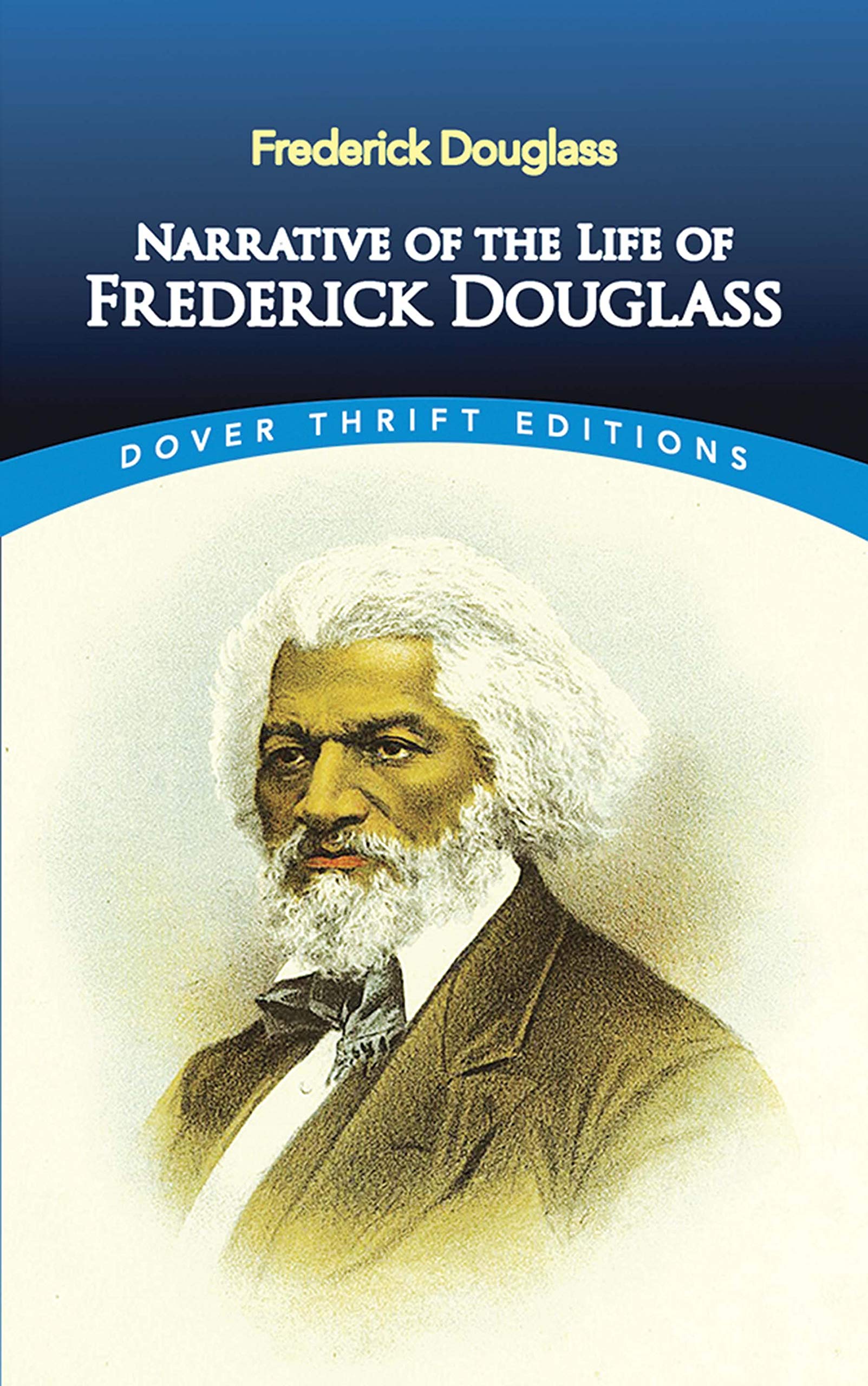
📖 Own the narrative that changed history — don’t miss out on this timeless classic!
Narrative of the Life of Frederick Douglass is a seminal 19th-century autobiography that chronicles Douglass’ journey from slavery to freedom. Praised for its honest and powerful prose, this used copy offers a compelling exploration of systemic racism, personal resilience, and the fight for human dignity. Ranked top in African American studies and discrimination categories, it remains a must-read for anyone seeking to understand America’s past and its ongoing impact.






| Best Sellers Rank | #3,806 in Books ( See Top 100 in Books ) #13 in Discrimination & Racism #13 in African American Demographic Studies (Books) #16 in Black & African American Biographies |
| Customer Reviews | 4.7 out of 5 stars 5,195 Reviews |
P**F
Upsetting, But Excellent
I’m starting this review before I’ve finished the book. I’m only like thirty pages in, really. But I feel grateful to be able to read more of what Douglass has to say. I believe that he is telling his truth and that makes for beautiful, if heartbreaking, reading. For the record (and the persistent Hypothetical Reader), it is almost 3:00 AM on January 18, 2020. It’s fitting that I’m turning to a book now. To help calm me down and get me to sleep. Douglass’ prose is complicated, so I know eventually I’ll be exhausted to sleep. And though I am generally grateful to books, this autobiography is the one I am reading at the moment, and, therefore, the one I am going to credit. I just took 2 Tyelenol PM It’s 3:45 AM. (Does anyone find this interesting? (That’s rhetorical.)) January 28, 2020. Fredrick Douglass’s writing is too compelling and my mind is racing too quickly from the emotional evening I’ve had. I am determined to read the same paragraph again and again until I understand it without my mind wandering. It took me like 10 tries. Each time I caught myself obsessing over phrases or questions to answer or books to write. I restarted the paragraph. I reminded myself that it is alright to think about it; that doesn’t make me a person who is incapable of loving and being loved; it just means that I have thoughts and emotions; but I’m trying to sleep. And then, when I realize I’m lost in ruminations, I’d start reading the paragraph over again because my mind had wandered. Don’t worry, not all my reviews will be this minutely autobiographical. I just feel compelled to bottle lightening or whatever magic it was that left me a bawling mess of emotions earlier this (last?) evening. But then I remind myself that these are just thoughts and these sentences are just words. And that doesn’t make them good or bad--by extension, that doesn’t make me good or bad--it just means they are words. (I have to stop using the word “just”; and also stop commenting about punctuation and word usage and grammar.) But those are just thoughts, too, and just more words to think about excising later. Because right now, I’m going to smile myself to sleep and keep reading that same paragraph again and again until I drift off or understand (or at least make some conscious semblance of sense from) what is being communicated. One last thing to mention. This should be parenthetical, but it’s not. Let’s not get caught in the weeds here. I want to mention mental health. I dedicated my last book reviews to those in my life who encouraged my reading; I dedicate this book to those who have encouraged and walked alongside me and allowed me to walk alongside of them in their mental health and (I’ll even go so far as to say) spiritual journeys. Goodnight my beloved people and words and books. I hope when I wake up, I’ll be awake. (Sometimes it just doesn’t matter if it’s real or not, fact or fiction. I can just experience the things I’m experiencing right now: Freedom.) That’s not a concept with which Frederick Douglass or any slave was familiar. Or, I mean, Douglass was able to see through the veneer of other people’s impositions to see his (and other slaves’ and masters’) real humanity and to be bold enough to share it. His writing is honest and therefore incredible. I believe what he writes and what he is saying. It’s January 26, now. I’ve finally been able to finish the book and make it through a hectic week. Frederick Douglass’ autobiographical narrative has been a friendly, somehow comforting, companion. Of course, history has proven that there are inaccuracies and mistakes and exaggerations for literary impact. This does not diminish from the incredible document which so clearly traces Douglass’ subjective experience through slavery to freedom. As I read I underlined and commented in the margins. Here are a few observations and quotes: “Slaves sing most when they are most unhappy. The songs of the slave represent the sorrows of his heart; and he is relieved by them, only as an aching heart is relieved by its tears” (9). I had never considered this interpretation before. Douglass’ is repulsed by slaveowners who profess Christianity and yet own and abuse slaves. Commenting on one of his masters, Douglass writes: “Prior to his conversion, he relied upon his own depravity to shield and sustain him in his savage barbarity; but after his conversation, he found religious sanction and support for his slaveholding cruelty” (32). This hypocrisy personally offensive to the author, though I could not easily discern from this book whether he would identify as a Christian himself. Chapter IX is a gut punch and ought to be required reading (fortunately for me, this is the chapter I read again and again as I tried to quell my manic thoughts and get to sleep). This chapter explores the ingrained evil that was simply viewed as convention by slave owners. Douglass verbally eviscerates his cruel masters and insightful comments on their hypocrisy and twisted character. He tells the story of terrible abuse even toward physically disabled slaves. Also of note, Douglass is careful to assert that these are facts rather than simple feelings or opinions. As his intellect developed, Douglass’ slavery grew more galling. After standing up to yet another abusive master, Douglass writes, “I now resolved that, however long I might remain a slave in form, the day had passed forever when I could be a slave in fact” (43). Douglass uncovers a number of subtle (and not so subtle) manipulation tactics used by slave owners to keep their slaves properly cowed and powerless. Douglass’ insight is astounding and nuanced and devastating as the truth of his firsthand experience rings out in every chapter. The book concludes immediately after Douglass seizes his freedom, telling us nothing of his ongoing ascendance. Written in his late 20’s, one must look to Douglass’ other two autobiographies to hear more of the story. Though at times, he may be a big self-indulgent and strongly opiniated, who can blame him for taking such liberties? This book is worth reading, pondering, and feeling as the oppression of slavery is explored and the indominability of Frederick Douglass is made evident. A-
G**L
Very necessary read on the condition of the slaves during the 19th century and prior
Very great autobiography and was very captivated by how many times Fredrick Douglass attempted to escape and failed in some instances. And the injustice the slaves went through can’t go ignored through the harsh imagery Fredrick speaks of one could only imagine how wicked many of these people were even the kindest people he noticed could easily be corrupted once they are in possession of slaves. Gives a greater understanding of the world only 200 so years ago and the mass prejudice some people use in their forms of argumentation which were used in the past likewise in reference to slaves this book is a must read . And Frederick makes the distinction between true Christian worship and the corrupted form of it in the south in the appendix
K**N
From slavery to a legend
It is never easy reading about the type of fear, brutality, and oppression most slaves experienced as Frederick Douglass describes with his personal accounts. No matter what type of book I read about the history of enslaved people everywhere, the brutal accounts are the same and I wonder how the absence of compassion and humanity can let a person sleep in peace and without guilt when they cast such cruelty on another human being with hearts of stone. Yet, so many of these slaveowners resoundingly proclaim that they are Christians. Frederick Douglass had no accurate knowledge of his age because it was the wish of most masters, within his knowledge, to keep their slaves ignorant. He never recalls meeting a slave who could tell of their birthday. Douglass was separated as an infant from his mother, but this was not an uncommon occurrence to part children from their mothers at a very early age. The name given to him by his mother was Frederick Augustus Washington Bailey. He bore many surnames like Stanley and Johnson before he chose to use Douglass as his name after he became a free man. "Slaves, when inquired of their condition and character of their masters, almost universally say they are contented, and that their masters are kind. The masters had been known to send in spies among their slaves to ascertain their views and feelings in regard to their condition," according to Douglass. A still tongue makes a wise head. Such practices were part of the dehumanizing character of slavery, just like the belief that education and slavery were incompatible with each other. The determination to read and learn was blasphemous in the eyes of the slavemaster and his household. Douglass sought freedom and while his attempts seemed futile, he eventually was successful at escape. He married Anna Murray and they began their lives in New Bedford. Due to the sensitivity of disclosing how he escaped to freedom, Douglass does not lay out how he did it because he knew slavemasters would read this narrative and foil any attempt of their slaves running away to seek freedom. He attended anti-slavery meetings but while attending an anti-slavery convention at Nantucket in 1841, he felt strongly to speak, when all before he was reluctant to do so. From this point, he became engaged in pleading the cause of his brethren in bonds, and to shed light on the American slave system as he faithfully relied upon the power of truth, love, and justice for success in his humble efforts. Yes, this is a short read and another good, personal, and emotional history-empowered book I highly recommend.
K**Y
An American narrative
Narrative of the Life of Frederick Douglass is an informative and heartbreaking read. It powerfully tells the truth about slavery and resilience. I would definitely recommend it
J**Y
His journey from a life of enslavement
"Narrative of the Life of Frederick Douglass" is a captivating and thought-provoking book that resonates with readers for several compelling reasons. One of the most striking aspects is Douglass's masterful storytelling, which draws readers into the tumultuous journey of his life with vivid and evocative language. His ability to convey the depth of his experiences makes the narrative both engaging and emotionally impactful. Readers will appreciate Douglass's resilience and determination in the face of unimaginable adversity. His journey from a life of enslavement to becoming a prominent abolitionist and advocate for social justice is not only inspiring but also a testament to the human spirit's capacity for triumph over oppression. Douglass's narrative skillfully captures the essence of his personal growth and transformation, making it a compelling and relatable story for a wide audience.
A**.
Good product
Item as described, fast delivery good price, seller AAAAA +, thx
E**N
Great Insight into Slavery
Having read other slave testimonials, I was not surprised by the stories Douglass recounts in his narrative. The tales of a master using cowhide rods to beat a slave until she bleeds, waiting for it to heal for a few hours while she is hog-tied, and then beating her again in the same place are horrifying and never easy to read, but we must not forget this wretched era of our country's history. It is important to keep these stories alive. What sets this narrative apart, though, is Douglass's ability to analyze the psychology behind slaves, slave owners, and taskmasters. As one example, Douglass explains that part of the secret to keeping slaves from rebelling or running away is to convince them that they would be worse off if they were free. One way to do this is to let the slave overindulge in something in order to lose faith in his ability to control himself. One time a slave got into the plantation house and ate some molasses. The owner went to town and got a huge bucket of molasses and made the slave eat so much that he never wanted to see molasses again. The owner used this as a way to teach the slave that he would destroy himself if it were not for the watchful, protective eye of the slave owner. Further, Douglass elaborates on the role of Christianity in slavery. Though most modern Christians deny that the Bible endorses slavery, from the perspective of Douglass, there was no crueler master than the zealously religious master, for it was the religious master that could use religion as a barrier to his own conscience and therefore commit more heinous acts than an ordinary conscience would allow. Douglass recounts the time one of his masters went to a religious revival. Hoping the master would return as a less violent, kinder person, Douglass was dismayed to see his master's poor attitude had morphed into righteous fury, making him a far more contemptible slave owner than he had previously been. This is a taste of what Douglass brings you in this slim volume. It's a one-sitting read that is more than worth the few hours you will invest. Recommended for everyone.
T**Y
Shame It Had To Be Written...
Living today in a mixed-race nation where slavery has been outlawed for over a century, I look back and think of how much of a shame it was that this kind of practice was justified for so long. There's so LITTLE to justify it that you think it could be dismissed immediately by anyone with any sense. It should not take the eloquent testimony of a driven man like Frederick Douglass to get people to question it. And it certainly shouldn't take a war to end it. Douglass does a phenomenal job arguing that there is no middle ground for a compromise between abolitionism and slavery. If men are not completely free from ownership by others, the only way to control them is by turning them into brutes. And of course, that's what was done. It's difficult to imagine not celebrating a birthday, being banned from learning, having no say in living with your family, or how you can spend your wages - the list goes on and on. Whatever damage slavery did to the bodies of its victims, one might argue that it did just as much damage to the souls of its perpetrators, corrupting them beyond measure. Douglass doesn't mince words when he describes these perpetrators to be heartless monsters and thieves, trying their best to put on a pious churchy appearance as they let their excess food spoil rather than share it with those who put in the work so it could be attained in the first place. This book didn't make me ashamed to be American or white. I'm not ashamed of those. But it went deeper than that. It actually made me ashamed to be human. And it made me ask the disturbing question that if I had no choice but to be a victim or a perpetrator myself, which would I choose? It made me sick to even consider such a possibility. But even so, I'm glad I read this historic biography because it certainly opened my eyes. I would highly recommend this book to anyone who's even 1% curious about it. Because I'll admit that while this was not anywhere near the top of my reading list, it might be one of the most important books I will ever read.
Trustpilot
1 month ago
1 month ago