
DOWNLOAD THE APP


Customer Services
Copyright © 2025 Desertcart Holdings Limited
DOWNLOAD THE APP
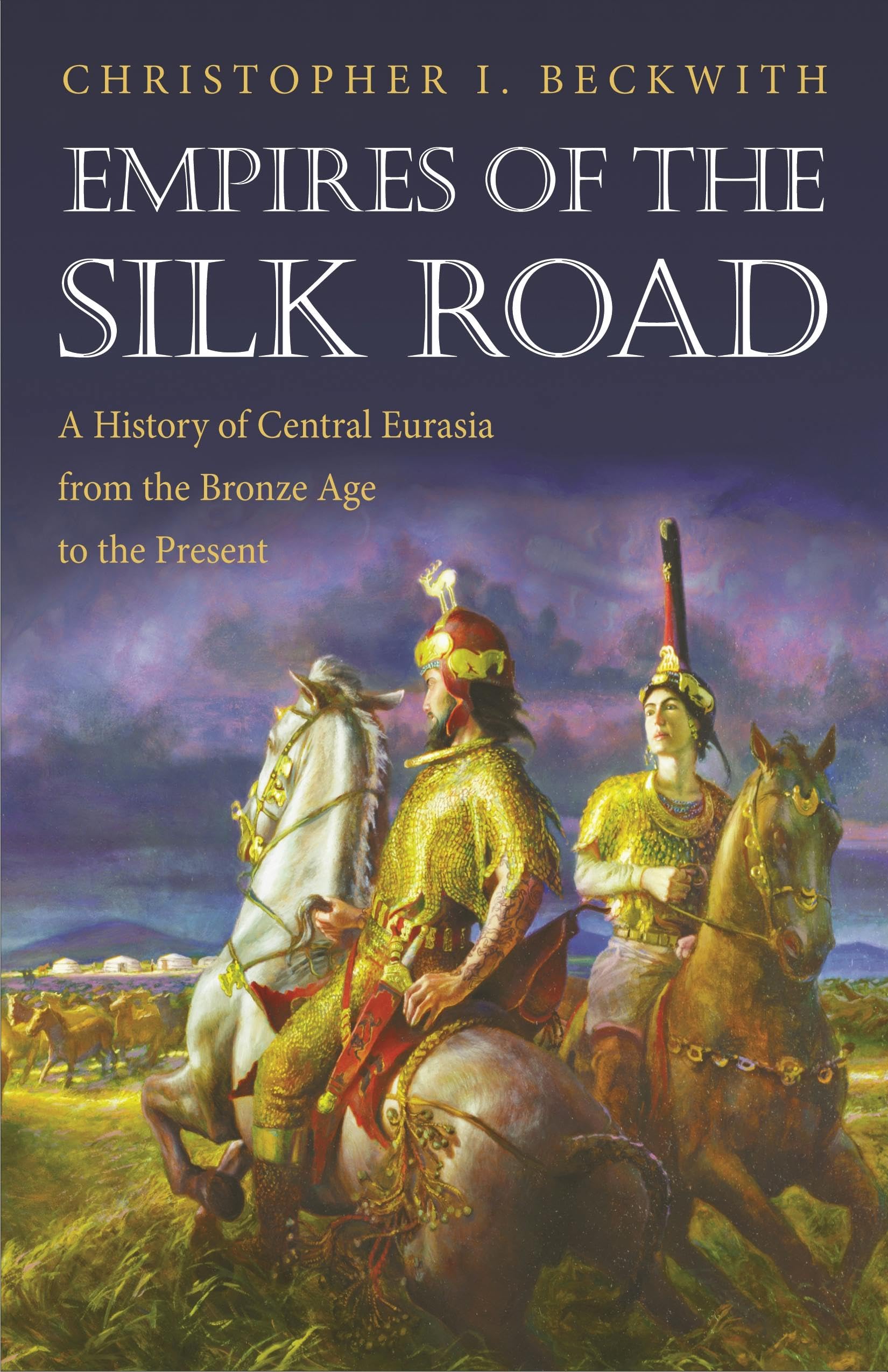
Empires of the Silk Road: A History of Central Eurasia from the Bronze Age to the Present [Beckwith, Christopher I.] on desertcart.com. *FREE* shipping on qualifying offers. Empires of the Silk Road: A History of Central Eurasia from the Bronze Age to the Present Review: Rayon or Silk, it's all good baby! - Although a tad dry and didactic in parts, Prof. Beckwith has written an excellent history on a complex system (the Silk Road and it's proto-capitalist history) and the often ignored areas (by western historians) of Central Asia and the Near East. Along the way he gets to have fun by taking many swipes at Post Structuralism/Modernism/Post Modernism. Even so-called western "Democracy" and the elites and their patsies who support it get roasted thoroughly. Prof. Beckwith exposes the circular logic of guys like Foucault and Derrida, why modern "Democracy" has led to the pauperization and even enslavement of millions of people and continues to do so even right now, and even why there are no good modern poets and people don't quote modern poets the way they used to quote, say, Shakespeare (hint: modern poets write prose, not poetry, and the lack of stucture and rhythm, which even an 8 year old can ape, is forgettable dreck). Some of his posits I don't entirely agree with (the early Trading Companies operating in the Asian Littoral were, for all intents, governmental agencies) but so what? Who but a fool agrees with everyone on everything. If you can slog through the many battles listed and the many jejeune names, this is a VERY good read. Review: Updated synthesis - recounting the history of what the author terms 'Central Eurasian [henceforth CEA] Culture Complex,' which - geographically speaking - spread from Manchuria and the Korean Peninsula (i.e., Koguryo kingdoms) in the East to as far as the Pannon Plain/Carpathian Basin in the West, and in some respects even beyond those frontiers. One of the central themes connecting diverse peoples in this diachronic-synchronic/vertical-horizontal study is the presence of the oath-sworn guard corps (Latin 'comitatus') that gradually grew in number and formed the heart of CEA nations until the adoption of world religions in the Middle Ages (p. 15 passim). Maintaining the steady flow of luxury goods so as to reward their services played no small part as the raison d'etre for commerce along the Silk Road. You can read about the war charioteer Hittites, Ashvins/Wu-sun-s, Mycaneans; the state foundation struggles regarding Scythians vs. Cimmerians, Hsiung-nu-s vs. Tokhars, Huns vs. Goths, Turks vs. Avars, Mongols vs. Jurchens; as well as about the Arab conquest in Central Asia, the Khazar kaganate, imperial Tibet, Uighurs, and sundry. By extending the analysis to maritime-based trade (littoral systems) and subsequent European (Portuguese, Dutch, British, Russian) expansion/colonization in Asia, the Orientalist scholar may have cast his net far too wide. Nowhere is this more apparent than in the last two chapters (pp. 263-319, concerning 19-20th centuries), which, as other reviewers have already noted, are way too sketchy, overly generalizing, at times propagandistic, and even off tangent. Don't ask me what importance T.S. Eliot's "The Waste Land" or Stravinsky's "The Rite of Spring" holds for CEA history. Rather, the author could have breathed a word or two, say, about the Manchu-Chinese/Tibetan conflict vis-á-vis the Gurkha-ruled Nepal, the Opium Wars, the Crimean War, the 'Great Game' b/w Russia and Britain for the control of Central (and Inner) Asia, etc. Nitpicking or not, allow me to make a slight correction at this point w/ regard to the following assertion: "[After the demise of the Sakyapa overlordship, circa 1357, w]ith the partial exception of brief interregnum periods, Tibet continued to be largely unified under the rule of one or another Mongol state down to the defeat of the Junghars by the Manchu-Chinese (p. 258 fn. 80)." This is clearly untrue. There was almost zero Mongol influence in Central Tibet (ÜTsang), let alone their central authority, during the Pakmodrupa priest-kings (1358-, nominally, 1618) and the Rinpungpa governors/castellans (roughly, 1491-1566). Under the reign of the Tsangpa rulers (1567-1642) certain Tibetan factions, mainly but not exclusively the Gelukpas, sought contact w/ various Mongol tribes in order to secure their military aid. The Mongols' role during the early stage of the Dalai lama's regime (1642-1720) was that of a hired sword to subdue internal and external opposition. The main corpus is best read simultaneously with the endnotes, of which there are 111 (pp. 385-426), that offer some real insights and marshal relevant evidences. The same is true for the epilogue entitled 'The Barbarians' (pp. 320-62), which goes a long way to dispel a host of long-held misconceptions, and the two appendices ('The Proto-Indo-Europeans and their Diaspora,' pp. 363-74; 'Ancient Central Eurasian Ethnonyms,' pp. 375-84). As a methodological tool, turning the ruling paradigm of centre-periphery inside out facilitates bringing some well-deserved 'historical justice' to this marginalized region in crucial observations, such as: + "In every recorded case when the traditional Graeco-Roman, Persian, or Chinese empires of the periphery [!] became too powerful and conquered or brought chaos to the Central Eurasian nomadic states, the result for Central Asia, at least, was economic recession. The Han Dynasty destruction of the Hsiung-nu resulted in chaos...it was several centuries before the Türk, the next nomadic people who understood the Silk Road, could restore the system...When the Chinese and Arab alliance against Tibetans and the Western Turkic empire...succeeded...the result was chaos..., bringing with it severe recession, followed by rebellions and revolutions led by Sogdians and other merchant people [740-60s CE] that affected most of the continent. Finally, when the Manchu-Chinese and Russians partitioned Central Eurasia and the Ch'ing Dynasty destroyed the Junghar Empire [1755]...the economic devastation they wrought...was so total that even at the turn of the millennium in AD 2000 the area had not recovered (pp. 257-8)." + "There was a constant drain of people escaping from China into the realms of the Eastern Steppe, where they did not hesitate to proclaim the superiority of the nomadic life-style. Similarly, many Greeks and Romans joined the Huns...where they lived better and were treated better (p. 76)." + The primary goal of fortifications along the borders of peripheral empires from China through Persia to Rome ('limes' network or the Byzantine military governorships called 'theme') was offensive in nature, "to hold territory conquered from neighbouring states and to prevent loss of population to them (p. 330)." + "[T]he vast majority of the silk possessed by the Central Eurasians in the two millennia from the early Hsiung-nu times [4-3rd c. BCE] through the Mongols down to the Manchu conquest was obtained through trade and taxation, not war or extortion (p. 23)." + Raids of steppe people were, in many cases, triggered by the breaches of treaties, or were made at the request of some peripheral power against local enemies (divide et impera), e.g., the Manchus were called upon by the Chinese Ming dynasty to crush rebellion; the Mongols' aim was to uproot their Jurchen (Chin dynasty) adversaries (p. 335); Uighur Turks (757 CE) were invited to quell the An Lu-shan revolt -- their sacking of Loyang (762) "was authorized by the financially strapped T'ang court as a reward or payment (p. 338)." For reasons unknown, the following essays by the same author of the present tome have not found their way to the bibliography (pp. 427-55): 'Tibet and the Early Medieval Florissance in Eurasia,' in: Central Asiatic Journal 21 (2), 1977: pp. 89-104; in collaboration w/ Michael Walter: 'Some Indo-European Elements in Early Tibetan Culture,' in: Tibetan Studies 7, Vol. 2: pp. 1037-54, Vienna 1997.
| Best Sellers Rank | #176,907 in Books ( See Top 100 in Books ) #18 in Central Asia History #55 in Iran History #204 in Chinese History (Books) |
| Customer Reviews | 4.3 4.3 out of 5 stars (241) |
| Dimensions | 5.5 x 1.5 x 8.5 inches |
| Edition | Reprint |
| ISBN-10 | 0691150346 |
| ISBN-13 | 978-0691150345 |
| Item Weight | 1.06 pounds |
| Language | English |
| Print length | 512 pages |
| Publication date | May 8, 2011 |
| Publisher | Princeton University Press |
K**N
Rayon or Silk, it's all good baby!
Although a tad dry and didactic in parts, Prof. Beckwith has written an excellent history on a complex system (the Silk Road and it's proto-capitalist history) and the often ignored areas (by western historians) of Central Asia and the Near East. Along the way he gets to have fun by taking many swipes at Post Structuralism/Modernism/Post Modernism. Even so-called western "Democracy" and the elites and their patsies who support it get roasted thoroughly. Prof. Beckwith exposes the circular logic of guys like Foucault and Derrida, why modern "Democracy" has led to the pauperization and even enslavement of millions of people and continues to do so even right now, and even why there are no good modern poets and people don't quote modern poets the way they used to quote, say, Shakespeare (hint: modern poets write prose, not poetry, and the lack of stucture and rhythm, which even an 8 year old can ape, is forgettable dreck). Some of his posits I don't entirely agree with (the early Trading Companies operating in the Asian Littoral were, for all intents, governmental agencies) but so what? Who but a fool agrees with everyone on everything. If you can slog through the many battles listed and the many jejeune names, this is a VERY good read.
I**E
Updated synthesis
recounting the history of what the author terms 'Central Eurasian [henceforth CEA] Culture Complex,' which - geographically speaking - spread from Manchuria and the Korean Peninsula (i.e., Koguryo kingdoms) in the East to as far as the Pannon Plain/Carpathian Basin in the West, and in some respects even beyond those frontiers. One of the central themes connecting diverse peoples in this diachronic-synchronic/vertical-horizontal study is the presence of the oath-sworn guard corps (Latin 'comitatus') that gradually grew in number and formed the heart of CEA nations until the adoption of world religions in the Middle Ages (p. 15 passim). Maintaining the steady flow of luxury goods so as to reward their services played no small part as the raison d'etre for commerce along the Silk Road. You can read about the war charioteer Hittites, Ashvins/Wu-sun-s, Mycaneans; the state foundation struggles regarding Scythians vs. Cimmerians, Hsiung-nu-s vs. Tokhars, Huns vs. Goths, Turks vs. Avars, Mongols vs. Jurchens; as well as about the Arab conquest in Central Asia, the Khazar kaganate, imperial Tibet, Uighurs, and sundry. By extending the analysis to maritime-based trade (littoral systems) and subsequent European (Portuguese, Dutch, British, Russian) expansion/colonization in Asia, the Orientalist scholar may have cast his net far too wide. Nowhere is this more apparent than in the last two chapters (pp. 263-319, concerning 19-20th centuries), which, as other reviewers have already noted, are way too sketchy, overly generalizing, at times propagandistic, and even off tangent. Don't ask me what importance T.S. Eliot's "The Waste Land" or Stravinsky's "The Rite of Spring" holds for CEA history. Rather, the author could have breathed a word or two, say, about the Manchu-Chinese/Tibetan conflict vis-á-vis the Gurkha-ruled Nepal, the Opium Wars, the Crimean War, the 'Great Game' b/w Russia and Britain for the control of Central (and Inner) Asia, etc. Nitpicking or not, allow me to make a slight correction at this point w/ regard to the following assertion: "[After the demise of the Sakyapa overlordship, circa 1357, w]ith the partial exception of brief interregnum periods, Tibet continued to be largely unified under the rule of one or another Mongol state down to the defeat of the Junghars by the Manchu-Chinese (p. 258 fn. 80)." This is clearly untrue. There was almost zero Mongol influence in Central Tibet (ÜTsang), let alone their central authority, during the Pakmodrupa priest-kings (1358-, nominally, 1618) and the Rinpungpa governors/castellans (roughly, 1491-1566). Under the reign of the Tsangpa rulers (1567-1642) certain Tibetan factions, mainly but not exclusively the Gelukpas, sought contact w/ various Mongol tribes in order to secure their military aid. The Mongols' role during the early stage of the Dalai lama's regime (1642-1720) was that of a hired sword to subdue internal and external opposition. The main corpus is best read simultaneously with the endnotes, of which there are 111 (pp. 385-426), that offer some real insights and marshal relevant evidences. The same is true for the epilogue entitled 'The Barbarians' (pp. 320-62), which goes a long way to dispel a host of long-held misconceptions, and the two appendices ('The Proto-Indo-Europeans and their Diaspora,' pp. 363-74; 'Ancient Central Eurasian Ethnonyms,' pp. 375-84). As a methodological tool, turning the ruling paradigm of centre-periphery inside out facilitates bringing some well-deserved 'historical justice' to this marginalized region in crucial observations, such as: + "In every recorded case when the traditional Graeco-Roman, Persian, or Chinese empires of the periphery [!] became too powerful and conquered or brought chaos to the Central Eurasian nomadic states, the result for Central Asia, at least, was economic recession. The Han Dynasty destruction of the Hsiung-nu resulted in chaos...it was several centuries before the Türk, the next nomadic people who understood the Silk Road, could restore the system...When the Chinese and Arab alliance against Tibetans and the Western Turkic empire...succeeded...the result was chaos..., bringing with it severe recession, followed by rebellions and revolutions led by Sogdians and other merchant people [740-60s CE] that affected most of the continent. Finally, when the Manchu-Chinese and Russians partitioned Central Eurasia and the Ch'ing Dynasty destroyed the Junghar Empire [1755]...the economic devastation they wrought...was so total that even at the turn of the millennium in AD 2000 the area had not recovered (pp. 257-8)." + "There was a constant drain of people escaping from China into the realms of the Eastern Steppe, where they did not hesitate to proclaim the superiority of the nomadic life-style. Similarly, many Greeks and Romans joined the Huns...where they lived better and were treated better (p. 76)." + The primary goal of fortifications along the borders of peripheral empires from China through Persia to Rome ('limes' network or the Byzantine military governorships called 'theme') was offensive in nature, "to hold territory conquered from neighbouring states and to prevent loss of population to them (p. 330)." + "[T]he vast majority of the silk possessed by the Central Eurasians in the two millennia from the early Hsiung-nu times [4-3rd c. BCE] through the Mongols down to the Manchu conquest was obtained through trade and taxation, not war or extortion (p. 23)." + Raids of steppe people were, in many cases, triggered by the breaches of treaties, or were made at the request of some peripheral power against local enemies (divide et impera), e.g., the Manchus were called upon by the Chinese Ming dynasty to crush rebellion; the Mongols' aim was to uproot their Jurchen (Chin dynasty) adversaries (p. 335); Uighur Turks (757 CE) were invited to quell the An Lu-shan revolt -- their sacking of Loyang (762) "was authorized by the financially strapped T'ang court as a reward or payment (p. 338)." For reasons unknown, the following essays by the same author of the present tome have not found their way to the bibliography (pp. 427-55): 'Tibet and the Early Medieval Florissance in Eurasia,' in: Central Asiatic Journal 21 (2), 1977: pp. 89-104; in collaboration w/ Michael Walter: 'Some Indo-European Elements in Early Tibetan Culture,' in: Tibetan Studies 7, Vol. 2: pp. 1037-54, Vienna 1997.
J**D
The Bookschlepper Recommends
This is the comprehensive history providing the reader with a sense of how civilizations rise and fall. The first two chapters are dense, illustrating Beckwith's analytical methods for his future recordings and conjectures. Ranging from the Danube to Japan, including Russia and into North Africa, the emphasis is on the Steppes and surrounding landscapes. Although Western historians have historically referred to the people of the Steppes as "Barbarians," Beckwith argues that (1) they were no more bloodthirsty than the Romans or other empire builders, (2) they sought trade and resorted to war only when favorable trade terms were refused, (3) they were the source of the Great Migration and, thus, most Western peoples and many Western ideals. Interesting lessons: you could tell which culture brought in specific advanced implements; their language names the machine. Chariots required a totally different design than ox carts, were available only to people who had domesticated horses, made a significant change in warfare. The Silk Road was inland-oriented and the city/states of the Eurasian areas ignored the coastal areas, leaving them ripe for development by the Portuguese and other Europeans once their naval abilities were developed. Power in these Asian countries shifted from the interior to the coast. The division of the Eurasian land mass, in the void created by the fall of the Byzantine and Tibet empires, among others, was possible in the 18th century; the stagnation and closed borders enforced by the Rus and the Chinese have driven the area into poverty, both economic and cultural. This is a thoughtfully constructed treatise, giving a comprehensive overview of a sometimes enigmatic geographical area. Beckwith's screed against Modernity, however, is repetitious and could have used a good editor. Additional maps would have been helpful.
M**K
Alldeles för dyr!!! Trodde den skulle levereras på en sidenklädde med tofsar!!!
M**M
Delivered and readable
W**Y
Grossartiges Buch über die Geschichte der Seidenstrasse. Es sind wirklich alle Völker, Herrscher, Kriege etc. aufgeführt vom Anfang bis fast heute. Unglaublich was über alle Jahrtausende in Mittelasien passiert ist, und wie wichtig dieser Erdenteil für die ganze Welt war. Für mich ein bisschen schwer verständlich war die Meinung des Autors, dass die heutige Kunst keine Kunst mehr ist.
A**A
This book concentrates on the societies based on the Pontic and eastern steppes and their movement. Wonderful read and well written for such a huge and complicated subject. Because of this book I can almost trace my own family history down one line.
G**R
海外の歴史は自国に都合の良いことばかり書いてあり、日本のそれこそが最も中立、学術的にも素晴らしい。…そう信じていたのは、私がいわゆる保守陣営の歴史書を入門編にしていたからだろう。だが本書を含めていくつか海外の本格的な歴史書を読み、その知識量や情熱、公平さに圧倒された。保守層が「海外の歴史書」と呼ぶのは、中学程度の教科書、あるいは歴史に材をとった政治プロパガンダに類する本だったのではないか。もちろん私は日本の本格的なそれを未読であるから、単純な比較ができないが 中央アジア諸国、ローマや中華に言わせれば蛮族あるいは遊牧民(しかし彼らの基盤は遊牧ではなく、ましてや都市の強奪ではなく農業と交易であることが本書の重要な指摘の一つであるが)の歴史的な役割の見直しがこのところ常識化したが、今のところ日本における通俗書を概観したところでは、例えば唐におけるソグド人の役割とか、部分的なものにとどまっていると、もちろん狭い読書体験の範囲であるが、そういう印象を持っている。この本は非常に広い空間と長時間の下で、彼らの興亡を述べており、私にとって歴史観を刷新される読書体験であった。何が起こって、それが次の何につながって、という単調な時間推移が、結局のところ多くの歴史観の根底であるが、これは横の関係が重要であることを実感できる。もちろん多くの人はそれをわかっているとは思うが、言葉の上でわかっていることを実体験させてくれるだろう。変化は知識が増えることではなく、パースペクティブの変化からくる。これはもう、実際に読んで体験していただくほかはない 以下は余談である。私の心に残った点 この少し前にヤスパースの歴史哲学を読んだところだった。その中で特筆されていたのが、よく言われる同時代的な奇跡、つまりギリシア自然哲学、インド哲学の成熟と釈迦の登場、中国の諸子百家、これに加えてユダヤ教の聖人たちの活躍、これらの空間的には交流がなかったはずの地域に、ほぼ一斉に思想的な飛躍が生じたことである。ヤスパースはこれを、人類の自然的発達のもたらした、十分にありうる偶然的現象として、おそらくはヘーゲル風の歴史観を支える材料とみなしている。 著者は源・ヨーロッパ語族がこの時期に周辺に大規模な移民を果たした結果であるとみる。彼らがそれぞれの先住民に溶け込む過程で生まれた軋轢と融和が、思想上の革新を生んだという。ただし、まだ資料は不十分であり、仮説にとどまるともいう 偶然と片付けることを良しとしないのであれば、確かにそれが最も妥当であるように思う。ちなみにそれに先立つ、殷から周への移行も、同様に西方からの移動民族が河北地方に原住する人々に溶け込んでいった結果であると説く。古代中国がいかに中央アジア的なものを含んでいるかを立証する手立ては、私の思いもよらぬ知識を使っており、手際も見事である ここは重要な分岐点だ。ヘーゲル的な、何もかもぼんやりとした一般論にして強引に説得力を持たせる最近の傾向(ポストモダンとか思弁的唯物論とか)に私は不信感をもつが、こんなところにもそんな思想的傾向を打ち破る材料があるのかもしれない。一応は、ヘーゲル、ヤスパースの線が正しい可能性もあると言っておく。研究の発展を待ちたい モンゴルが東西交流の出発点であり、ここから本当の一体化した歴史が始まったという「俗説」が明快に否定されている点も印象深い。モンゴルは中央アジアが周辺国に影響を与えた、大規模ではあるが比較的遅めの一例である。もちろん著者は名指しで岡田英弘を批判しているのではない。しかし岡田氏の大発見のごとく言われている説が、ここでは俗説として片付けられていることに、私は胸のすく思いがする この本の序で、自分はポストモダン的な歴史観に与しないとわざわざ断っているが、私はポストモダン的歴史などというものにお目にかかったことがなく、引っかかっていたのだが、読み終えてしばらく後、岡田史学こそポストモダンなのではと思ったのである。事実は知らない。しかし歴史の客観性を否定し、各個人のストーリーがあるだけとする岡田氏は、まさにポストモダンと呼ぶにふさわしいのではないか さらに余談だが、このところ妙に評判の良い岡田氏の本を数冊読んで、その底にある何とも言えぬ不誠実さ、具体的には実証論より印象を優先する態度に、私は違和感を持った。そもそも持ち上げられ方がおかしい。学説が無視され、不遇をかこつ生涯であったとされる。でも彼は一貫して大学に籍を置き、芸術院賞をもらい、生前に著作集が出るという、地味なこの分野では破格の成功者である。この祝福された学者人生を不遇というのは、余りに価値観がずれすぎていて私を何ともやりきれない気持ちにする。保守層の、こういう無神経さが嫌いだ 唐が歴史上まれにみる残虐な帝国であることは、言われてみれば当たり前なのだが、これを読むと背景込みでよくわかる。私の知識は古く、唐の文化への称賛ばかり読んできた気がする。たまに政治の暴虐を指摘する場合でも、自国民への圧政と政争の激しさ、つまり内部に向けてのことが主である。だがこの地域の大帝国の出現は、周辺諸国にとっては常に地獄であった。唐こそが、トルキスタンとチベット侵略の嚆矢である。ということは、今両国が完全に消えるとしたら中華帝国は千数百年かけて望みを遂げることになる。中国は百年単位で戦略を立てているという地政学の著書があったが、どうやらそういうことでもない。膨張主義は必然であり、戦略があるわけではなさそうだ とまあ、いろいろな空想の働く本であった
Trustpilot
1 week ago
5 days ago