We remain fully operational. Our teams are working around the clock to ensure your deliveries continue safely.

DOWNLOAD THE APP


Copyright © 2025 Desertcart Holdings Limited
DOWNLOAD THE APP
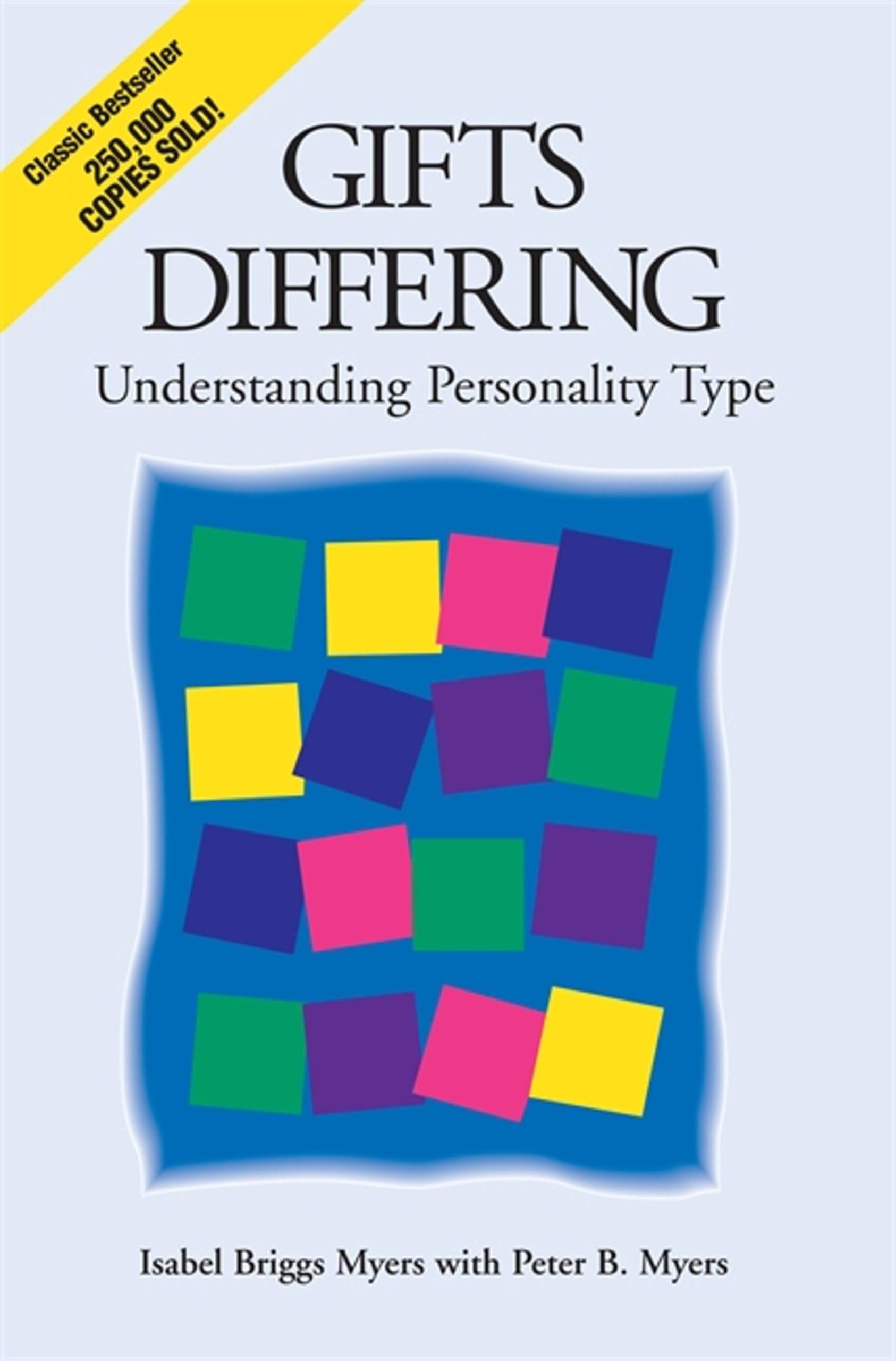
desertcart.com: Gifts Differing: Understanding Personality Type eBook : Myers, Isabel Briggs, Myers, Peter B.: Kindle Store Review: A Great Overview of the Myres-Briggs Theory - Obviously, Gifts Differing is the original and authoritative work on the Myres-Briggs Personality Type theory. The original works are not always easy to read or very comprehensive, but this book is both. The central crux of the book is that differences between people can be explained and understood and no one is "better" than anyone else. Everyone has one of 16 viewpoints that encompass how they view themselves and the external and by understanding them you can not only learn how others think, but even clarify how you think and learn your own strengths and weaknesses better. I think that most of the ideas from the book can be found online for free in various essays and such, but, IMO, the original book is far more clear, concise, and complete. I had read on Myres-Briggs for over a year before getting the book and the book provided a lot of useful insight. This would serve as a good introduction to the theory and as a good reference for anyone. The book overviews the theory by first analyzing each of the four dichotomies (I/E, N/S, T/F, P/J) and how they work with an internal or external viewpoint. They then cover each of the 16 types. That is the crux of the theory and takes up about half of the book. Coming off of that there are a few chapters that address specific details of how the personalities act in life, such as education. The material is presented concisely; the authors have specific points to make and they make them well. There are many tables that compare and contrast various personality attributes, so it's easy to consult and read on a whim. The authors compiled are a lot of statistics related to types, many (most?) of which are education oriented. However, some of their statistics have been contested and newer results exist. In specific, this book claims that the extrovert to introvert ratio in the world is about 2:1 (aka, 66% extroverted, 34% introverted). Recent results peg that closer to 50/50, maybe 55/45. The writing style and vocabulary is digestible by just about anyone -- it's formal, but doesn't have the academic style that annoys or intimidates casual readers. The content (aka, the actual MB theory) itself has a bit of complexity to it. There's a decent amount to digest, but it's not overly difficult to learn with a little diligence. But you need to pay attention to what they say, don't skim. For someone being introduced to MBTI, I would offer a bit of advice for reading this book: 1) They use their own definitions for certain words, like "intuition". When you see these kinds of words, leave your own definition at the door and accept theirs. You'll have a hard time understanding the material and you'll over-complicate matters if you don't use their vocabulary. Doing so is a standard practice to do when you need to use clear definitions repeatedly. 2) Myres-Briggs is only about preferences. They never say anything about what one is bound by nature do or what one cannot do, they only speak of what one prefers to do. It is all about preferences, and preferences lead to patterns in behavior. It is vital that you understand that. 3) They are a little blunt about strengths and weaknesses. They talk about what strengths and weaknesses are enjoyed or struggled with by various types, and the address how to use them and how to counter them (respectively). They point out common faults that people can be blind to. On that note, they're not "politically correct". They aren't anti-PC either, they just call it, gently but firmly, as they see it. Overall: The Myres-Briggs theory (regardless of this book) is a great theory and very helpful for daily life. This book does a terrific job of explaining it. Review: Good Overview of the Theory - This is the second book I read on the MBTI after Keirsey's "Please Understand Me II." Overall, I liked this one much better because it didn't completely focus on the four temperaments. The book is split into four sections: Theory, Effects of the Preferences on Personality, Practical Implications of Type, and Dynamics of Type development. The theory part is good for anyone who wants to know the theoretical grounding for the MBTI and the linkage to Jung's theories. It's definitely more geared towards people unfamiliar with the MBTI, because it more or less tries to give validity to the theories by referring to Jung, who is much more respected and well-known. The second part, Effects of the Preferences on Personality, goes through the effects of each of the preferences: E/I, S/N, T/F, and J/P. The descriptions of each of the types themselves are really nothing special; you can find them online anywhere. However, the book includes a fascinating statistical analysis on the effects of type on career choice. For example, people who study law are overwhelmingly T, while science students are overwhelming N. I personally found the descriptions of the cognitive functions themselves to be fairly good, although I have heard that Beren's books are more specialized in that topic. The third part, Practical Implications of Type, talks about the implications of type on marriage, learning styles, child development, all the while emphasizing the need for people of different types to work together to balance each other's weaknesses. Most of this information you can find on the internet nowadays, but Myers' analysis goes a little bit deeper than what you would find online. The last part, Dynamics of Type Development, really just emphasizes one important concept: healthy personal development requires the development of an auxiliary function. Most of this section shows you the negative implications for not developing a strong auxiliary. The MBTI is really not everybody's cup of tea. As someone who types ISTJ, I have always been highly skeptical that "personality tests" have any validity at all. The MBTI is really no different: there's no real empirical evidence to prove that the theoretical portions are valid. However, I cannot deny the positive impact studying these theories have had on my attitudes toward people. I would approach all these theories (MBTI, Big 5, Socionics, etc) with a healthy dose of skepticism, but I have learned that it also pays to be open-minded to the possibilities these theories offer.
| ASIN | B0047T7MQU |
| Accessibility | Learn more |
| Best Sellers Rank | #184,110 in Kindle Store ( See Top 100 in Kindle Store ) #62 in Psychology Education, Training & Supervision eBooks #66 in Psychology of Personalities #163 in Popular Psychology Personality Study |
| Customer Reviews | 4.6 4.6 out of 5 stars (1,110) |
| Edition | 2nd ed. |
| Enhanced typesetting | Enabled |
| File size | 3.8 MB |
| ISBN-13 | 978-0891063001 |
| Language | English |
| Page Flip | Enabled |
| Print length | 313 pages |
| Publication date | December 15, 2010 |
| Publisher | Nicholas Brealey |
| Screen Reader | Supported |
| Word Wise | Enabled |
| X-Ray | Not Enabled |
B**.
A Great Overview of the Myres-Briggs Theory
Obviously, Gifts Differing is the original and authoritative work on the Myres-Briggs Personality Type theory. The original works are not always easy to read or very comprehensive, but this book is both. The central crux of the book is that differences between people can be explained and understood and no one is "better" than anyone else. Everyone has one of 16 viewpoints that encompass how they view themselves and the external and by understanding them you can not only learn how others think, but even clarify how you think and learn your own strengths and weaknesses better. I think that most of the ideas from the book can be found online for free in various essays and such, but, IMO, the original book is far more clear, concise, and complete. I had read on Myres-Briggs for over a year before getting the book and the book provided a lot of useful insight. This would serve as a good introduction to the theory and as a good reference for anyone. The book overviews the theory by first analyzing each of the four dichotomies (I/E, N/S, T/F, P/J) and how they work with an internal or external viewpoint. They then cover each of the 16 types. That is the crux of the theory and takes up about half of the book. Coming off of that there are a few chapters that address specific details of how the personalities act in life, such as education. The material is presented concisely; the authors have specific points to make and they make them well. There are many tables that compare and contrast various personality attributes, so it's easy to consult and read on a whim. The authors compiled are a lot of statistics related to types, many (most?) of which are education oriented. However, some of their statistics have been contested and newer results exist. In specific, this book claims that the extrovert to introvert ratio in the world is about 2:1 (aka, 66% extroverted, 34% introverted). Recent results peg that closer to 50/50, maybe 55/45. The writing style and vocabulary is digestible by just about anyone -- it's formal, but doesn't have the academic style that annoys or intimidates casual readers. The content (aka, the actual MB theory) itself has a bit of complexity to it. There's a decent amount to digest, but it's not overly difficult to learn with a little diligence. But you need to pay attention to what they say, don't skim. For someone being introduced to MBTI, I would offer a bit of advice for reading this book: 1) They use their own definitions for certain words, like "intuition". When you see these kinds of words, leave your own definition at the door and accept theirs. You'll have a hard time understanding the material and you'll over-complicate matters if you don't use their vocabulary. Doing so is a standard practice to do when you need to use clear definitions repeatedly. 2) Myres-Briggs is only about preferences. They never say anything about what one is bound by nature do or what one cannot do, they only speak of what one prefers to do. It is all about preferences, and preferences lead to patterns in behavior. It is vital that you understand that. 3) They are a little blunt about strengths and weaknesses. They talk about what strengths and weaknesses are enjoyed or struggled with by various types, and the address how to use them and how to counter them (respectively). They point out common faults that people can be blind to. On that note, they're not "politically correct". They aren't anti-PC either, they just call it, gently but firmly, as they see it. Overall: The Myres-Briggs theory (regardless of this book) is a great theory and very helpful for daily life. This book does a terrific job of explaining it.
D**I
Good Overview of the Theory
This is the second book I read on the MBTI after Keirsey's "Please Understand Me II." Overall, I liked this one much better because it didn't completely focus on the four temperaments. The book is split into four sections: Theory, Effects of the Preferences on Personality, Practical Implications of Type, and Dynamics of Type development. The theory part is good for anyone who wants to know the theoretical grounding for the MBTI and the linkage to Jung's theories. It's definitely more geared towards people unfamiliar with the MBTI, because it more or less tries to give validity to the theories by referring to Jung, who is much more respected and well-known. The second part, Effects of the Preferences on Personality, goes through the effects of each of the preferences: E/I, S/N, T/F, and J/P. The descriptions of each of the types themselves are really nothing special; you can find them online anywhere. However, the book includes a fascinating statistical analysis on the effects of type on career choice. For example, people who study law are overwhelmingly T, while science students are overwhelming N. I personally found the descriptions of the cognitive functions themselves to be fairly good, although I have heard that Beren's books are more specialized in that topic. The third part, Practical Implications of Type, talks about the implications of type on marriage, learning styles, child development, all the while emphasizing the need for people of different types to work together to balance each other's weaknesses. Most of this information you can find on the internet nowadays, but Myers' analysis goes a little bit deeper than what you would find online. The last part, Dynamics of Type Development, really just emphasizes one important concept: healthy personal development requires the development of an auxiliary function. Most of this section shows you the negative implications for not developing a strong auxiliary. The MBTI is really not everybody's cup of tea. As someone who types ISTJ, I have always been highly skeptical that "personality tests" have any validity at all. The MBTI is really no different: there's no real empirical evidence to prove that the theoretical portions are valid. However, I cannot deny the positive impact studying these theories have had on my attitudes toward people. I would approach all these theories (MBTI, Big 5, Socionics, etc) with a healthy dose of skepticism, but I have learned that it also pays to be open-minded to the possibilities these theories offer.
L**A
Genial y en buen estado
M**I
Sehr gutes Buch für MBTI interessierte Menschen, die sich schon auskennen, aber noch mehr lernen wollen. Und auch für welche, die sich das Konzept erstmal anschauen wollen.
A**R
In mijn pakket : product zoals omschreven. Nog niet gelezen.
A**A
O tipo de livro para quem gosta de Jung e é intuitivo, sobre o próximo passo na tipologia Junguiana.
M**L
Bel libro, ho imparato tanto! E' in inglese ma ne vale la pena :)
Trustpilot
3 weeks ago
3 days ago