
DOWNLOAD THE APP


Customer Services
Copyright © 2025 Desertcart Holdings Limited
DOWNLOAD THE APP

🌟 Discover the Unseen: A Journey Beyond the Ordinary!
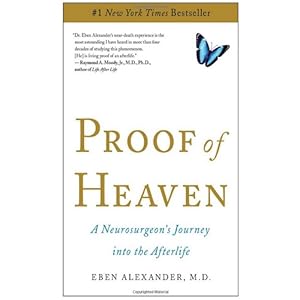
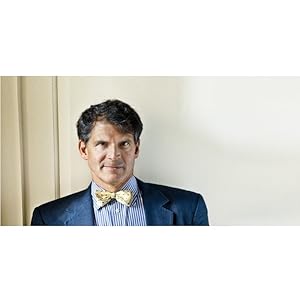
Proof of Heaven is a groundbreaking memoir by neurosurgeon Dr. Eben Alexander, detailing his near-death experience and the profound insights he gained about consciousness, spirituality, and the afterlife. This compelling narrative invites readers to explore the intersection of science and the metaphysical, challenging traditional views on life and death.
| Best Sellers Rank | #2,932 in Books ( See Top 100 in Books ) #2 in Near-Death Experiences (Books) #4 in Reincarnation (Books) #6 in Christian Eschatology (Books) |
| Customer Reviews | 4.4 4.4 out of 5 stars (25,190) |
| Dimensions | 5.5 x 0.64 x 8.38 inches |
| Edition | 1st |
| ISBN-10 | 1451695195 |
| ISBN-13 | 978-1451695199 |
| Item Weight | 2.31 pounds |
| Language | English |
| Print length | 196 pages |
| Publication date | October 23, 2012 |
| Publisher | Simon & Schuster |
B**N
Great Book, lots of questions
Great book - but lots of questions! If true, this is perhaps the most astounding, important, enlightening and uplifting story ever told. It complements, supplements and/or trumps all spiritual revelations and materialist musings up to this point in human history. If people think about this correctly (and I have little hope that the majority will), and if it can be confirmed, we would all come together and live happily ever after; this is the stuff of fairy tale; in the good sense. Is it real? Certainly for all intents and purposes, Dr. Alexander is highly credible. So either: 1) it is true, or 2) he is somehow misinterpreting a really strange hallucination caused by brain damage as reality or 3) he is making it all up. Personally I discount this last option. Is it possible that this was a strange hallucination caused by brain damage? Dr. Alexander is sure that it is not. The fact that he received validation with the photo of his sister at the end is really stunning! But I suppose it is possible that his mind (or brain) may have been playing tricks on him. A critical question for me is whether or not this journey actually did occur when his neo-cortex was non-functional as he says as oppose to being in a degraded state. He says he has time anchors which demonstrate that the majority of the really sublime experience did in fact occur when his neo-cortex was non-functional. If this journey really did occur when his neo-cortex was non-functional, then clearly, it would seem, consciousness is not reducible to material causation as materialism requires. However, even if there is some doubt about when the most exquisite elements of his journey occurred, the following very difficult question remains for those who adopt a materialist line of thinking: How can it be imagined that such advanced concepts discloses in the book which rang very true to me (there are more that are difficult to articulate) could be evoked out of a severely compromised brain? If this is real then virtually everything that nearly all the scientists in all the universities of all the world have been saying for decades about evolution, the brain and mind is spectacularly wrong! If there is a conscious mind apart from the brain then it must have been bestowed by some pre-existent intelligent entity--probably some divine entity. But materialist scientists are not going to like the idea that they themselves and the scientific paradigm itself could be regarded as fallible any more than the authority of the leaders of the church was challenged a few centuries ago. If this story gets traction, materialist scientists are going to wage war on Dr. Alexander. A few thoughts about the phenomenon of consciousness related to Dr. Alexander's experience. I have never understood how intelligent people--including Dr. Alexander until his NDE--could dismiss consciousness as a phenomenon of the physical brain. I have never accepted that for a wide variety of reason only one of which I will mention: If human consciousness were reducible to physical phenomenon then what accounts for the immutability of one's sense of self? How can it be imagined that, in Dr. Alexander's case, after the brain damage he incurred and once his neo-cortex was restored (miraculously), that his sense of self--that he is the same Eben Alexander he was before--be perfectly reconstituted? How can a physical algorithm--organic computer--account for that especially in light of the fact that his brain structure must have undergone catastrophic change? Personhood--self, identity whatever you want to call it--is constant despite radical changes in the underlying physical structure. In fact, how can trillions of firing neurons account for consciousness at all? When the best explanation offered by materialist to explain consciousness--the most real thing about us--is that it is an illusion, you know they are really grasping at straws. I am anxious to read more about Dr. Alexander's experience. He has written 20,000 words about it.
T**Y
A splendid, compelling book!
This is a splendid and important book. Its author is a long-practicing neurosurgeon who is a former faculty member of the Harvard Medical School. A few years ago, he suffered an e-coli infection that developed into meningitis, attacking his brain, leaving him comatose—without consciousness or a functioning brain—for a week, and quite nearly killing him. Against great odds (100 to 1 or worse in his view), he has recovered completely, and written this book. The book concerns his illness, the reality he quite vividly and consciously experienced while nearly brain dead, and conclusions he has reached concerning God and reality based on his experiences. Before his illness, the author practiced as an academically inclined neurosurgeon. He considered himself a scientist as well as a practicing physician, and his views about reality and God reflected his training and his career. He saw reality as consisting of things that could be perceived with the senses, either directly or indirectly using machines and instruments. In his view, reality began and ended with the physical world and the observed physical reality of our galaxy and the greater universe. Notably he did not see consciousness as existing independently from this physical reality—instead, it was an artifact of physical brain structure and brain chemistry. Although I don’t believe that he expressly stated that he believed God did not exist, it is pretty clear that he didn’t view God as being a part of this observable physical reality, and the book seems to indicate that, regardless of his belief in God, matters spiritual and religious did not play a big part in his life nor attract much of his attention. During his illness, and while his brain (at least the higher level parts responsible for consciousness, congition, personality, memory, etc.) was completely non-functional, he experienced a new reality of great beauty, wonder and peace, the most vivid aspect of which he describes as being pervasive, unconditional love. When he recovered consciousness and in the months following his recovery, he sought to apply his scientific training and experience to understanding what he experienced. He has concluded that consciousness exists independently of the physical brain and that, freed from limitations resulting from our limited sensory abilities (seeing, hearing, touching, etc.) and from the limited processing power of the human brain, his consciousness was able to perceive a much greater, multidimensional reality—the heaven of the book’s title. Though he is obviously a bit frustrated by limitations on the concepts we can express using human language (after all, a language that, while quite useful and apt in dealing with the limited reality of our physical world, was not developed for use in connection with the greater reality he experienced nor for expressing his expanded perceptions of that reality) his book does a very good job describing that reality. His writing also reflects a certain intellectual rigor and scientific analysis, and I am compelled to give greater weight and credence to his descriptions and conclusions in view of his scientific approach as well as the relative unimportance of the spiritual component of his life before he developed meningitis. This book will be food for thought for me for a long time. I recommend it without reservation. Tom Hurley
M**N
Interesting Perspective
While I have to disagree with the title Proof of Heaven that this book was actually not proof of heaven, I found the premise and the experience shared in this book quite fascinating. Dr. Alexander talks about his experiences while in a coma from a serious bacterial meningitis attack that is quite rare and shuts down the neo-cortex of the brain, the part that makes us, basically, human, and puts him in a coma he was not expected to live through or return from. He shares his vivid memories of experiences he had in a place outside of this realm of existence, memories of acceptance, love, inclusiveness, connectedness, peace, calm and so many good things. The main point that of love, unconditional and overwhelming, in a way that isn't even able to be expressed on this world. Dr. Alexander considers this absolute proof of God and Heaven, where I see it as proof that there is something after this life, but not necessarily the religious versions of God and Heaven as we have been told in the Bible or through other religious upbringings. I find the concept of unconditional love fascinating, and somewhat comforting, and I definitely like the perspective of life of some sort, existence and consciousness of some sort, after this body fades away, especially now that I have been diagnosed with a terminal illness, and thinking about death and dying is something that has come to my mind sooner than it would for most people. I enjoyed his personal stories about his journey. I appreciated his honesty about how he was not really a believer prior to this experience, that he was a staunch man of science, to a point, and how this changed that. I like the way he now weaves these two things--the science and the faith--together to be a better doctor and a better person. I like that he provides other resources and information for the reader to read, to consider, and to decide for themselves what they think happened. I went to many of his other resources and read them and even saw him in some video where he was interviewed about his experiences. It's all very compelling... and again, somewhat comforting, especially to me. See, I have a terminal illness, and I know my death is more imminent than I had original expected it to be... life and death, this life and the afterlife, have both been big on my mind. This book did provide me some comfort, some feeling that there might be something else out there beyond this. I think I needed that. At the same time, there was some compelling stories that tied some things in his life together in a way that seems only able to happen outside of this realm. You'll have to read his story to learn more about it. If you're interested, but not sure about buying the book, look him up online and read some of the places where he talks about near death experiences with others who have had them too. Fascinating stuff, and it might help you make up your mind if this is something you want to consider buying or not. I consider it money well spent, if for nothing but the fascination factor. If you're not a believer, this book might make you think about an afterlife differently. If you are a believer, I think this book can really reenforce your faith. If you're a skeptic, you might still find this book fascinating in what it shares about how to live your life now. I think it's well worth considering and picking this one up to read, and he tells the story in a compelling way. There is enough technical and medical/scientific information to make you feel informed, but not so much it's bogged down. And there is enough personal anecdote and experience to feel you're reading a story too. Good balance.
J**N
We are not our bodies
If you Google Dr. Eben Alexander III you find that he has credentials pages long as a respected neurosurgeon and medical academic. He, like many of us technically trained folks, found it hard to truly believe religious concepts like prayer to a God, spiritual entities, and life after death. However, also like some of us, life dealt him a blow which resulted in a life changing spiritual experience. I read this book eagerly searching for similarities with my own encounter years ago, which turned me from a confirmed agnostic to a serious believer. Dr. Alexander's experience was much more severe and extensive than my own, but had enough similarities that I have probably have less trouble than some in believing that his story is true. The initiator of his encounter was a severe case of bacterial meningitis, an often fatal disease which damaged the outer cortex of his brain, putting him in a coma for seven days. His body became unresponsive, requiring a ventilator to keep it alive, but according to his later account, his consciousness or spirit remained active, and was taken out of the body through what the religious would call the heavenly realm. The journey seemed to include three levels that he later named as follows: 1.The underworld, a transparent mud-like space through which he rose until he encountered: 2. the Gateway, an entry to a land that looked like a more beautiful version of the World. He sailed above this land accompanied by a beautiful young woman (later found to be a deceased sister whom he had never met), finally approaching 3. The Core, "an immense void, infinite in size, pitch black but also brimming over with light" (I quote this because it did not make sense to me - apparently our linear brains cannot comprehend something being two things at once). In this place he was accompanied by an "orb" which interpreted the messages to his consciousness from the Creator, who seemed to completely surround this space. He felt as though he were in a "giant cosmic womb". He learned many things there. Some he could not explain in human language, such as the meaning of science's newly discovered "dark energy" and "dark mass". Three important messages he could explain were received shortly after he arrived: 1. "You are loved and cherished." 2. "You have nothing to fear." 3."There is nothing you can do wrong." He was told there are many universes. Evil is present in small amounts in all of them to allow the possibility of making the free will choices necessary for progression of the species, but love is overwhelmingly dominant. From the higher worlds one could access the lesser worlds at any time or place. To me, this all sounded like a combination of religious beliefs and science speculation. Yet, it did seem possible. Dr. Alexander suddenly woke up from his coma and after a long convalescence, regained his full mental facilities and began to write down his experiences. As a brain specialist and scientist he realized as much as anyone how farfetched it all sounded. He subsequently reviewed the physiology carefully, investigating nine possible physical explanations for the phenomenon he experienced. All had to be rejected, leaving his only conclusion that a person's consciousness exists outside the body in the heavenly realms and resides only temporarily in the body during its short period on earth. Dr. Alexander believes that this happened to him for a reason and that he is called to bring his experience to the attention of his fellow humans. Crazy as my summary might sound; this is not a crazy person. His book is well written, fascinating to read, and it certainly expanded my thinking about that part of life which is death. One final comment: I doubt if "Proof of Heaven" was Dr. Alexander's original title; it looks more like a publisher's idea. As a scientist, Dr. Alexander knows that this book is not a proof of heaven, it is only one more piece of evidence that life may be more than just a body.
R**E
Greatly Shortens the Leap of Faith
Proof of Heaven by Eben Alexander, which is now 26 weeks on the NYT best seller list, is an autobiographical account of the near death experience (NDE) of a 60 year old neurosurgeon who taught at Harvard for 15 years and achieved high success in many professional publications, over 200 conference talks, and in surgical practice. A dedicated scientist who heard several NDEs from his patients during his long practice, he assumed that these experiences were mere symptoms of the dead or near dead brain. He contracted an extremely rare (1 in 10 million) bacterial meningitis which put him in a (Biblically suggestive) 7 day coma with a completely "dead" neocortex, which is the large part of the brain responsible for all conscious experience and much more. All previous cases lasting half as long as his affliction resulted either in death or a permanent vegetative state. Leaving aside for the moment the momentous question of whether his astonishing NDE was a mere biological symptom, the book is gripping as (1) a medical documentary and (2) an odyssey. Just as it's fun to read The Odyssey, The Aeneid, Dante's Inferno, and Milton's Paradise Lost (Eben's experience has striking parallels with Paradise Lost especially), Eben's book is worth reading as one of the greatest visionary stories of all time. His NDE was similar to most others, but amplified by the putative total flat-line of his neocortex. Unlike other NDE's, he had no memory of who he was during his visions, presumably because of his completely disabled neocortex. His consciousness was literally selfless and pure and went further and more vividly into a transcendent state of knowledge than all other documented NDEs. His experience of the divine is surely one of the most compelling ever narrated. He points out that prior to his NDE he was not really a skeptic of NDEs, for true skeptics at least read about what they are skeptical of, and prior to writing down his visions, he never read anything on the topic, for his scientific mindset was firmly entrenched and cursorily explained NDEs. Dedicated skeptics of this book have one major and one minor criticism in their favor. The major criticism is that he does not address a rebuttal by one neurosurgeon reviewer: that his visions could have occurred when his brain was reviving from the coma. The minor point, which I arrived at, is that, though he apparently achieved a miraculous, indeed the only, case of complete mental recovery, perhaps he does not admit that the 2 months recovery time he claimed was needed to regain all of his medical knowledge was in fact never complete, and he realized he must earn money in another way. After getting to know this person through the book and interviews, one would have to be an awfully enthusiastic conspiracy theorist to believe the minor criticism. Eben's appendix about the medical science that could explain his visions mitigates the major criticism but does not invalidate it. Faith always requires a leap from evidence. All evidence of the divine is circumstantial at best. (I'm haunted by the consistency with which the best of such evidence remains so precisely circumstantial). My broad reading in quantum physics, in the empirically established prescience in predator-prey and other animal interactions, and in the few well-documented paranormal events, leaves my scientific mind disposed to believe that Eben's NDE was indeed an encounter with a dimension of our universe that abuts the one us mortals experience, and that after death we will go to that dimension. In a clash of titans, Einstein debated Neils Bohr for several years over the implications of established facts that had already proven the validity of quantum mechanics. As one physicist framed this debate, "Upon its outcome rested the entire enterprise of science, and its triumph over superstition, religion, and magic." Over years, in papers and at preeminent conferences, the debate swung one way and the other, with apparent victories undermined by a subsequent argument. In the end, Einstein, pale and shaking, conceded victory to Bohr. Since that monumental defeat of "the last great classical physicist," science has reclaimed some of the battlefield it lost that day. But it did so at the expense of accepting proven postulates, like Bell's Theorem and the role of the observer, that, when actually read and understood as much as laymen can, are just as incredible as the claims that NDEs are visits to another dimension of the universe. Accepting those proven postulates--and not to accept them is to dismiss science--opens doors to accepting NDEs as proof of other dimensions of consciousness that await the expiration of our short little lives here. After reading this book, one has the option of assigning a probability that NDEs are visits to another dimension of the universe. Until now, this is what I've done with NDEs and several post-quantum cosmogonies. But the impact of this book on me was to force a decision 100% one way or the other. I chose to believe that Eben's NDE was a visit to the afterlife. I always remain open to new information that could change my mind, but for now I'm all in. Once all in, the implications are vast and deep in how one responds to life--life including death--and for me that journey has just begun. ~Rob Laporte Greenfield, MA
R**B
Review of Proof of Heaven by Eden Alexander III, M.D.
Proof of Heaven was both interesting and surprisingly suspenseful; I always looked forward to picking it up and continuing my reading. The author is an impeccably educated and highly respected neurosurgeon who had been adopted and followed in the professional footsteps of his adoptive father; had been an experienced shy diver in college; married and had children; longed to meet his birth family and finally did; somehow contracted a very rare bacterial meningitis; and while moving toward death in a coma, claims to have gone to heaven where he met God, an angel, and had other unquestionably (for him) heavenly experiences that he lived to share with others, asserting that collectively they represent "the single most real experience of my life." A fascinating and gripping story!--but that said, it's time to take a close look at the author's claim, namely, that there is "Heaven" after death, or more generically, that consciousness survives death. I think it not unreasonable--indeed, fundamental--to require of someone who insists his or her experience proves consciousness survives bodily death both to have died and subsequently to have returned to life sometime prior to making such an assertion. Any claim to have experienced death and to know what occurs after it without having first died would seem absurd on its very face. Indeed, initially Alexander claims to have died: "My experience showed me that the death of the body and the brain are not the end of consciousness, that human experience continues beyond the grave." (I think it premature to claim having experienced "death of the body" if one's respiratory, circulatory, and digestive systems are functioning, and only the nervous system is damaged--however severely.) So, I could only shake my head in wonderment when he claimed later not to have died but to have had a NEAR death experience (NDE). Throughout, he refers to his experience as an NDE and compares the experiences of other NDE survivors to his own, noting--until nearly the end of his book--that his NDE was similar to those recounted by other NDE survivors save their meeting deceased relatives and reviewing their life's good and bad actions: "I experienced none of these events, and taken all together they demonstrate the single most unusual aspect of my NDE." Then, in a patently self-contradictory statement, he writes, "At the risk of oversimplifying, I was allowed to die harder, and travel deeper, than almost all NDE subjects before me." With a sentence like that, I don't think he need worry about oversimplifying. So, we have an author claiming to know what happens to consciousness after death based on his own experience of death even though he repeatedly admits that he had not died at any time prior to his claim. For me, this turns his assertion of having entered the foyer of heavenly life into evidence that, at most, he had arrived only at the derriere of his earthly life. My second quandary is the medium responsible for his right to claim he was in heaven, namely, sensing and feeling: While in what he calls the "Realm of the Earthworm's-Eye View," he notes, "...gradually this sense of deep, timeless, boundaryless immersion gave way to something else: a feeling like I wasn't really part of this subterranean world at all, but trapped in it." A little further down, he writes, "I heard an occasional dull roar," and, "the movement round me became less visual and more tactile...," and, "then I became aware of a smell." Later, after he had passed through the portal of heaven, he was told something by an angel, and her "message flooded me with a vast and crazy sensation of relief." When he's in the Core (of heaven), he writes, "Seeing and hearing were not separate in this place where I now was. I could hear the visual beauty of the silvery bodies of those scintillating beings above, and I could see [sic] the surging, joyful perfection of what they sang." It's curious to me that sensation, however modified his seeing and hearing were in heaven, were, nonetheless, one of his modes of knowing. This would make earthly hearing and seeing weak analogues of their heavenly counterparts, but more remarkably, not only our consciousness survives death, but also our senses! This implies that the material organs of sight and hearing are not essential to these capabilities. We do know that we can hear music in our mind that we are not hearing with our ears and see things in our mind that are not present to our eyes under two conditions: we're dreaming, or we've consciously induced them. But Alexander insists he is not dreaming and others are generating the sounds, sights, and smells. Although his claim fits his theory of post-death consciousness, he never died, and for those of us who are still pre-dead, a dreaming or inducing explanation is simpler and less fantastical. Also, we do know that physical eyes and ears are essential to earthly seeing and hearing under either of the main concepts of the body-mind relationship: that we are a mind (soul, spirit) trapped in a body and finally freed of it upon death, or we exist as an inseparable body-mind unity. Under the first condition, there would have to be some plausible theory to explain how the soul retains senses once it's left the body. Under the second condition, body and soul exist only as an integrated entity, at death extinguishing together. A related problem, advanced by his description of consciousness after death, is duality--or, if you will, the multiplicity of separately distinguishable beings/things/experiences in the post-death realm. Alexander's heaven eliminates the ego but retains distinct beings outside himself (for example, he doesn't claim to be God or the angle). Okay, maybe he wants to suggest that none of these separate and distinct beings have an ego, but something has to account for his recognizing that they (perceivable beings, music, smells, visuals of various kinds) are real and are not just his projections. Maybe they exist like thoughts, perceptibly existing immaterial objects. The only problem with this is that we conjure our thoughts, and subconscious mechanisms conjure our dreams. I'm sure Alexander is not suggesting that his heaven is populated by conjured images--and he insists they're not dreams--but I don't see how he can escape the conundrum. Celestial existence for Alexander often seems conceptually similar to earthly experience, differing primarily in quality and seeming often little more than exquisite extensions of ordinary life. He does write, "The blurring of the boundary between my awareness and the realm around me went so far at times that I became the entire universe." What is surprising about this statement is the "at times." At one point in my life, I was an intermittent TMer. After several years of erratic adherence to my meditation practice, I routinely experienced extended periods non-dualistic absorption into a unitary bliss, timelessness, spacelessness, even occasional out-of-body consciousness. Thus, "at times" I had earthly experiences that were not dissimilar to what he describes as a peak heavenly experience--and I didn't have to die to experience them, making me wonder just how other-worldly they are. Alexander states that "up there" there's no emotional distinction between "inside" and "outside" because changes of "mood" experienced there are so vast as to include and affect both the mood feeler and his or her surroundings simultaneously. Commenting further on emotions, he writes, "All the human emotions are present [in heaven]...." Does he really want to assert that greed, avarice, lust, hate, and other such emotions reside with love in God's paradise? This completely contradicts other statements about the heavenly environment. He does mention evil, as necessary for there to be free will, which is required "for us to become what God longer for us to be." However, he does not raise the issue of moral behavior as a prerequisite for heaven or as even affecting one's access to or enjoyment of heaven. Should I ever enter Alexander's rapture, I hope not to attend a dance and see Mother Theresa grinding with Adolph Hitler. But maybe I will, given that "in the larger picture love was overwhelmingly dominant, and it would ultimately be triumphant" over evil. Finally, the author's recitation of numerous failed attempts to explain his mental states while in a coma go only so far as demonstrating that extremely rare phenomena are less susceptible to explanation than are common ones. I hardly think that such a recognition would startle anyone. So, at best, I see Proof of Heaven as an engaging addition to NDE literature and at worst, an unsupported, indeed self-contradictory and sloppily analyzed, claim to a reality that fails to meet even the most obvious precondition: One has actually to die, not just come close to it, before earning the right to assert the post-death condition of consciousness. Of course, my concern about basing a belief in an afterlife on Alexander's experience while in a coma is irrelevant to whether or not there is an afterlife. I just don't think Proof of Heaven gets us any closer to proving it than we were with former NDE accounts. He may have been "allowed to die harder" than previous NDEers, but like them, he didn't die. I think he should have remained more the scientist upon coming out of his coma and considered his experience as evidence of what the brain may still do after the cranial cortex is compromised. Rather than counting on eternal consciousness, I think we should work on coming to terms with death's being the close of our one and only, randomly engendered, and unrepeatable existence. If we awake to having been mistaken and find ourselves in another dimension, nothing will be lost. If we don't awaken in paradise, we will not grieve it. In the meantime, we won't violate the knowable and will experience how precious, fleeting, and irreplaceable life is--ours and that of all other beings. It might be easier to have compassion for one another, if we don't presume that upon death we're whisked off to "a better place" where we'll all be reunited in bliss.
P**R
very good read
I’m not a religious person so I read this book as a way to challenge my disbelief. It is a beautiful and well written description of a fascinating experience. I’m a scientist so this book being written by a neurosurgeon gave it a perspective that I personally needed for the words to hold my attention. While I won’t say it’s changed my mind, the book certainly made me think and got me interested in reading more on the subject. One big question, however, that wasn’t discussed was whether the author believes any single religion is closer to the truth than another and if so which one.
A**L
Explanations of Consciousness
Dr. Alexander writes about his personal near death experience (NDE), which was unique in its causes and somewhat different than most reported NDEs. His insights are deeply personal, and the doctor stresses the impossibility of using language to describe what happened to him - or at least his remembrance of it - but he determined that the experience was valid and had a purpose. The purpose was to allow him to expose the fact that consciousness survives the death of the body. Like many other NDEs reported his is both unique and common. Much like the survivors of the Titanic, each has their own special story but all of the stories swing around the common theme of shipwreck. Evidence of the doctors experience actually comes from a source not mentioned by him. As he detailed in the book, his near death was the result of a specialized bacteriological agent that, if it was loosed upon humanity, could destroy at least half the people on earth in a year. And while he talks for awhile about this bacteria and what it could do, it is actually a minor part of his story. There is the key. As a rock solid scientists and medical man, in other circumstances his ENTIRE focus would be on that potentially mass killing agent and not on his personal experience. But in this instance his entire focus is on his remembered incident. This focus is unusual in the extreme for a person with the author's background. This should tell the reader that Dr. Alexander is absolutely sincere and deeply believes that what he saw, heard, felt, and otherwise went through was absolutely real. The author does not spend any time on philosophy or trying to explain the conundrum of life. Descartes' "ghost in the machine" doesn't concern him. He tells us that consciousness is nothing like any philosopher has told us or could ever tell us. What the doctor has said is life and consciousness are so vast and mysterious that they cannot be explained in language or comprehended by our earthly minds. Deeply within creation is what he sometimes terms a creator, but he stresses that our minds cannot grasp what this reality is or means. With this he moves far beyond human experience as a foundation for truth. He clearly denotes that our minds cannot find or determine truth and could not comprehend it if we did find it - at least through observation and measurement. What he describes is beyond measurement and science. While the doctor does not say it, his ideas mean that all our philosophy and science will not attain the ultimate goal of understanding existence because we are not capable of such understanding. His result is neither rational or irrational, it is beyond any kind of rationality. In the final boiled down explanation he tells us love is the key to the universe and that we can, through meditation and other semi-spiritual means, move closer to that truth. This idea is not new, and in fact reaches back thousands of years to the very beginnings of humanity. Thus, the doctor offers little that is new outside of his individual experience. The book is easy to read and understand and gives the reader a good insight into the doctor's mind. Dr. Alexander is a brilliant man and has a mind honed to a fine edge by his education and insights. Well worth the time to read. His list of other reading sources on NDE is excellent. AD2
Trustpilot
3 days ago
3 weeks ago