
DOWNLOAD THE APP


Customer Services
Copyright © 2025 Desertcart Holdings Limited
DOWNLOAD THE APP


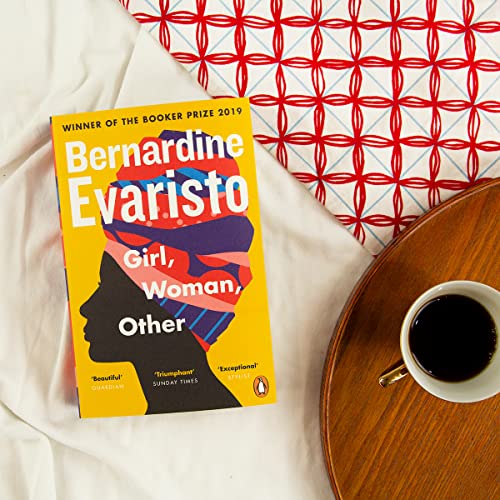
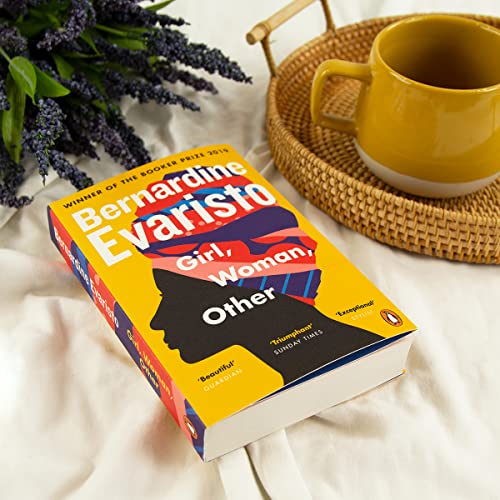
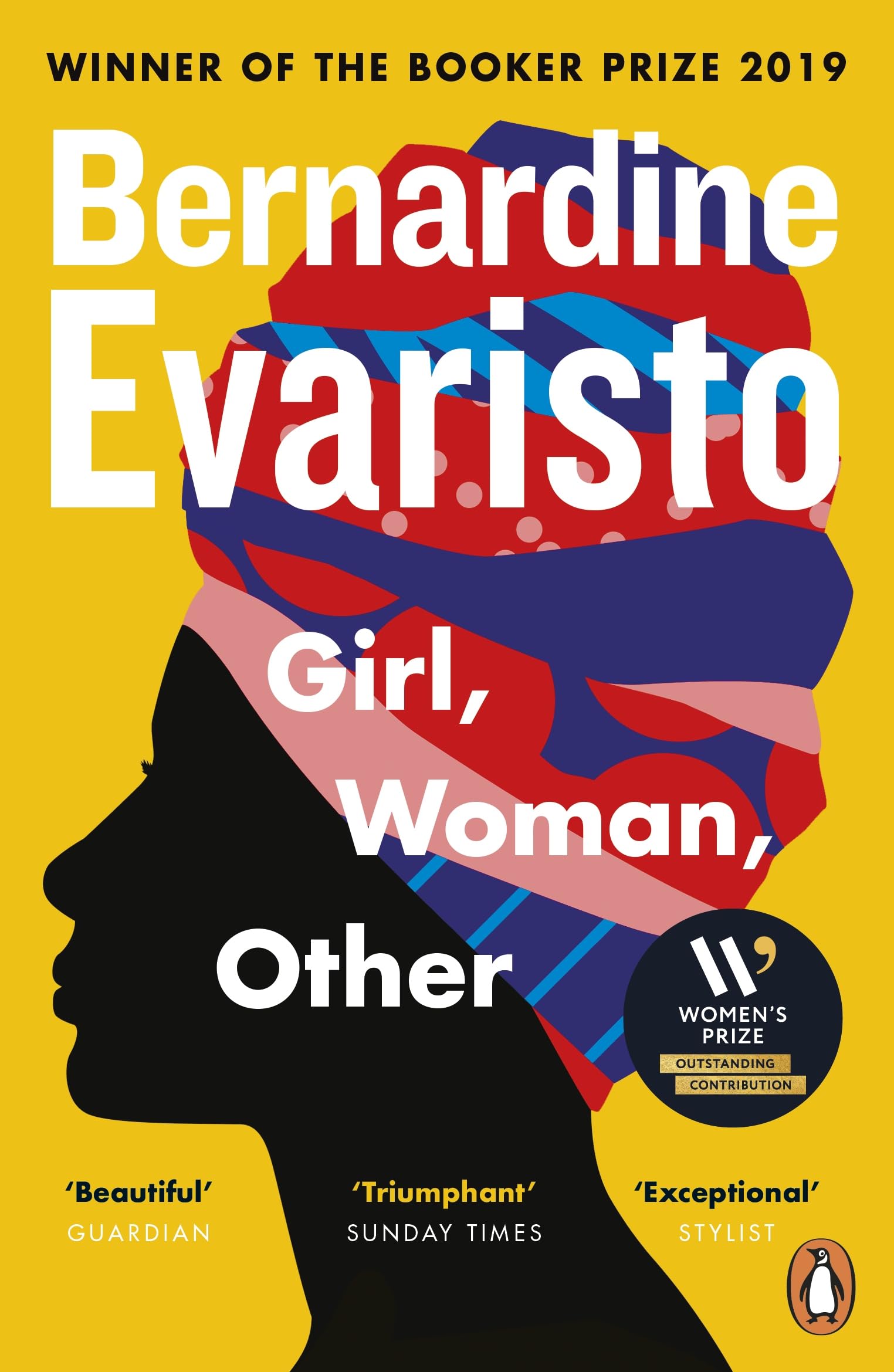
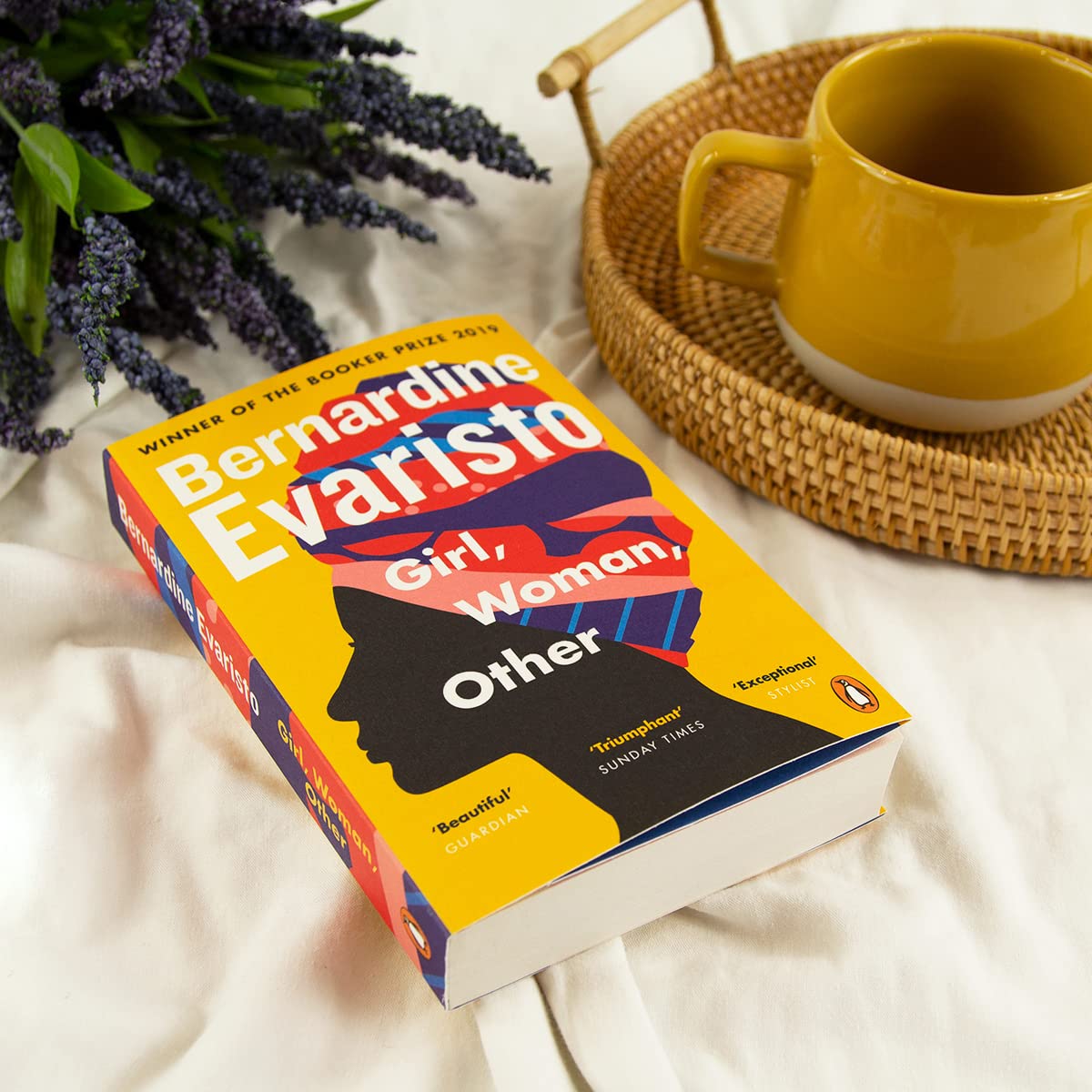
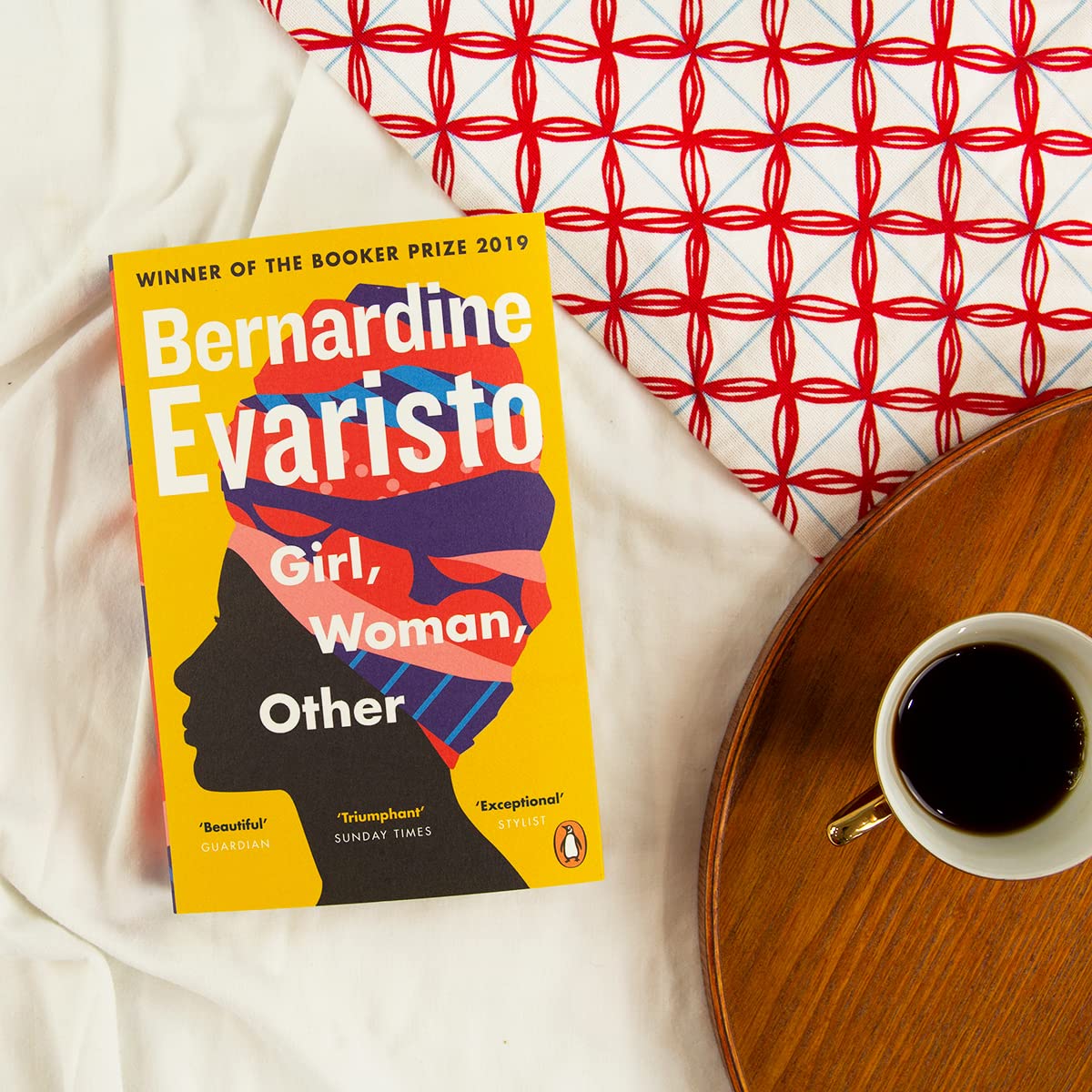
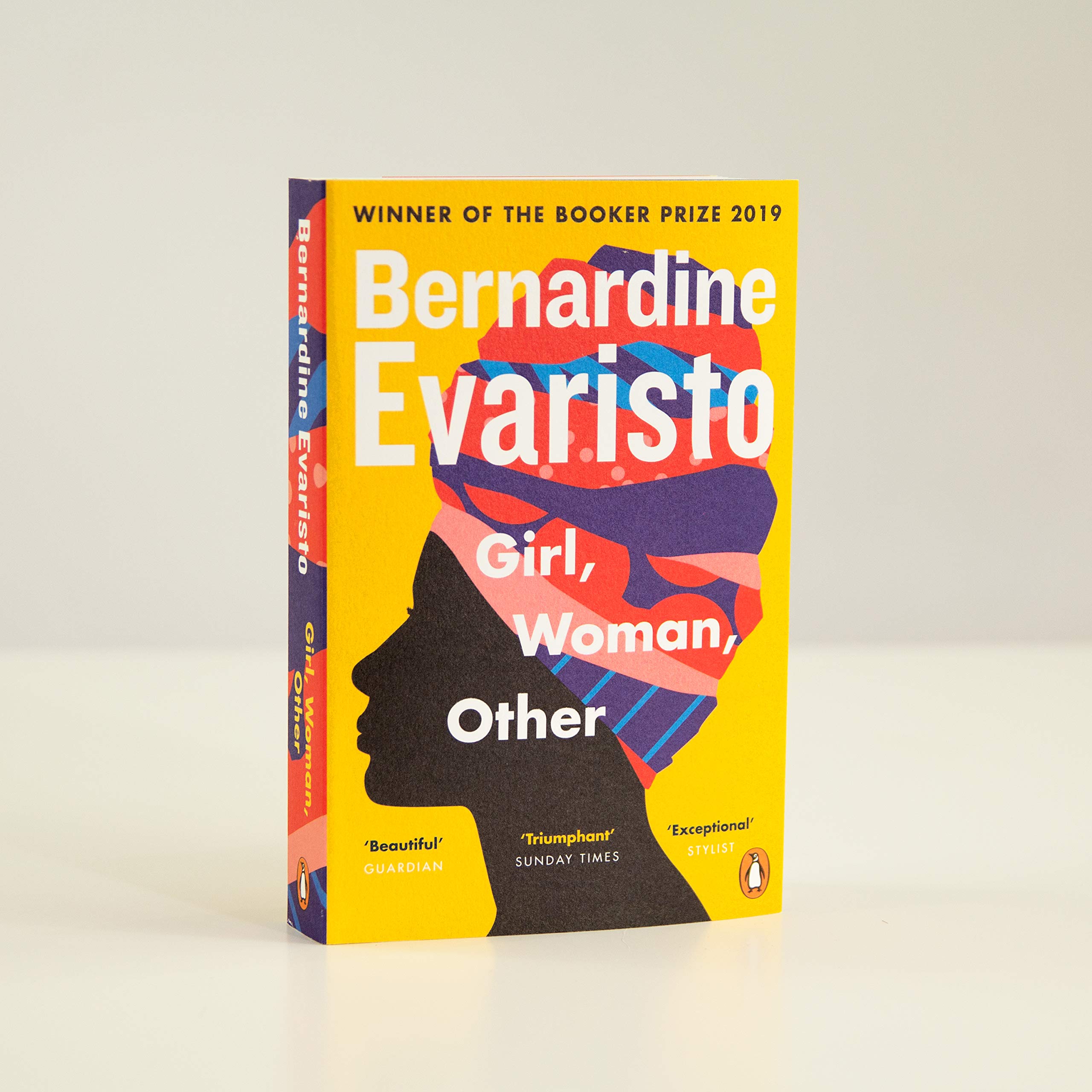
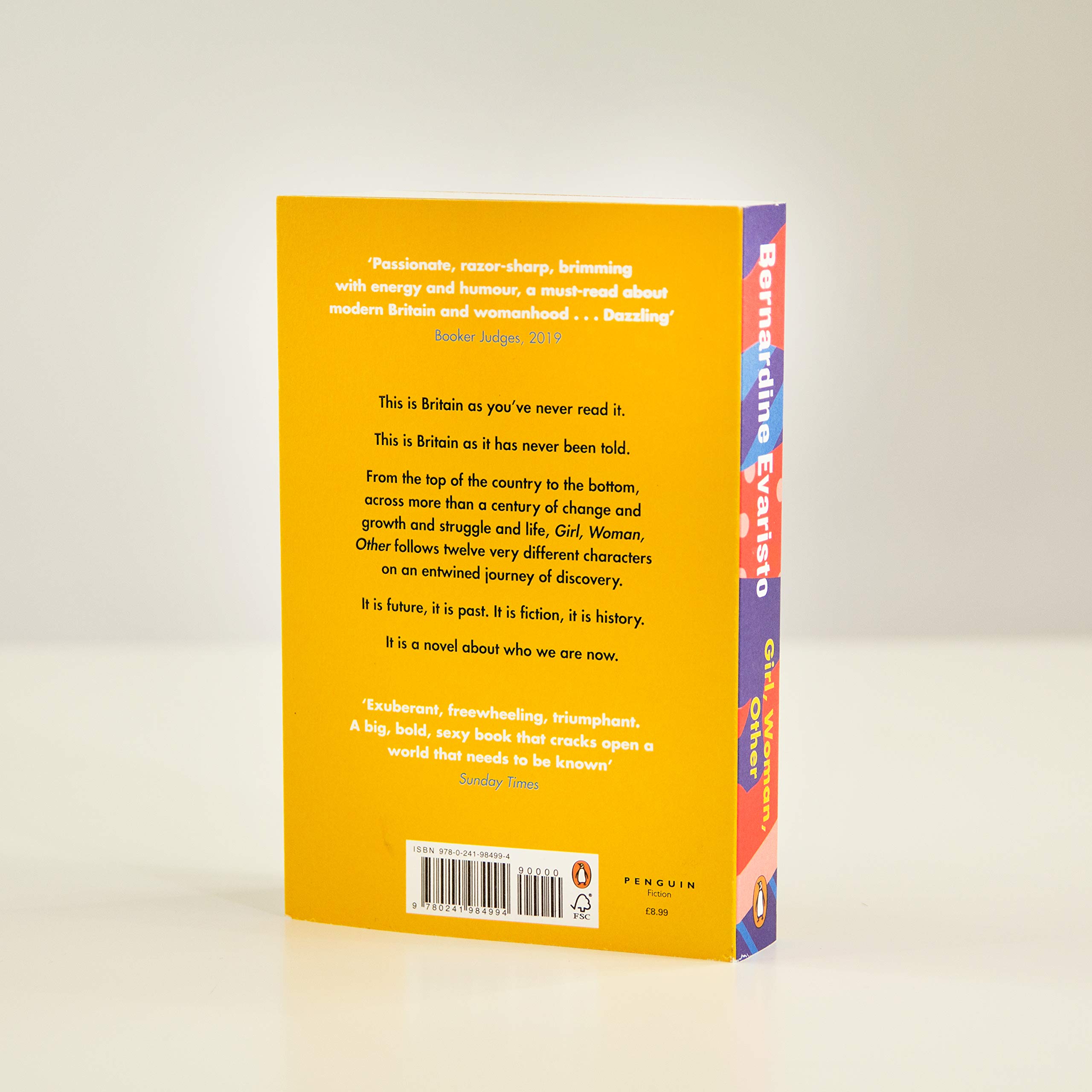
🏆 Unlock the Booker Prize-winning story that everyone’s buzzing about!
Girl, Woman, Other is a 464-page paperback published by Penguin Books Ltd, celebrated for its powerful storytelling and exploration of feminism and gender. Winner of the Booker Prize, this contemporary fiction bestseller has garnered over 30,000 reviews with a 4.4-star rating, making it a must-read for the socially conscious and culturally curious.


| Best Sellers Rank | #11,720 in Books ( See Top 100 in Books ) #309 in Fantasy (Books) #604 in Contemporary Fiction (Books) |
| Country of Origin | United Kingdom |
| Customer Reviews | 4.4 4.4 out of 5 stars (30,763) |
| Dimensions | 12.9 x 2.8 x 19.8 cm |
| Generic Name | Book |
| ISBN-10 | 0241984998 |
| ISBN-13 | 978-0241984994 |
| Importer | Penguin Random House India Pvt Ltd |
| Item Weight | 326 g |
| Language | English |
| Net Quantity | 500.00 Grams |
| Packer | Penguin Random House India Pvt Ltd |
| Print length | 464 pages |
| Publication date | 1 July 2020 |
| Publisher | Penguin |
A**R
Magical level of storytelling!
Will sweep you off your feet with its brilliance. Every story comes with gut wrenching beauty, consistent in its magnificence and brutally honest. This is one of the best pieces of literature on feminism and gender I have read till date. Out of the world 👏🏼
A**H
Good book
G**X
A super experiment flying high
A lyrical exploration of a city and its inhabitants the kind of which had never been written before, the structure of poetic form allowing not just dramatic emphasis that one can feel it in the stomach, but the line breaks provide the narrative with an air that gives life to the characters and their stories. A suoer-ambitious experiment that Evaristo carries with aplomb and ingenuity. A beautiful, lyrical marriage of form and substance. A must read, deserves a place in the book shelf amongst the great works of literature. Buy!!!
A**R
SO Goood!
Absolutely brilliant, if you read one thing this year, let it be this! I didn't think I'd love it so much. It's also my most highlighted book in recent times. Every statement packs a punch.
K**R
Fantastic and deeply satisfying
I loved this book. I did have starting trouble but when I finished the first two chapters, I fell hook,line and sinker in love. As someone from a different part of the world, it’s so fascinating to read, learn and come to love these amazing and fierce women and also realise that they are just like the women in my own life. We’re all united! Will definitely be recommending it to my fellow book lovers.
D**A
Beautiful, refreshingly diverse and gloriously inclusive world woven
As the last lines of this book says- this is about being together This book is about struggle, love,joy and imagination. It has 12 characters - all black and British, but each moving through different decades and carving out their identities on their life journeys. Each character has a dedicated chapter; with overlapping lives. However, their experiences, background and choices couldn’t have been more different. Therefore the protagonists support each other and often forgiving. however, it’s a slow read because of its writing style. After a while, it becomes a little frustrating (personal opinion).
P**I
A phenomenol work of modern art
The generalized discrimination against people, more specifically, women of color has been dissected through the individual struggles of 12 narratives of 12 loosely linked women. Everisto's explicit and vivid style of writing will capture and enthrall you. Great read.
A**A
It's an O.K. read!
The book is pretty well versed. The content too is quite tangible and comprehensible. But I found it to be a little predictable. As in, it din't quite seem like a Booker prize winning material. It din't overwhelm me, as I speculated it would.
Y**E
I put this book down after spending 452 pages reading about lesbians, transexuals, polyamorous people, gender non-conformists, black feminists, white feminists, gay men, transvestites and I was left with one overarching feeling: we're all the same. No matter how one identifies or one's orientation, we are all people who want to be loved, who have feelings, who suffer, who experience joy. This message that we’re more alike than we might believe is brought home at the end of the novel where after being shocked by the results of a DNA test, one of the characters notes “if there’s one thing she’s learned in the past forty-eight hours, anyone can be a relative.” Modern DNA tests increasingly prove that race is a social construct, created to oppress certain people. Who among us can say we are purebloods? This message is further advanced by the discussions of gender, mainly, that like race, gender might just be a social construct. Yes, we are born male or female, but femininity and masculinity are defined by culture. Where the book really shines is in Evaristo’s discussion of feminism. After swimming through the fascinating worlds of the LGBTQ community, and coming to understand that no trans person can speak for any other trans person, that the individuals making up the LGBTQ community are as unique from each other as anyone else, the real message of the novel starts to shine through. It’s a novel about feminism. And it takes this concept to a new level. The novel reveres feminism and feminists while it acknowledges the negative cultural attitudes held of feminists from the 1960's. The new feminist is unapologetic and willing to state who she is. This book will definitely force you to consider your own beliefs about where you stand vis-a-vis our patriarchal culture. Even Amma, the main character who is a radical feminist and lesbian, questioned whether she was a true feminist. “Yazz was the miracle she never thought she wanted, and having a child really did complete her, something she rarely confided because it somehow seemed anti-feminist.” (p. 36) Yazz, 19-years-old, challenges her mother to broaden her definition of feminism. “[F]eminism is so herd-like, Yazz told her, to be honest, even being a woman is passé these days, we had a non-binary activist at uni called Morgan Malenga who opened my eyes, I reckon we’re all going to be non-binary in the future, neither male nor female, which are gendered performances anyway, which means your women’s politics Mumsy, will become redundant…” (p. 39) The idea that feminism goes beyond gender politics, because gender is really irrelevant, is just one of the revolutionary concepts Evaristo throws at us, willy-nilly. The novel begins and ends the opening night of a performance of Amma’s play. Amma’s been rejected from the National stage for 30 years. Her plays are revolutionary—too outrageous. Finally, she gets her shot. The play is about Amazon women warriors who have female slaves and guard the palace because men cannot be trusted not to cut off the king’s head or castrate him, who fought their neighbors and the French who come to colonize the country, where male babies are killed. The hero is a female warrior cast out because she cannot bear the king a child, and becomes the fiercest warrior, fighting wars that include fighting off slave ships looking for captives for the American slave trade. Amma and Yazz fear the critics who could derail her longed-for success. I won’t spoil it by expressing their opinions. The novel is divided into five chapters and an epilogue. In each chapter, except the final “After-party” one, three women are described. The characters are rich and generally bold, different from characters we generally see in literary fiction. Different in that they all struggle with feminism, their identities, and their sexual orientation. While the chapters at first glance seem they could be separate stories, the women are all related in some fashion, whether through blood, friendship, or mentorship. My favorite section is Chapter 4 about Megan/Morgan. Megan is a little confused. She ends up in online chatrooms trying to understand herself. She meets Bibi. During their on-line chats, we get an education about the differences between transsexuals and transgendered people, and especially about feminism in the LGBTQ community. “So Bibi had been born a man and was now a woman…and Megan was a woman who wondered if she should have been born a man, who was attracted to a woman who’d once been a man, who was now saying gender was full of misguided expectations anyway even though she herself had transitioned from male to female this was such head fuckery.” Head fuckery indeed. So many ideas expressed in the novel are head fuckery. Yet somehow these people muddle through, make mistakes, and figure out who they are. This novel is unabashedly contemporary. It’s no wonder it made the Booker Prize Shortlist for 2019.
S**I
Varie storie di donne che si intrecciano nelle quali ritrovarsi e specchiarsi
N**R
Loving it so far
M**N
Review Girl, Woman, Other is an unconventional novel in the sense that it doesn’t have a plot, doesn’t have a particularly linear timeline, and doesn’t have a single focal character. What it is, essentially, is a collection of twelve different, loosely linked character studies that combine to create a sort of picture of black heritage in Britain. The twelve narratives are grouped into four sets of three, each set has relatively tight connections with the others in that set, but the four sets are connected sometimes in tangential ways. Each narrative is fully and beautifully told, centring on a black woman but with a lively and diverse cast of supporting characters - sometimes generations of that character’s family, sometimes friends, sometimes employers or offspring. Each of the twelve characters is sufficiently different to maintain interest and avoid any blurring between them. They range, for example, from a lesbian theatre dramatist, to a city banker, to a Northumbrian farmer, to a narcissistic schoolteacher. Some of the characters are more likeable than others, some of them are happier than others. Taken together, though, they challenge a number of pre-conceptions: e.g. that black skin was not seen in Britain before the Windrush; that the black community is somehow homogenous; that black kids have lower expectations than their white counterparts. We see in great detail the complexity of the backgrounds of many Black Britons; the systematic stifling of ambition and opportunity that Black kids experience; and the power of familial expectations and the perils of wanting something different from life. Girl, Woman, Other does have a couple of codas. The first is an after party following the opening of a play by Amma, the star of the first narrative. This brings together some of the characters and offers an opportunity for some set-piece politicking. If the novel has a weak spot, this is it. The second coda is much more powerful, as one of the characters discovers her true heritage. The reader will already have worked this out, but the salient feature is more the character’s reaction than the actual fact of it. This remarkable collection of narratives is dauntingly long to start with, but after the first two or three stories it is very hard to put down. It is written in a compelling, immediate style (almost verse like with line spacing and lack of capital letters), and gives a very convincing insight into lives that the reader might never have previously noticed. This is an important work that gives a better understanding of our country, and an appreciation that the story is still being written.
A**K
Genuine copy.. it’s a amazing narrative of different stories of women of colour in England… the book spotlights England’s racism and discrimination like it has never shown before, the unprivileged women of colour and they constant struggle to fit in and build themselves. The book marvellously sheds the light on the oppression towards the LGBTQIA+ community through out several decades. The novel is so entertaining, you would find yourself reading through it -non stop- even when you are dying to sleep 😊
Trustpilot
3 weeks ago
1 month ago