
DOWNLOAD THE APP


Customer Services
Copyright © 2025 Desertcart Holdings Limited
DOWNLOAD THE APP
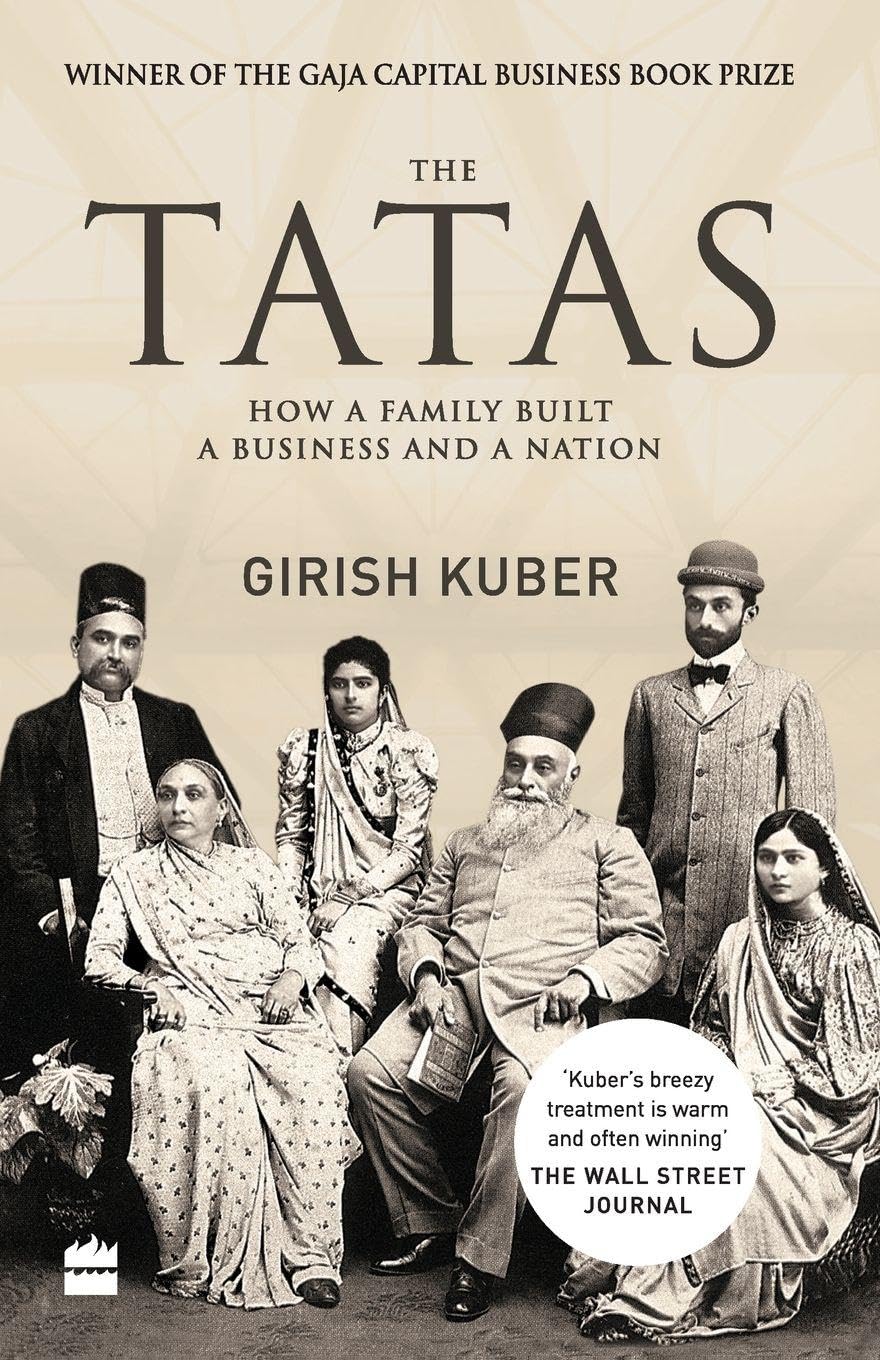
The Tatas: How a Family Built a Business and a Nation : Kuber, Girish, Pande, Vikrant: desertcart.in: Books Review: In Tatas We Trust - It is often said that the goldsmith does not spare even his mother in the obnoxious practice of his trade. Indians known for their love for gold jewellery, and the world’s largest consumers were always at the receiving end. But when it comes to ‘Tanishq- A TATA Product’, the customer is sure of the purity of gold, that he or she buys, with the hard earned money. The TATA brand is now a gold standard for integrity, corporate governance and business ethics. This book is an excellent narrative of this spectacular achievement, that has been built steadily over 150 years. Nusserwanji Tata born in 1822 in a priestly family decided to move to Bombay (Mumbai) from Navsari, to set up cotton trading business. His son, Jamsetji Nusserwanji Tata, who would be the ‘Bhishma Pitamah’ of the Indian Industry was born on 3 rd March 1839. The Parsis were the first to realise the importance of modern education and Jamsetji graduated from the prestigious Elphinstone College, Bombay. In addition, the family realized the importance of global trade and commerce and Jamsetji was equipped with the best of education and global business exposure. The Tatas gain a foothold in commerce in 1868, by supplying blankets and food to the British army in Abyssinia, and thereafter establishing the Empress mills in 1877. The book outlines three phases of the growth of the Tata empire elegantly. Jamsetji had many firsts to his credit in laying the solid foundation for the Tatas and Indian industry. He was much ahead of his times. While we know his as the founder of Tata Steel, he was the first to setup a hydroelectric plant, the Indian Institute of Science, silk industry in Mysore/Bangalore, the Taj Mahal Hotel and Dairy farms in Bombay and even strawberry farming in Panchgani. (I am reminded of the famous Tata steel jingle ‘We also make Steel’). His is rightly termed as ‘The Man Who Sowed Dreams’ in the book. Subsequent chapters are devoted to progress under JRD Tata and Ratan Tata. Under JRD, who used to say ‘Live life a little dangerously’, futuristic businesses like Airlines, Chemicals and Insurance took shape. The group faced unprecedented challenges after India’s independence when the successive governments with leftist tilt, nationalized the airline and insurance businesses. Tata steel escaped by a whisker. The interesting part of the story was that JRD was considered a fatherly figure by the then PM Mrs Indira Gandhi, but there was no element of political patronage or ‘Crony Capitalism’ in the case of the Tatas. Ratan Tata was lucky to take over as chairman of Tata Sons in 1993, soon after the path-breaking liberalization of the economy in 1991. He consolidated the group and grew it globally. More than the chronological events of the growth and key milestones, this book stands apart in focusing on the core values of the Tata Group. Businesses were built with a social purpose in mind, with a long-term view. Profits were important, but only a by-product of the larger mission of nation building. Above all, the respect and love for the people, be it employees or customers, is the core value that is the pinnacle of the Tata tradition. JRD would stop his car at the bus stop and ask the employees waiting for the bus to hop in! JRD’s doors were always open to any employee. ‘The janitor has the same rights as the director. He too is an employee’. At Bombay house, when Ratan Tata’s car stops, he would be fondly greeted by the stray dogs, who would even accompany him to the elevator. He would stand in the queue, waiting for his turn to get in. Strength of character, nerves of steel and heart of gold. This is the TATA legacy. The book concludes with an excellent hyperbole. ‘Someone had once said that the only city in India in its true sense is Mumbai; the rest are just overgrown villages….; We can say the same about the Tatas- they are India’s original industrialist family. The others are overgrown traders.’ For the Tatas, business is for the long run, like a marathon and not a sprint, as for many others. Thankfully, the Tatas is now headed by a marathon runner, Natarajan Chandrasekaran! Outstanding book, this is a North Star to guide corporate India, our policy makers and regulators. Image courtesy : Creative Commons. Review: Good read - Very well written in a simple and understable english. Motivating and inspiring. One should read it once.
| Best Sellers Rank | #9,328 in Books ( See Top 100 in Books ) #287 in Biographies & Autobiographies (Books) |
| Customer Reviews | 4.6 out of 5 stars 976 Reviews |
B**Y
In Tatas We Trust
It is often said that the goldsmith does not spare even his mother in the obnoxious practice of his trade. Indians known for their love for gold jewellery, and the world’s largest consumers were always at the receiving end. But when it comes to ‘Tanishq- A TATA Product’, the customer is sure of the purity of gold, that he or she buys, with the hard earned money. The TATA brand is now a gold standard for integrity, corporate governance and business ethics. This book is an excellent narrative of this spectacular achievement, that has been built steadily over 150 years. Nusserwanji Tata born in 1822 in a priestly family decided to move to Bombay (Mumbai) from Navsari, to set up cotton trading business. His son, Jamsetji Nusserwanji Tata, who would be the ‘Bhishma Pitamah’ of the Indian Industry was born on 3 rd March 1839. The Parsis were the first to realise the importance of modern education and Jamsetji graduated from the prestigious Elphinstone College, Bombay. In addition, the family realized the importance of global trade and commerce and Jamsetji was equipped with the best of education and global business exposure. The Tatas gain a foothold in commerce in 1868, by supplying blankets and food to the British army in Abyssinia, and thereafter establishing the Empress mills in 1877. The book outlines three phases of the growth of the Tata empire elegantly. Jamsetji had many firsts to his credit in laying the solid foundation for the Tatas and Indian industry. He was much ahead of his times. While we know his as the founder of Tata Steel, he was the first to setup a hydroelectric plant, the Indian Institute of Science, silk industry in Mysore/Bangalore, the Taj Mahal Hotel and Dairy farms in Bombay and even strawberry farming in Panchgani. (I am reminded of the famous Tata steel jingle ‘We also make Steel’). His is rightly termed as ‘The Man Who Sowed Dreams’ in the book. Subsequent chapters are devoted to progress under JRD Tata and Ratan Tata. Under JRD, who used to say ‘Live life a little dangerously’, futuristic businesses like Airlines, Chemicals and Insurance took shape. The group faced unprecedented challenges after India’s independence when the successive governments with leftist tilt, nationalized the airline and insurance businesses. Tata steel escaped by a whisker. The interesting part of the story was that JRD was considered a fatherly figure by the then PM Mrs Indira Gandhi, but there was no element of political patronage or ‘Crony Capitalism’ in the case of the Tatas. Ratan Tata was lucky to take over as chairman of Tata Sons in 1993, soon after the path-breaking liberalization of the economy in 1991. He consolidated the group and grew it globally. More than the chronological events of the growth and key milestones, this book stands apart in focusing on the core values of the Tata Group. Businesses were built with a social purpose in mind, with a long-term view. Profits were important, but only a by-product of the larger mission of nation building. Above all, the respect and love for the people, be it employees or customers, is the core value that is the pinnacle of the Tata tradition. JRD would stop his car at the bus stop and ask the employees waiting for the bus to hop in! JRD’s doors were always open to any employee. ‘The janitor has the same rights as the director. He too is an employee’. At Bombay house, when Ratan Tata’s car stops, he would be fondly greeted by the stray dogs, who would even accompany him to the elevator. He would stand in the queue, waiting for his turn to get in. Strength of character, nerves of steel and heart of gold. This is the TATA legacy. The book concludes with an excellent hyperbole. ‘Someone had once said that the only city in India in its true sense is Mumbai; the rest are just overgrown villages….; We can say the same about the Tatas- they are India’s original industrialist family. The others are overgrown traders.’ For the Tatas, business is for the long run, like a marathon and not a sprint, as for many others. Thankfully, the Tatas is now headed by a marathon runner, Natarajan Chandrasekaran! Outstanding book, this is a North Star to guide corporate India, our policy makers and regulators. Image courtesy : Creative Commons.
J**A
Good read
Very well written in a simple and understable english. Motivating and inspiring. One should read it once.
A**G
Most inspiring and trusted business group..
Excellent book.. good writing and a rich history of the most trusted business group in India.. was excited to reach next chapter after finishing one.. the truest and most inspiring indian story of a brand
D**R
Girish Kuber sir really the Kuber in creativity and creative writing great Tatas
This book is really very nice. The author Girish Kuber is a great person,eminent journalist. The detail history of Tata family is really motivating it is great reading. The journey of Tatas is wonderful their contribution to the country and the world at large is really great unparallel. Book is beautiful nicely printed I deliberately ordered hard Bound book. I gifted this to my young friend who is CA and lawyer to and very good reader.
V**1
A must read
A must read it is so addictive every single line and chapter is detailed
M**N
Best book to learn about Tata group
Best book to read the tata group history in detailed manner. Kudos to the author Girish Kuber and translator Vikranth
N**R
An incredible true story of a 125 year journey
So we have all known that Tata are 100+ year old, they originally owned Air India, they are greats, etc. However, reading about the whole journey with all the interesting and awe-inspiring anecdotes and important details in sequential story format is what makes this book A MUST READ. Its actually incredible how generations of TATAs have flown against the wind, swam against the tide with sheer will and resourcefulness. From the 1st one to the last of the legend (Ratan Tata). And because its not really a 500 page boring account of details, its easy to read and you start feeling what next, what next....highly recommended for everyone.
S**.
The TATA story.
The finest words by SIR J.R.D. TATA(the image).This book is truely very addictive.The TATA story is really very interesting filled with motivation and enthusiasm of the stalwarts.This nation do owe to them forever.A great great book containing the finest and the simplest words in it.Literally GIRISH KUBER's skill of writing is out of the box.And the translator VIKRANT PANDE also did a spectacular job using proper and authentic words and of course very simple to interpret.JAI HIND.
Trustpilot
2 months ago
3 weeks ago