
DOWNLOAD THE APP


Customer Services
Copyright © 2025 Desertcart Holdings Limited
DOWNLOAD THE APP
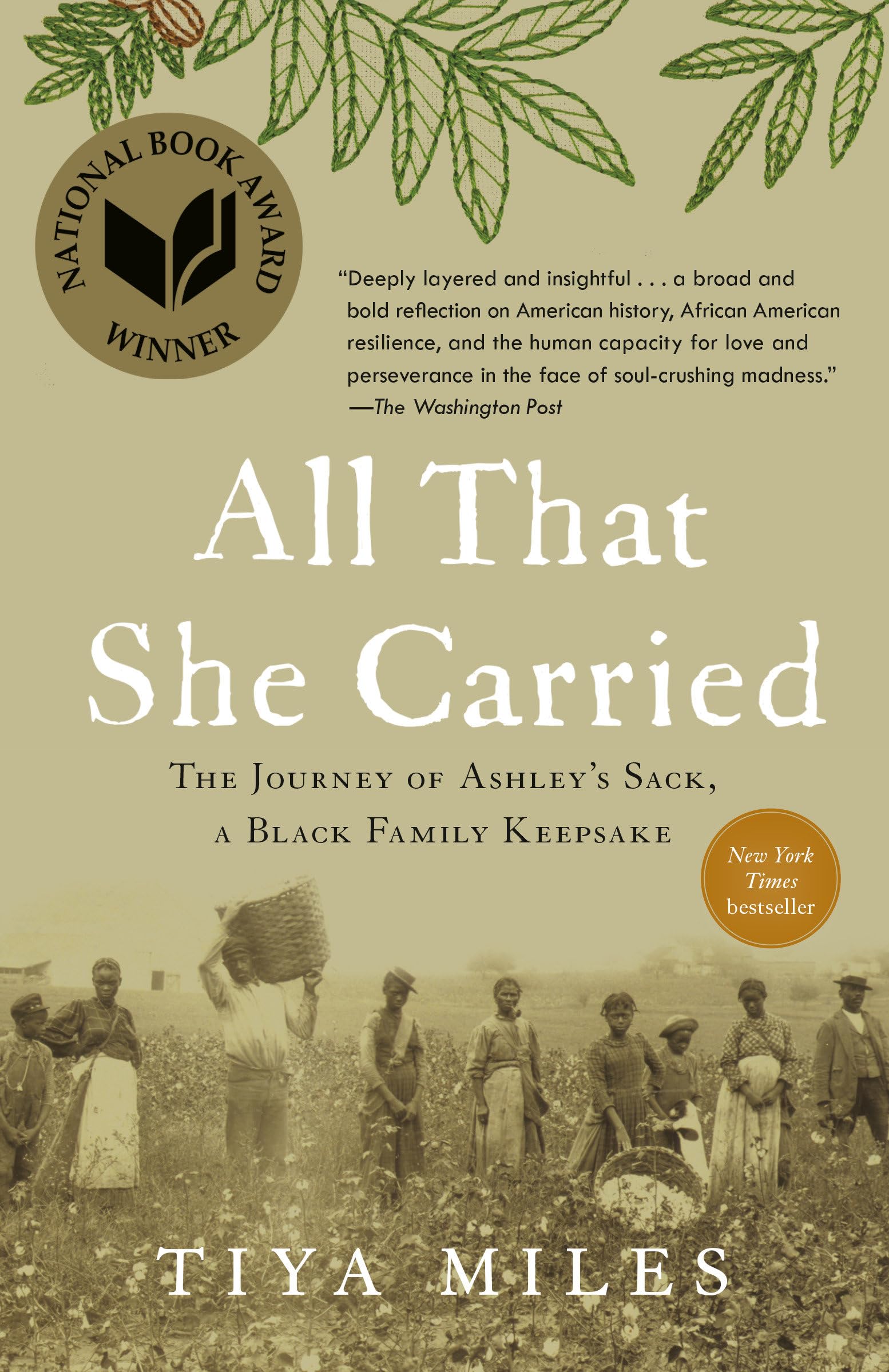
All That She Carried: The Journey of Ashley's Sack, a Black Family Keepsake [Miles, Tiya] on desertcart.com. *FREE* shipping on qualifying offers. All That She Carried: The Journey of Ashley's Sack, a Black Family Keepsake Review: A master narrative of slavery, memory, material objects and silences of the archives. - A well written book that uses textiles to recover the history of slavery in the south through the stitches of family memory on a handmade cotton sack passed from generations of female slaves that was auctioned off and ended up in a museum in Charleston, where the original owner Rose was enslaved. It is a well woven tale in the hands of a master historian. Great text for classroom. Review: Worth the effort - While sometimes tedious, and often conspicuously repetitive, this book is worth sticking with to the end. You cannot fail to come away from it with a deeply sentimental appreciation for the experience of enslaved people in relation to "things." Think of how many things have passed into your possession based largely on their meaning more than their utility: furniture, jewelry, clothing, tools, art, and of course, photographs. This book will give you an appreciation for things so outwardly mundane and yet so packed with personal value. And except for those beset with an inability to do so, you will gain yet a stronger, if deeply disturbing, comprehension of America's Original Sin.


| Best Sellers Rank | #8,748 in Books ( See Top 100 in Books ) #8 in Black & African American History (Books) #19 in Women in History #57 in U.S. State & Local History |
| Customer Reviews | 4.3 4.3 out of 5 stars (1,399) |
| Dimensions | 5.2 x 0.88 x 8 inches |
| Edition | Reprint |
| ISBN-10 | 1984855018 |
| ISBN-13 | 978-1984855015 |
| Item Weight | 10.6 ounces |
| Language | English |
| Print length | 416 pages |
| Publication date | February 1, 2022 |
| Publisher | Random House Trade Paperbacks |
F**F
A master narrative of slavery, memory, material objects and silences of the archives.
A well written book that uses textiles to recover the history of slavery in the south through the stitches of family memory on a handmade cotton sack passed from generations of female slaves that was auctioned off and ended up in a museum in Charleston, where the original owner Rose was enslaved. It is a well woven tale in the hands of a master historian. Great text for classroom.
J**S
Worth the effort
While sometimes tedious, and often conspicuously repetitive, this book is worth sticking with to the end. You cannot fail to come away from it with a deeply sentimental appreciation for the experience of enslaved people in relation to "things." Think of how many things have passed into your possession based largely on their meaning more than their utility: furniture, jewelry, clothing, tools, art, and of course, photographs. This book will give you an appreciation for things so outwardly mundane and yet so packed with personal value. And except for those beset with an inability to do so, you will gain yet a stronger, if deeply disturbing, comprehension of America's Original Sin.
S**M
Great writing.
Great writing. Very informative story. I learned things I didn't know before.
L**E
amazing story. lovingly and deftly stitched.
The moment I picked up this book, I took out my pen. I knew I'd mark it up. I knew I'd be taken on a journey with the author leading the way. I often do this with books I know I will love. I underline, circle and highlight. I placed this book on mud cloth covering a chest beside my bed. It is beside other books that leave me thinking and breathing again. What an exhale. Like Tiya Miles, the author, I have ancestry in Mississippi. Via this book, she took me to the south, but also to the unnameable places where black women/women period have fought for their humanity (indeed, I have seen knitting old women in the frigid North Atlantic doing something similar. Fighting!). They save themselves. They save their families. Some do so via cloth. Each stitch on fabric that may be passed on to a loved one signals their/our determination to live, but also seeable and unseeable histories involving ever-hurting people. They are still strong people. I have not finished this book. I stop to savor what it is saying. I also cannot get the hand-sewn curtains made of cotton that my late grandmother gave me out of my mind's eye. I can still see her uneven stitches. She had arthritis. She also had great love. At the time I received the curtains, which are pictured here, I was leaving for another state, but she wanted to give me something. Something that may not have been much. She gave me a part of herself when she presented those curtains. Miles, an accomplished and amazing historian, has done the same. Read this book. It will remind you of this one thing: we are strong enough to get through this difficult moment in world history. Remember the ancestors. Remember the things they have been stitched, touched, passed down. Remember.
A**R
Historical Accounting
Although interesting from an important historical perspective, I thought there would be more on the actual families and their lives. This is very historical in describing the times.
C**A
Extraordinary book
I bought these gifts as a book for my colleagues. This is an extraordinary book about the legacy of Black women and the gifts that Black women have gift U.S. culture as a result of their resilience. It is told through a sack, Ashley's sack, that passes through generations into the author's hands at an estate sale of people who once owned the the ancestors associated with the sack. It is a hard read because it is unapologetic about the nature of the enslavement of Black people, the terrorism, the systemic infusion of past actions to U.S. culture.
S**L
Requires an open mind and a curiosity about the subject matter.
This is a tough one. If you are interested in things Black American women during the slavery years may have done to strengthen family ties, preserve culture, or record ancestory, you will enjoy the speculation and stories in this book. I encourage open minded people to read this without applying bias to the best of your ability. Many of my older white female friends in my book group did not like it because they felt the author was speculating and "making up" what she wanted material items and their messages from the past to be. For me, it was a look inside a current African American woman's mind, imagination, speculation and recollection of family stories passed down verbally over several generations. Try it; you might learn something. I would recommend it. It's not a fun vacation read. But it is a book for those who might want to expand their minds on the topic.
H**R
Fascinating!
Based on one single item, Miles tells a story of many people, in slavery and after slavery, but still in challenging times. She keeps bringing the story back, but it is much more than a story of one item. Extremely well written, and easy to read (other than the challenging emotional context - even for this white person - hope I can be considered an ally).
Trustpilot
2 weeks ago
2 weeks ago