🥁 Unleash pro beats anywhere, anytime—your pocket-sized rhythm revolution!
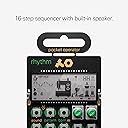
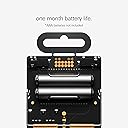
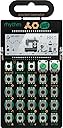
The Teenage Engineering PO-12 Rhythm Pocket Operator is a compact, 50g drum machine featuring 16 synthesized drum sounds and 16 built-in effects. It offers a 16-step sequencer with pattern chaining and real-time effect tweaking, plus jam-sync functionality to connect with other Pocket Operators or external devices. Powered by 2 AAA batteries, it’s designed for on-the-go music creation with a durable wooden body and intuitive controls, making it a favorite for live jamming and studio use alike.


| ASIN | B00X6EYNQE |
| Batteries | 2 AAA batteries required. |
| Best Sellers Rank | 2,389 in Musical Instruments & DJ ( See Top 100 in Musical Instruments & DJ ) 4 in Tabletop Synthesizers |
| Body material | Wood |
| Colour Screen | No |
| Connector | Auxiliary |
| Country Produced In | china |
| Customer Reviews | 4.4 4.4 out of 5 stars (5,674) |
| Date First Available | 12 May 2015 |
| Finish type | Lackiert |
| Global Trade Identification Number | 07350073030538 |
| Included components | Integrierter faltbarer Support und integrierter Knowles-Lautsprecher |
| Item Weight | 50 g |
| Item model number | TE010AS012 |
| Manufacturer | Teenage Engineering |
| Material Type | Bass Wood |
| Number of Keyboard Keys | 23 |
| Product Dimensions | 17.78 x 8.89 x 0.51 cm; 50 g |
| Size | PO-12 |
| Speaker Count | 1 |
| UPC | 714573520413 142200968572 |
G**O
Very very very fun
I have quite a few drum machines from a maschine plus, novation circuit, kolg volva beats and the pocket operator so I I have a pretty good idea about where this fits into the mix. It's way more powerful than it looks. It's really possible to do some quite complex things on this with only the few settings that you have. For example, yes it's a 16 step sequencer so it's quantized but if you way to have something non quantized you could shift where you trim the same at for example to get it to a microstep. The storage space on it is a bit limiting so it makes you really conserve the space you have. Longer samples for example may be hard to work with. There is a way to back it up to a sound file if you want to though which is nice to have. Recording in it is very easy. The build in mic is ok but record from line in for much better results. The battery life is great so expect a few weeks of continuous use out if 2 battering. The only negative thing I have to say is that the dials are really terrible. It makes it so hard to trim a clip for donfine adjustments. Some people have soldered different ones on that are better quality but I've bit tried it. Get the outrageously expensive case to go with it since it will save your fingers if you use it a lot. Sound quality is good but don't expect high end audio. I've found that if you get a good recording of a sample on it the quality is quite good but this just lends it's self to the type of music it can create. For comparison you can do more on this than a Kirk volca beats and it fits in your pocket. It's actually really good for just jamming and playing live
R**N
So Awesome!
I found out about the Pocket Operators a couple of months ago and have since become a huge fan of these amazing instruments. They're fun, but serious enough to be used live and in the studio and not as flimsy as you'd think. The variations of sounds you can get from each of the 15 bass sounds (And 1 micro drum kit) is huge by combining the A and B parameter controls with the 16 play styles (How the note is played) and 16 effects. (Sounds 12 - 15 seem like they should come from a much larger, expensive device!) A seemingly major down point is that they're chromatically locked to C major, so if you want any sharps/flats you need to use the semi-tone bend effect on fx number 15. I thought this was going to be a problem, but I haven't had any issues with it at all, in fact, it enables me to think up more creative basslines. Another thing to point out is that I thought my device was broken straight out of the box as it would not turn on when the batteries were inserted. However, I discovered on a forum that by bending the battery connection points in a little, the problem was solved. I don't think I'll bother getting a case as it looks cool and is pretty sturdy - as long as you don't sling it loose into a bag or leave it lying around on the floor somewhere... Recording lines live can be a little tricky, but once you'e used to it, building up and chaining pattern sequences is quite intuitive and powerful, especially when synced to other Pocket Operators and similar devices. A lot of people have described these as 'Toys', which is a slightly misleading thing if you haven't 'Played' with them; it's small and fun, but so is a Harmonica or a Ukulele, and this can do SO much more. Oh... and there's a little dude running around on the screen while you play things that goes back to bed to sleep when playing is done!
M**K
Excellent for learning the art of sequencing
If I were allowed to swear I would. This device is brilliant. If I explain why I bought it you'll see what hole it fills. This is important as if you want something super basic this is not for you; if you want something with every bell and whistle out there, this is not for you eitther. Right, here we go: I have played on iPhone apps that allow you to sequence drum machines. They are fun but they all seem a little too basic and far off what a professional may use. They also do not 'feel' like a good stepping stone into music production. So I wondered what to go for. I checked out software first. There seemed to be lots out there ranging in price and complexity. I was reluctant to go out and buy some software that would just put me off for life. You know what I mean: you go and buy photoshop pro, try to draw a circle and find you have to spend four hours on Google to learn how to do it! I did not want the photoshop pro version of music sequencing; I did not want to have to boot up the computer sit at a table with a mouse (and possibly a keyboard) to get going. I wanted something the size of an iPhone that I could just grab and make music. Then along came this bad boy: the pocket operator. Before you read on check out YouTube to see what people have done with it. When you link it up with another (or even more) you can get some real professional music laid. How easy it is: I am gonna be honest. It was not intuitive for me. You can't just open it and get stuck in. I struggled to even play around to work out what things did. This may not be the case if you have experience of this sort of thing; the symbols (pun intended) may mean something to you. I was a little frustrated but remembered why I bought it. I wanted something a little more professional that a simple iPhone app. And that was gonna require a little learning. So I put the work in. If you have peace you can become proficient with its use in about an hour. You may need to refer back to the instructions to remind you how to do some if it but it is actually relatively simple. I would advice learning one function then spending a few minutes playing with it then moving on. The hard part is actually making a good track. But then if that was easy we would all be pop stars! The internal speaker is not brilliant but it is much better than I was expecting so don't let that put you off; with earphones its perfect. It takes two AA batteries and is constantly on. There is no off button but this does not matter. To my understanding most of the screen is just for show but some of it does help. All the LEDs near each button all mean different things depending on what you are doing. I found it a little confusing at first but quickly got the hang of it. So, if you are looking to put your foot in the water - get this; it is wicked. I was picking my wife up from somewhere the other day. I arrived early so killed 15 minutes in the car with the Operator, wrote a little track and smiled. Boom! I read that the Rhythm was was the best to get if you were just getting one. It is not just a drum machine; you can get melody on your tracks to.
A**.
4 stars
Very cool little gadget, slightly damaged packaging
F**O
I love this little thing. It sits somewhere between a real professional tool and a toy. It's very small and portable, battery life is pretty good, and it can make a wide range of sounds. Getting a whole track devoted to Tonic is a huge upside; the drum sounds are deep and customizable, and the sequencer is great. Biggest limiting factors are that you are limited in terms of the sounds you can apply to the samples, and also there is two-voice polyphony: one synth sound and one drum sound on any given step. However, despite these limitations, the possibilities are still pretty deep, and chaining patterns together in a pseudo-"song mode" is possible. Overall, for $100, it's a great buy for anyone who loves synthesizers and music production. I wouldn't recommend this to a first-time synth buyer but if you already have a collection and want something fun and diverting, this is the one to get.
C**N
Llego nuevo, esta bien chido Con unos tutoriales aptendi a usarlo de volada. Pero si esta algo limitado en comparación a un sampler dedicado, se podria decir q es un sampler de juguete, se lo preste a mi sobrino de 6 años, y le entendio jaja
P**L
The PO-28 Robot is the lead guitarist among the Pocket Operator lineup. Its specialty is providing lead synthesizer over the top of the other units, although it is fully capable in its own right. What you get: Lo-fi lead synth goodness. Playing the 16 keys and twisting the knobs will get you the lo-fi equivalent of everything from a haunting guitar to soaring synth and bleep-bloop chiptune leads. Although 16 keys isn't a lot, the unit does let you tune up and down a decent amount to get some range. Great for simple live play. A fully-functional sequencer. The 16-step sequencer also makes use of the 16th sound key which provides 16 different drum sounds. Use some of the low synth lines for bass, the drum key for drums, and then rock out your lead with the high instruments. That's full song capability, onboard. Super cool, and so fun for freeform play. Song play. The sequencer can remember up to 128 patterns in sequence. At 80bpm, that's 6.4 minutes of recorded patterns. You can then use the FM and live play to jam over top of that. You can also punch in more patterns or sets of patterns on the fly, meaning you have almost unlimited play options within the confines of the unit. Connects to other POs. Since this is mostly a lead synth, you may want to immediately connect it to the PO-12 Rhythm or PO-32 Tonic which are more fully-featured drum machines. This will let you control the drum separate from lead, making for more complex song ideas. You can also add a PO-14 Sub for basslines, a PO-33 for samples, or a PO-35 speak for voice/vocoder samples. Or how about a PO-20 for more lo-fi 8-bit arcade sounds? So many options! The POs share clock using a simple stereo ("aux") cable, and the audio will be output by the final unit in the chain. The only downside: Teenage Engineering responded to the fact that at high volume the PO-1X series had distorted sound by lowering the volume on the PO-2X series. You will therefore want to look up some guides people have made for chaining the units- you may for instance want the volume on the Robot maxed out while your rhythm machine is set down to maybe half volume. It's a small oddity, and takes moments to fix. But the Robot is very quiet in use, you really need headphones to enjoy it in anything but a silent room. Overall: Love this thing. It's like the rest of the Pocket Operator line are an 80s electronic band and the Robot is the lead guitarist stepping onstage with a keytar. You can really make some rocking lead parts with this unit, as it has more options to fade in sound creating the sort of haunting guitar/synth sound that layers so well on top of the lo-fi drums and bass from the other units. This is a big recommendation for anyone who already owns another Pocket Operator- take your gigs to the next level. If you can only afford one: While the Robot is great, it's meant to sit alongside other units. The most complete unit for a kid to play with, or for an aspiring musician, is the PO-20 Arcade. The Arcade hits the best balance of rhythm and lead so you can make songs on the train. The other big recommendation is that the PO-32 Tonic, which has integration to the Microtonic software meaning professional music producers adore its added flexibility.
P**R
Got it for a good deal! Love these little things!
S**N
Delivered. Works.
Trustpilot
1 month ago
1 month ago