
DOWNLOAD THE APP


Customer Services
Copyright © 2025 Desertcart Holdings Limited
DOWNLOAD THE APP
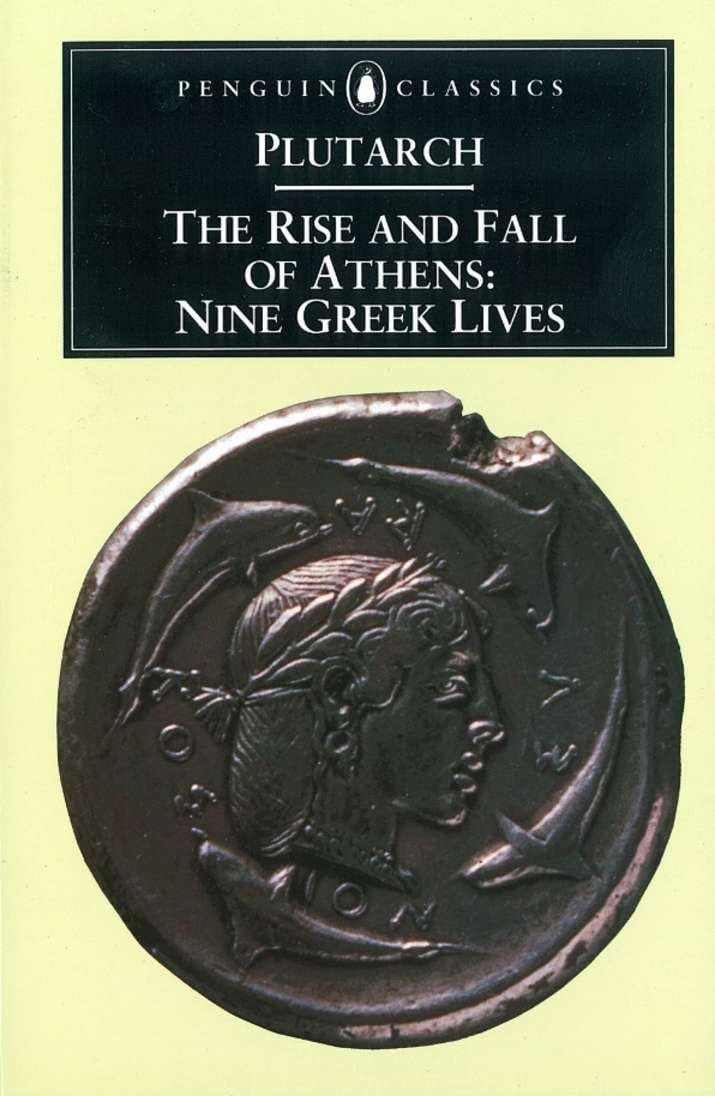
desertcart.com: The Rise and Fall of Athens: Nine Greek Lives: 9780140441024: Plutarch, Scott-Kilvert, Ian, Ian Scott-Kilvert, Ian Scott-Kilvert: Books Review: A great selection of Plutarch's Lives - As with any historical work, this edition of Plutarch should be reviewed for two things: the quality of the edition, including the translation, introduction, notes, etc, and how enjoyable reading the work is. Of course, anyone who wants to read Plutarch is going to do so. Therefore this review is targeted at people looking for the right edition of Plutarch, and those looking for a book that's simply fun to read. This edition is perfectly adequate and a great value although the introduction and maps are both meager and largely unhelpful. The translation by Ian Scott-Kilvert is easy to read and clear. The notes are helpful and are put in as footnotes, rather than endnotes, so the reader doesn't have to flip to the back of the book constantly. The selection of Lives is great for anyone interested in classical Athens. It includes Theseus, Solon, Themistocles, Aristides, Cimon, Pericles, Nicias, Alcibiades, and Lysander (the Spartan). Price-wise, the book is also quite cheap. Plutarch is not one of the most popular Greek writers, but for anyone interested in the history of ancient Greece or in the classics more generally, he is very helpful. His Lives make it easy to learn about the history without reading the longer books of Thucydides, Herodotus, and Xenophon. Plutarch does tend to view his subjects through rose-tinted glasses, but overall his portrayals are fair. He gives both sides to a story when there is disagreement among the sources he used. All in all, he is a great historian and anyone interested in ancient Greek history should enjoy reading him. Review: Very complex but great supplemental read with lecture - Super complex but full of information
| ASIN | 0140441026 |
| Best Sellers Rank | #651,207 in Books ( See Top 100 in Books ) #88 in Historical Greece Biographies #531 in Ancient Greek History (Books) #3,856 in Military Leader Biographies |
| Customer Reviews | 4.5 4.5 out of 5 stars (144) |
| Dimensions | 7.78 x 5.14 x 0.63 inches |
| Edition | First Edition |
| Grade level | 12 and up |
| ISBN-10 | 9780140441024 |
| ISBN-13 | 978-0140441024 |
| Item Weight | 7.9 ounces |
| Language | English |
| Print length | 320 pages |
| Publication date | September 30, 1960 |
| Publisher | Penguin Classics |
| Reading age | 18 years and up |
A**A
A great selection of Plutarch's Lives
As with any historical work, this edition of Plutarch should be reviewed for two things: the quality of the edition, including the translation, introduction, notes, etc, and how enjoyable reading the work is. Of course, anyone who wants to read Plutarch is going to do so. Therefore this review is targeted at people looking for the right edition of Plutarch, and those looking for a book that's simply fun to read. This edition is perfectly adequate and a great value although the introduction and maps are both meager and largely unhelpful. The translation by Ian Scott-Kilvert is easy to read and clear. The notes are helpful and are put in as footnotes, rather than endnotes, so the reader doesn't have to flip to the back of the book constantly. The selection of Lives is great for anyone interested in classical Athens. It includes Theseus, Solon, Themistocles, Aristides, Cimon, Pericles, Nicias, Alcibiades, and Lysander (the Spartan). Price-wise, the book is also quite cheap. Plutarch is not one of the most popular Greek writers, but for anyone interested in the history of ancient Greece or in the classics more generally, he is very helpful. His Lives make it easy to learn about the history without reading the longer books of Thucydides, Herodotus, and Xenophon. Plutarch does tend to view his subjects through rose-tinted glasses, but overall his portrayals are fair. He gives both sides to a story when there is disagreement among the sources he used. All in all, he is a great historian and anyone interested in ancient Greek history should enjoy reading him.
H**R
Very complex but great supplemental read with lecture
Super complex but full of information
H**C
The Rise and Fall of Athens: Nine Greek Lives
I just got back from the Greek Isles last year. This book is better than those I bought and looked at there.
S**I
Five Stars
a must.
S**E
Five Stars
It's a classic and it's Plutarch.
C**O
Moral Lessons From Stories
Even though I liked this book, Plutarch really does not know his subjects that well. Plutarch enjoys making each of his characters into moral lessons. So, there may be truth behind the writing but do not take it full on. Takes a story and takes bad qualities and rewrites to a moral lesson. Plutarch emphasizes qualities for his own purposes. Read critically.
I**A
Five Stars
very good condition
R**A
Fascinating Character Studies
The sketches contained here of nine influential Greeks are fascinating on their own account even though they were originally written as part of the parallel lives of Greeks and Romans. I don't pretend to be a scholar of Ancient Greece but I do have a keen interest in it and I found Plutarch's writing in this interpretation and Penguin Edition quite accessible and as I became more engrossed actually very engaging and exciting in sections. Organized chronologically he covers Theseus the founder of Athens, Solon the lawgiver, and various military and political figures who follow most notably Pericles . I found the sections on Nicias ,Alcibiades and Lysander absolutely fascinating in their descriptions of later military campaigns ,particularly the campaign in Sicily against the Syracusians. Alcibiades emerged for me as one of the more interesting characters who combines great military leadership with personal flaws to an astonishing degree. I've had this book on the shelf for a long time and now that I finally picked it up it was much more of an exciting read than I had expected. Highly recommend it.
L**Z
Great book, got me full marks on my ancient history essay on the Delian League.
L**T
Through 9 Greek Lives (Theseus, the democracy builder; Aristides, the `Spartan' Athenian; Themistocles, the arrogant but victorious supreme commander; Solon, the legislator; Cimon, the alcoholic but conquering oligarch; Pericles, the noble and unselfish democrat; the richissime Niceas, exploiter of silver mines; Alcibiades, the debauched double-dealing chameleon; and Lysander, the killer of Athens and its democrats), Plutarch sketches eminently the main political and social issues of ancient Greece and of Athens in particular. In Athens, the vicious battle between the few and the many, the haves and have-nots, equality and liberty was fought through two political parties: the aristocrats (oligarchs) supported by Sparta, Socrates, Plato and the priests (`the power of the ruler as the image of the god') on the one hand, and on the other hand, the democrats. The Greek cities were evidently united against their common enemy, Persia, whose policies aimed at defeating the Greek outright or at inciting them to destroy one another. But the cities fought one another even in foreign countries (e.g. for the gold mines in Thrace). It all ended with Niceas's disastrous expedition in Sicily and Lysander's bloody victory over Athens. Plutarch's book is still very actual indeed. He shows us Pericles as the first Keynesian, organizing huge public works and `transforming the whole people into wage-earners', or the anti-scientific stance of religion (`natural philosophers belittled the power of the gods by explaining it away as nothing more than the operation of irrational causes'). Plutarch is an excellent psychologist: `people as so often happens at moments of crisis, were ready to find salvation in the miraculous rather than in a rational course of action'. Market manipulation with foreknowledge is of all times: `Solon confided to his most intimate friends that he did not intend to touch land, but had decided to abolish debts. They promptly took advantage by borrowing large sums ...' But Plutarch times were still extremely barbarous: a decree ... that all prisoners of war should have their right thumb cut off to prevent holding a spear, although they could still handle an oar.' This book is a must read for all those interested in the history of mankind.
K**Y
Totally absorbing.
V**S
marvellous edifying stuff that everyone should read
K**D
Splendid edition, delivered well ahead of accorded time.
Trustpilot
2 weeks ago
2 weeks ago