Some deliveries may take a little longer than usual due to regional shipping conditions.

DOWNLOAD THE APP


Customer Services
Copyright © 2025 Desertcart Holdings Limited
DOWNLOAD THE APP
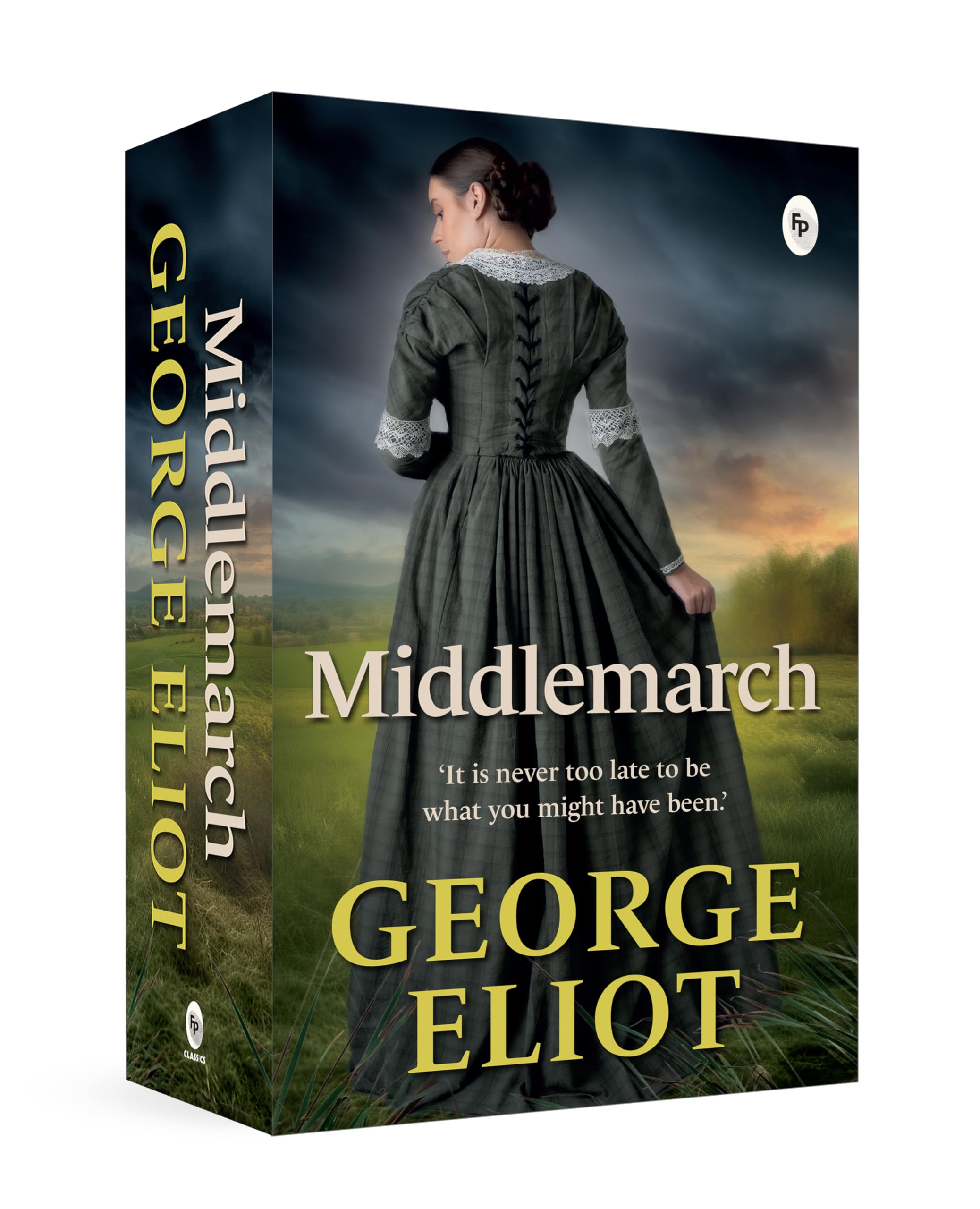
desertcart.in - Buy Middlemarch book online at best prices in India on desertcart.in. Read Middlemarch book reviews & author details and more at desertcart.in. Free delivery on qualified orders. Review: So concludes George Eliot, in her epic novel that both Martin Amis and Julian Barnes claim is the greatest English novel. I dare not make such a pronouncement, knowing there are far too many English novels I have never read, nor are even familiar with. Nonetheless, I was exceedingly impressed; in reading it I felt that this was the equivalent of eating a real tomato from the garden, as opposed to the store-bought cardboard ones. It was such a long time to reach that subject concluding phrase, that speaks of unremarkable lives, that can, nonetheless, be fascinating. It commenced, way, way back when, I was in high school, and a possible reading assignment was “Silas Marner.” It was the universal consensus of the junior high school class that “Marner” was the most BORING book, ever (as though we had read a lot back then.) I read “Catcher in the Rye” instead, a much more acceptable coming-of-age book. Fast forward decades, and the Vine Program surfaced, and offered me Rebecca Mead’s “My Life in Middlemarch,” which I read and reviewed in 2014. Mead had read “Middlemarch” FOUR times; she was 17 when she read it the first time. In part, for Mead, it was that ever-changing river that one puts one’s foot in. Each decade that she re-read it provided richer meaning. I gave Mead’s book a 5-star, plus rating, and decided to read “The Mill on the Floss” as a “prequel,” which I did in 2014, giving it my special 6-star rating. Another five years pass, with “Middlemarch” still unread. Finally, fortunately thanks to a friend who is a former desertcart reviewer, who just finished the novel this year, the question hung heavily: “If not now, when?” It took me over six weeks to complete it. I found myself reading it in bite-sized portions, due to her psychological insights into the actions and feelings of a range of characters and her prose which remains original and fresh, more than 150 years after original publication. Like Proust, Eliot provides a detailed depiction of one social strata in society, rooted in a particular time and place. Her sentences do not run on as long, which, in Proust’s case, could take your breath away. Her development of a significant range of characters is deeply impressive. Compared to Proust, this lengthy novel of 650 pages, in the re-issued Digireads version, is almost laconic. I’m sure a comparison of the two authors has been the subject of more than one Ph.D. dissertation. Eliot’s world is early 19th century, middle to upper middle-class rural England. The heartland of this “green and pleasant land.” Foreign events are never mentioned. London, and the machinations of the politicians, are far off, though talk of “reform,” seems to have percolated down to the village commons. Technological advances, like the coming of the railroad, are only briefly mentioned, mainly in conjunction with surveying opportunities. The time period is a bit fuzzy, but based on a couple of actual dates, one would assume the novel takes place in the two decades centering around 1830. Eliot waited until later in life, 1871-72, to write this work. Solid character development spans some 15 individuals. Dorothea Brooke is a key character, and perhaps Eliot’s alter ego. Before 21, Dorothea decides to wed a much older man, one that the reader will grow to despise: Casaubon. She is dazzled by his intellect and learning. They honeymoon in Italy. She comments that for women, and their choices, passion is low on the list. Her disillusionment will follow. Another key character is Lydgate, a young doctor who come to town, and weds Rosamond, who would not be content “with any of the village boys.” For these individuals, as well as others, there is always the economic and social structure founded on land ownership, and how a given individual can be described by the annual rent that is due them, for example, a couple thousand pounds a year. And in reading about all the small-town intrigues, jealousies, pecking-order status and class, along with the attendant gossip of Middlemarch, it made me again realize how much more pleasant it is to live relatively anonymously in a larger city. The following are some passages that I marked: “…but it was inevitable that in that excusing mood he should think of her as if she were an animal of another and feebler species. Nevertheless, she had mastered him.”; “It was not simply that beneficent harness of routine which enables silly men to live respectably and unhappy men to live calmly…”; and, “…going to end his stricken life in that sad refuge, the indifference of new faces.” Usually I like the epilogue sections of books, and Eliot did not disappoint in this matter either. How did things turn out in the long run for those that we had gotten to know well during a sliver of their life? Regrettably, given the time period, explicit sexual passages are verboten. So, one must project, and I kept thinking that with Eliot’s sensitivities, she would have started with a brush of the fingertips along the nape of the neck… I’ll never be granted time to re-read this work three more times, like Rebecca Mead did. But I’d love to have the time for one more re-reading. 6-stars for the best English novel that I have read. Review: Nel testo su Kindle le parole sono spesso unite ( non separate da spazi) il che ostacola la lettura.


| Best Sellers Rank | #13,444 in Books ( See Top 100 in Books ) #301 in Historical Fiction (Books) #624 in Classic Fiction (Books) #911 in Contemporary Fiction (Books) |
| Country of Origin | India |
| Customer Reviews | 4.4 4.4 out of 5 stars (1,631) |
| Dimensions | 20.3 x 25.4 x 4.7 cm |
| Generic Name | Book |
| ISBN-10 | 9358563133 |
| ISBN-13 | 978-9358563139 |
| Importer | Fingerprint! Publishing |
| Item Weight | 620 g |
| Language | English |
| Packer | Prakash Books |
| Print length | 896 pages |
| Publication date | 1 December 2023 |
| Publisher | Fingerprint! Publishing |
J**I
So concludes George Eliot, in her epic novel that both Martin Amis and Julian Barnes claim is the greatest English novel. I dare not make such a pronouncement, knowing there are far too many English novels I have never read, nor are even familiar with. Nonetheless, I was exceedingly impressed; in reading it I felt that this was the equivalent of eating a real tomato from the garden, as opposed to the store-bought cardboard ones. It was such a long time to reach that subject concluding phrase, that speaks of unremarkable lives, that can, nonetheless, be fascinating. It commenced, way, way back when, I was in high school, and a possible reading assignment was “Silas Marner.” It was the universal consensus of the junior high school class that “Marner” was the most BORING book, ever (as though we had read a lot back then.) I read “Catcher in the Rye” instead, a much more acceptable coming-of-age book. Fast forward decades, and the Vine Program surfaced, and offered me Rebecca Mead’s “My Life in Middlemarch,” which I read and reviewed in 2014. Mead had read “Middlemarch” FOUR times; she was 17 when she read it the first time. In part, for Mead, it was that ever-changing river that one puts one’s foot in. Each decade that she re-read it provided richer meaning. I gave Mead’s book a 5-star, plus rating, and decided to read “The Mill on the Floss” as a “prequel,” which I did in 2014, giving it my special 6-star rating. Another five years pass, with “Middlemarch” still unread. Finally, fortunately thanks to a friend who is a former Amazon reviewer, who just finished the novel this year, the question hung heavily: “If not now, when?” It took me over six weeks to complete it. I found myself reading it in bite-sized portions, due to her psychological insights into the actions and feelings of a range of characters and her prose which remains original and fresh, more than 150 years after original publication. Like Proust, Eliot provides a detailed depiction of one social strata in society, rooted in a particular time and place. Her sentences do not run on as long, which, in Proust’s case, could take your breath away. Her development of a significant range of characters is deeply impressive. Compared to Proust, this lengthy novel of 650 pages, in the re-issued Digireads version, is almost laconic. I’m sure a comparison of the two authors has been the subject of more than one Ph.D. dissertation. Eliot’s world is early 19th century, middle to upper middle-class rural England. The heartland of this “green and pleasant land.” Foreign events are never mentioned. London, and the machinations of the politicians, are far off, though talk of “reform,” seems to have percolated down to the village commons. Technological advances, like the coming of the railroad, are only briefly mentioned, mainly in conjunction with surveying opportunities. The time period is a bit fuzzy, but based on a couple of actual dates, one would assume the novel takes place in the two decades centering around 1830. Eliot waited until later in life, 1871-72, to write this work. Solid character development spans some 15 individuals. Dorothea Brooke is a key character, and perhaps Eliot’s alter ego. Before 21, Dorothea decides to wed a much older man, one that the reader will grow to despise: Casaubon. She is dazzled by his intellect and learning. They honeymoon in Italy. She comments that for women, and their choices, passion is low on the list. Her disillusionment will follow. Another key character is Lydgate, a young doctor who come to town, and weds Rosamond, who would not be content “with any of the village boys.” For these individuals, as well as others, there is always the economic and social structure founded on land ownership, and how a given individual can be described by the annual rent that is due them, for example, a couple thousand pounds a year. And in reading about all the small-town intrigues, jealousies, pecking-order status and class, along with the attendant gossip of Middlemarch, it made me again realize how much more pleasant it is to live relatively anonymously in a larger city. The following are some passages that I marked: “…but it was inevitable that in that excusing mood he should think of her as if she were an animal of another and feebler species. Nevertheless, she had mastered him.”; “It was not simply that beneficent harness of routine which enables silly men to live respectably and unhappy men to live calmly…”; and, “…going to end his stricken life in that sad refuge, the indifference of new faces.” Usually I like the epilogue sections of books, and Eliot did not disappoint in this matter either. How did things turn out in the long run for those that we had gotten to know well during a sliver of their life? Regrettably, given the time period, explicit sexual passages are verboten. So, one must project, and I kept thinking that with Eliot’s sensitivities, she would have started with a brush of the fingertips along the nape of the neck… I’ll never be granted time to re-read this work three more times, like Rebecca Mead did. But I’d love to have the time for one more re-reading. 6-stars for the best English novel that I have read.
C**N
Nel testo su Kindle le parole sono spesso unite ( non separate da spazi) il che ostacola la lettura.
C**R
Très facile à lire et beaucoup de détail dans l'histoire de leurs vies à ce moments là. On pouvait croire on était avec les characters
田**心
I'm glad I was able to see art that expands my imagination. I was a little interested in art, so I wanted to visit museums and other places.
A**T
Hay palabras juntas. Dificil de leer. Basura
Trustpilot
3 weeks ago
1 month ago