🔌 Power your freedom, anywhere, anytime.
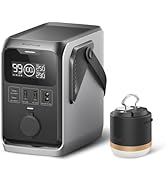
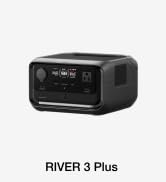
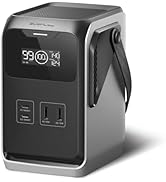
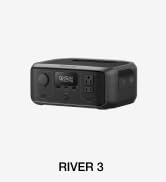
The EcoFlow RIVER 3 Plus is a compact, ultra-quiet portable power station featuring a durable 286Wh LiFePO4 battery expandable up to 858Wh. It delivers 600W continuous and 1200W peak power with lightning-fast <10ms UPS switching, ideal for protecting sensitive electronics. With rapid 1-hour AC and 1.5-hour solar charging, plus smart app control, it’s engineered for millennial professionals who demand reliable, scalable power on the go—perfect for camping, remote work, or emergency backup.














| ASIN | B0DCCB657J |
| Antenna Location | Camping |
| Best Sellers Rank | #15,654 in Patio, Lawn & Garden ( See Top 100 in Patio, Lawn & Garden ) #108 in Outdoor Generators |
| Brand | EF ECOFLOW |
| Built-In Media | RIVER 3 Plus portable power station, AC charging cable, car charging cable, EcoFlow USB-B to USB-A UPS communication cable, user manual, and a 5-year service. |
| Color | Black |
| Customer Reviews | 4.6 out of 5 stars 564 Reviews |
| Item Height | 5.8 inches |
| Item Type Name | Portable Power Station |
| Item Weight | 3.5 Kilograms |
| Manufacturer | ECOFLOW |
| Model Name | EF-RV-H02-1 |
| Model Number | EF-RV-H02-1 |
| Number of Outlets | 7 |
| Other Special Features of the Product | 2X Runtime for<100W Appliances & Ultra-Quiet, <10 MS UPS & Power up to 1200W, Expandable to 858Wh, Fast & Solar Recharge, LiFePO4 Long-Life Battery |
| Power Source | Solar Powered |
| Recommended Uses For Product | Camping |
| Special Feature | 2X Runtime for<100W Appliances & Ultra-Quiet, <10 MS UPS & Power up to 1200W, Expandable to 858Wh, Fast & Solar Recharge, LiFePO4 Long-Life Battery Special Feature 2X Runtime for<100W Appliances & Ultra-Quiet, <10 MS UPS & Power up to 1200W, Expandable to 858Wh, Fast & Solar Recharge, LiFePO4 Long-Life Battery See more |
| UPC | 842783143549 |
| Voltage | 110 Volts (AC) |
| Warranty Description | 5 Year |
Y**X
Really fast charging. Excellent engineering with modular design.
I had been buying, using, and recommending power stations for over 6 years now, including those from Goal Zero, Jackery, Bluetti, EcoFlow, and many other brands. EcoFlow really surprised me with their Delta Pro that I bought a few years ago for our vacation home due to many of its innovative features. In fact, a Goal Zero representative I spoke with at a conference was surprised by EcoFlow's engineering chops that year. It put the company on my radar as one of the top power station manufacturers I could recommend. Thus far, I had bought, tested, and compared EF's Delta Pro and Delta series batteries, and I was curious about what the River line was targeting. Jackery and Goal Zero did not distinguish their products much: Jackery has the Explorer/Explorer Pro, and Goal Zero the Yeti X/Yeti Pro. What I learned was that River offered lower-capacity batteries (up to 286Wh or 858Wh with expansions) for portability and low-powered devices like laptops and cameras. Delta was designed for larger appliances and tools, for extended runtime (with battery capacity between 1,000Wh and 12,000Wh), or even to power a home or RV. If you do not know what "Wh" (Watt-Hours) and "W" (Watts) mean, do not worry. I will go over the basics later on in this review. For now, know that Watt-hours measures the battery capacity -- how long something can run for -- and Watts measures how much power is used or produced. When shopping for batteries, you will also run into terms like "Lithium-ion" and "LiFePO4". In fact, many people are confused about what they are. We will go over them in more detail later, but know that EcoFlow's batteries all use LiFePO4 now (as do Bluetti's). Jackery and Goal Zero only recently switched to LiFePO4. This battery chemistry's greatest benefit is longevity: lasting at least 10 years with normal use. ANALYSIS The EcoFlow River 3 Plus (or "Max') is a compact, portable battery designed for everyday use with lower-powered devices like cameras, phones, laptops, car freezers, and home network equipment that keeps the internet running. Where EcoFlow shines compared to competitors is its embrace of modular designs. The River 3 Plus (286Wh capacity) can be expanded with an extra battery that doubles (572Wh) or even triples (858Wh) its capacity, depending on which Smart Extra battery you pair with. With 572Wh, a car freezer could run for a full day, and with 858Wh the same appliance can run between 1.5-2 days, depending on how warm the ambient temperature is. In cold weather, the car fridges can last even longer. River 3's naming convention is a bit odd: the base, River 3 Plus (286Wh), becomes River 3 Max (572Wh) by adding the Smart Extra Battery EB300 (286Wh), and turns into River 3 Max Plus (858Wh) by adding the Smart Extra Battery EB600 (572Wh). In other words, all 3 "models" share the River 3 Plus as their base. Sweet Spot: The 1,000Wh battery capacity hits the sweet spot for many consumers, including this author, who are looking for the right balance of power and portability. But when it comes to home integration, the more Watt-hours a battery ecosystem offers, the longer one can power a home for during a blackout. The River 3's advantage with the lower capacity (286Wh, 572Wh, or 858Wh) is portability where space may be at a premium. Plus, they are far lighter to carry than 1,000Wh or larger batteries. EcoFlow, Goal Zero, Jackery, and Bluetti power stations can be used while simultaneously charging themselves. WHICH MODEL IS BEST? Which power station to get depends on your needs, and for that, I recommend you read the "CONTINUOUS VS PEAK OUTPUT" section of this review, then check the "CALCULATIONS" part to figure out what size battery to get. BATTERY TECHNOLOGY As I previously stated, the River 3 uses LiFePO4 (Lithium Iron Phosphate) whereas older Jackery and Goal Zero batteries used Nickel Manganese Cobalt (NMC). The latter is also used by today's cellphones from the likes of Apple and Samsung. Where individuals are often confused is that some consider LiFePO4 to be better than Lithium-ion (Li-ion) batteries, but in reality, both NMC and LiFePO4 are Li-ion. I found many incorrectly referring Li-ion to be NMC and not LiFePO4. Regardless, what are the differences between NMC and LiFePO4? LiFePO4 is bulkier and heavier than NMC, yet most power station vendors now use LiFePO4. Here is why LiFePO4 is better than NMC: - Safer, less volatile, and thus cheaper to manufacture - Charge cycle: 1500-2000 (10+ years) -- NMC: 20-25% capacity loss after every 500 cycle (6-10 years for up to 2000 cycles, after which capacity is vastly diminished) -- EcoFlow claims 3500 cycles before dropping to 80% of original capacity and 6500 to 50%. - Usable in more extreme temperatures (-4F/-20C to 176F/80C). NMC: only 140F/60C max - Holds 350-day charge. NMC: 300 LiFePO4 batteries are less volatile (safer), more usable in extreme temperatures, and have a higher charge cycle count (battery lifetime) than NMC. You can see from some of my pictures that the River 3 Plus (286Wh LiFePO4) is nearly the same size as the Goal Zero Yeti 500x (497Wh NMC). Again, LiFePO4 has many advantages, but it is heavier and bulkier than NMC batteries. The River 3 Max (572Wh) is vastly larger than the Yeti 500x and adds just 75Wh of capacity. CAUTION: Lithium-ion batteries do NOT like to remain discharged at 0% for prolonged periods of time. If you let your battery stay at 0% for too long, you may not be able to charge it again without specialized equipment. CONTINUOUS VS PEAK OUTPUT It is important to understand the difference between Watts and Watt-Hours. How much power is used or produced is measured in Watts, and how much energy a battery can store is calculated in Watt-Hours. See the "CALCULATIONS" section below for more details. - AC Inverter: Converts battery (DC) power into AC -- River 3 Plus provides 600W continuous output with a 1,200W peak - Peak/Surge (Starting): Nearly every device initially draws extra power to turn on. The highest amount it pulls is the Peak. As long as that number is below 1,200W, it can be STARTED. Examples… -- Turns on OK (PEAK under 1,200W): --- Freezer starts at 400W (peak), runs at 150W once on -- Will NOT turn on (PEAK over 2,700W): --- Home AC starts at 4,000W (peak), runs at 1,000W once on Most devices power on at a higher (Peak) wattage than when they are already on (Continuous). Therefore, if its peak exceeds the power station's max, it may not be able to start - Continuous Output (Running): Once devices are on, as long as they keep drawing less than 600W total, they will stay ON until the battery runs out -- CONTINUES running (under 600W) --- 100W TV + 60W laptop = 160W -- COULD STOP running (over 600W) --- Temporary overdrawing beyond 600W for a few seconds is okay. A quality BMS will protectively shut down the battery if the surge does not end after a while. Regularly going over for a prolonged time can ruin the battery in the long run --- 450W appliance (600W peak) + 100W laptop (120W peak) = 550W (less than 600W). This will run fine ---- Add a 100W TV (130W peak) = 650W. Probably will stay on for a short period ---- Add another 60W laptop = 710W (over 600W). Battery will definitely shut down CALCULATIONS The below calculations are rough ESTIMATES as conditions, battery quality, and age can vary. [SORRY: I had to shorten my original review by a LOT (including many calculations) so it could fit here on Amazon.] Time to Charge the River 3 Max (572Wh) - Calc: Hours to charge battery = Battery capacity (Wh) / Input Wattage -- As battery approaches 75% full, the input charge will increasingly be slowed down to prevent overcharging - AC Wall: 380W @ 90 mins [572 Wh / 380W] - 12V Car Charger -- 120W @ 4.8 hrs (at 10A, if car supports it) -- 220W @ 2.6 hrs (at 18A, if car supports it) Charge Time with Solar - Calc: Hours to charge battery = Battery capacity (Wh) / (Panel Wattage x [0.5 or 0.75]) -- In a perfect lab, solar panels charge at the listed wattage -- Expect to only receive 50-75% on a good, sunny day (ie. 75W – 113W for a 150W panel), depending on panel's age, component quality, and weather - 200W solar panel: as fast as 3.8 hours [572Wh / (200W x 0.75)] - Underproduction: If a panel is not making enough, adding extra ones can generate a higher, combined output - Overproduction: If the panels make more than the maximum the power station charge port can take, only the max will go through Watts Used/Produced by a Device - Calc: Watts used or produced by device = Voltage x Amperage - Vacuum with 120V @ 9.5A uses 1,140W - Solar panel with 12V @ 10A can produce up to 120W Ideal Battery Power Station Size - Calc: Battery capacity (Wh) = Watts used by device x Hours needed for / 0.85 -- 10-15% of power is lost during power conversion - 45W car fridge needed for 8 hours: Minimum 424Wh power station (45W x 8 / 0.85) OTHER TOPICS - Mobile app control via WiFi or Bluetooth - Near-instant auto-switching between AC and battery power -- Makes it suitable for use as a Standby Power Supply (SPS) during a blackout - Expansion options -- Battery capacity expansion to a total of 858Wh with the Smart Extra Battery 600 (+572Wh) or 572Wh with Smart Extra Battery 300 (+286Wh) -- Connectivity with solar panels - 5-year warranty - NOT quite waterproof at IP54: protected against dust intrusion and water splashing from any direction, but do not leave it out in the rain FINAL THOUGHTS EcoFlow thoroughly impressed us with their Delta Pro power station and quickly added the company to our list of recommended battery providers. Their newest Delta 2, now a LiFePO4 product, further surprised us with 1,200W rapid-charging that took the battery from 0 to 80% in a whopping 50 minutes! Had we not seen that in person, we would have dismissed it as a marketing gimmick, but we were proven wrong. The River 3 Plus has continued with its engineering chops with solid specifications and performance, especially with its modular design where one can decide how much capacity to add to the base River 3 Plus unit.
F**T
It just works well
I’ve had this for a bit now and while it does have a weird atmosphere smell when being used, it’s such a great product. I used this as a power supply for my little garage shop when I’m just doing quick work and need the lights on. If I’m just working on bicycles with hand tools, it keeps my lights on for about 6 hours. It’s awesome! Charges quickly whether I’m using a wall plug or a solar panel I bought separately.
S**H
Great unit if you size it to your needs correctly!
I bought the River 3 Plus to take on a festival camping trip. My goal was to keep our personal devices charged up and to power a small 12 volt cooler throughout the night when solar power wasn’t available. I would say it met the goals, but I might go up to a larger capacity or add the extra battery unit if doing it again. The River 3 Plus itself performed flawlessly and ran silently, even in near 100 degree weather, and actually probably 115 inside the car. The display shows everything you need to know as far as input and output wattage and estimated run time. It’s a good size to easily carry around, compared to the Delta series that weigh much, much more. The Bluetooth pairing was painless and the app worked flawlessly. I also appreciated the built in light when messing with the buttons at night. For my use case on this trip, the biggest issue is the battery capacity and the DC input limit. I was trying to charge a couple Dewalt power tool batteries to run a tent fan, charge several phones, a camera, some tent lights, and keep our 12 volt fridge running through the night. I only had a 100 watt solar panel and that proved to be not enough to replenish this fast enough, (not the fault of the River 3 Plus). I should have bought a 200w+ panel. I then had to rely on my car’s 12v cigarette lighter adapter for times when the sun was not out, which is also limited to about 100w. So I could never get more than 100w input at any time. When I managed to get it topped up enough, it definitely kept the fridge going 24/7, which was the most important task. If I could suggest any improvements, it would be to add a second solar/DC input, because then I could have used both my car’s interior cigarette lighter ports, or solar plus car simultaneously, to deliver 200 watts, which would have definitely sustained my needs a lot better. Overall, I’m very happy to have this unit and expect to get a lot more mileage from it. Ecoflow really seem to know what they’re doing with the design of these portable power stations.
M**N
The superior choice for small AC power backup
I owned both the Anker Solix C300 and this EcoFlow River 3 Plus until I discovered a key flaw in the Anker unit. My application is to power back my home networking equipment. Therefore, it was important for me to have the unit and AC outlets power back on when utility-provided AC was restored after a power failure that was long enough to fully deplete the battery. This River 3+ performed admirably in that way once I set the unit to remember and restore port settings upon startup (note that is not the default setting so need to change it if this is your application also). In contrast, the Anker Solix C300 had no such option and thus worked until the battery was fully depleted and the power restored, at which point, the Anker unit did not resume operation of my connected AC networking equipment. That represented a fatal flaw for me since I need my network equipment to resume operation without human intervention should an extended power failure happen when away from home. Beyond this core feature, I find the EcoFlow infrastructure to be a bit more mature in that it offers many settings including the ability to set limits on charge and discharge to further extend battery longevity. It also features an option to add an additional battery to further extend this small device’s capacity. As a side note, with the default battery, this was able to power my AT&T BGW320 gateway plus my Asus ET12 Pro tri-band router for nearly 9 hours (they have a combined AC draw of 26 watts). I decided to reduce the max charging limit to 80% to extend battery life and with that, the unit still provided 7 hours of system backup. Very happy with the device after a few days of operation. It is completely quiet once charged and even while charging or operating a load is very quiet (inaudible at anything over 2 feet away), charges quickly, and is feature packed. The Anker and EcoFlow models consume similar power with the AC inverter on along with the baseline system electronics. The anker measured roughly 12 watts beyond the consumption of the connected AC appliances while the EcoFlow drew roughly 10 watts suggesting EcoFlow is slightly more efficient. That comparison was similar on the app-reported operating temperature for both units with the Anker typically running at 90 degrees F while EcoFlow measured 86-88 degrees. I will report back should any disappointments arise in the coming months.
T**E
great product
charge rate and ability is great. So easy to use, just plug in and will charge up in usually less than an hour or so.
P**A
Solid UPS, Quiet, Functional and Reliable
I purchased this UPS to replace a previous BLUETTI unit that produced too much fan noise, and a failed Goldenmate unit with fault codes. So far, EcoFlow has been smooth sailing. Functionality: Set up is easy. I like the extra light and the USB comm port. The AC charging speed is very fast. The iOS app is intuitive and it takes no time to find and connect to the UPS for firmware upgrade, monitoring and configuration. There is also no discernable noise. Reliability: I use this UPS with a Synology NAS and a desktop PC, with a total of <300w load. During the first 2 days there was a quick succession of 3 brief power grid flickers. My equipment did not feel a thing. It is functioning as a UPS should. I'm very happy about that. Power Management Software: The PC power manager software is simple, and it offers minimal but reasonable number of features to help properly shutdown a directly-USB-connected PC. I tried it in the "Remote" mode, pairing up with its companion NUT server package for Synology NAS. The NUT server seems working properly after the initial setup. However, if the NAS is restarted, the service would not automatically start on its own. I would have to manually start it, it appears to be running, but stops running within a few seconds. I'd have to restart it one more time to get it stable. This is a repeatable issue every time the NAS restarts. On a side note, the USB comm port does not seem to produce a standard power device profile. Synology has its own built-in UPS support. It could not detect this UPS from the USB port. I would suggest that the manufacturer consider the alternative: Instead of offering a proprietary USB comm with in-house-built NAS NUT service (that doesn't autostart), why not implement the USB comm as a standard power device profile, then provide instructions for users to click a few boxes in Synology Control Panel to turn on its own power management with NUT service? Synology already has its own NUT default credentials and port settings, it would be an easy setup on the PC/Mac side of the Power Manager to pick it up. Overall: This product is very well built, functional, and reliable. I give it a 4 start, with 1 star for future improvement on its Power Management software offering.
R**H
Reliable Power
We live where there are frequent power outages. Sometimes it's just a quick flicker and sometimes they last a few hours. They're a nuisance and we believe they have caused a couple of our TV's to fail. We purchased several of these Ecoflow power stations for different places in our home. We plan to get a few more so we can have at least one for each room. They provide our electronics with uninterrupted power and allow us to keep Internet and TV during longer outages which makes them more reliable than our power company. They are small enough to carry around, easy to use, we can monitor all their power levels from our phones and they are less expensive than replacing TVs! They have never let us down. We would recommend them with confidence.
J**I
UPS, Solar input, Good capacity
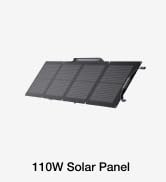
I’ve been using the EF ECOFLOW Portable Power Station RIVER 3 Plus for a variety of purposes, and it’s become an indispensable part of my daily routine. From phone charging to router and security camera backup, and even pairing it with both the 45W solar panel that came with it and the Renogy 200W Shadowflux panel, this setup has been reliable, efficient, and incredibly easy to use. Phone Charging Station As my primary phone charging station, the RIVER 3 Plus is perfect for keeping my devices powered throughout the day. It features USB-A, USB-C, and even a 1200W AC outlet, allowing me to charge my phone, tablet, and other devices simultaneously. The 286Wh LiFePO4 battery provides ample power, so I can charge my phone multiple times a day without worrying about running out of juice. The compact design makes it easy to move around, and the fast charging ensures my devices are ready to go quickly when I need them. UPS for Router Another key use for the RIVER 3 Plus is as an uninterruptible power supply (UPS) for my router. When the power goes out, the RIVER 3 Plus seamlessly switches over to backup power with its <10 ms UPS functionality, ensuring that my internet connection stays live without interruption. This has been a huge benefit during storms or brief outages, keeping my devices connected and my work unaffected. I never have to worry about losing access to the internet or having to reset my router after a power flicker. UPS for Security Cameras The RIVER 3 Plus also serves as a backup power source for my security cameras. As a part of my home security system, it’s critical to ensure my cameras remain powered during power outages. The RIVER 3 Plus keeps them running reliably, providing peace of mind that my home is always monitored, even during blackouts. Whether I’m away or at home, knowing my security system is continuously backed up by the RIVER 3 Plus gives me confidence that my property is protected 24/7. Solar Charging with the 45W and Renogy 200W Panels The RIVER 3 Plus is fantastic on its own, but pairing it with the solar charging options makes it even more versatile. The 45W solar panel that comes with the unit is great for topping off the battery during sunny days. It’s portable and easy to use, just plug it in, set it up, and let it recharge the power station as I go about my day. It’s perfect for short trips or keeping the battery topped up for light use. For longer-term off-grid use or more robust charging, the Renogy 200W Shadowflux panel is a game-changer. It’s highly efficient, especially for partial shade conditions, and charges the RIVER 3 Plus much faster than the 45W panel. With the Renogy 200W panel, I can keep the RIVER 3 Plus powered up for extended periods, making it ideal for longer camping trips or situations where I need a steady, reliable source of power away from grid electricity. Quiet Operation and Ease of Use One of the best features of the RIVER 3 Plus is its quiet operation—<30 dB, making it ideal for both home and outdoor use. I love that I can charge my devices or power my router and security cameras without any intrusive noise. The system is also incredibly user-friendly. Setting up the power station, connecting the solar panels, and switching between charging options is simple and intuitive. Conclusion The EF ECOFLOW RIVER 3 Plus has been a fantastic addition to my home and outdoor setup. As a phone charging station, router UPS, and security camera backup, it provides reliable power when I need it most. The solar charging options—both the 45W panel and the Renogy 200W Shadowflux panel—give me the flexibility to keep everything powered sustainably and efficiently, whether I’m at home or on the go. The RIVER 3 Plus is truly an all-in-one solution for backup power and off-grid energy, and I highly recommend it for anyone looking for a quiet, portable, and efficient power source.
Trustpilot
1 day ago
1 week ago