Desert Online General Trading LLC
Dubai, United Arab Emirates
Desert Online General Trading LLC
Dubai, United Arab Emirates
Full description not available
I**M
We are apes that could do better
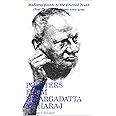
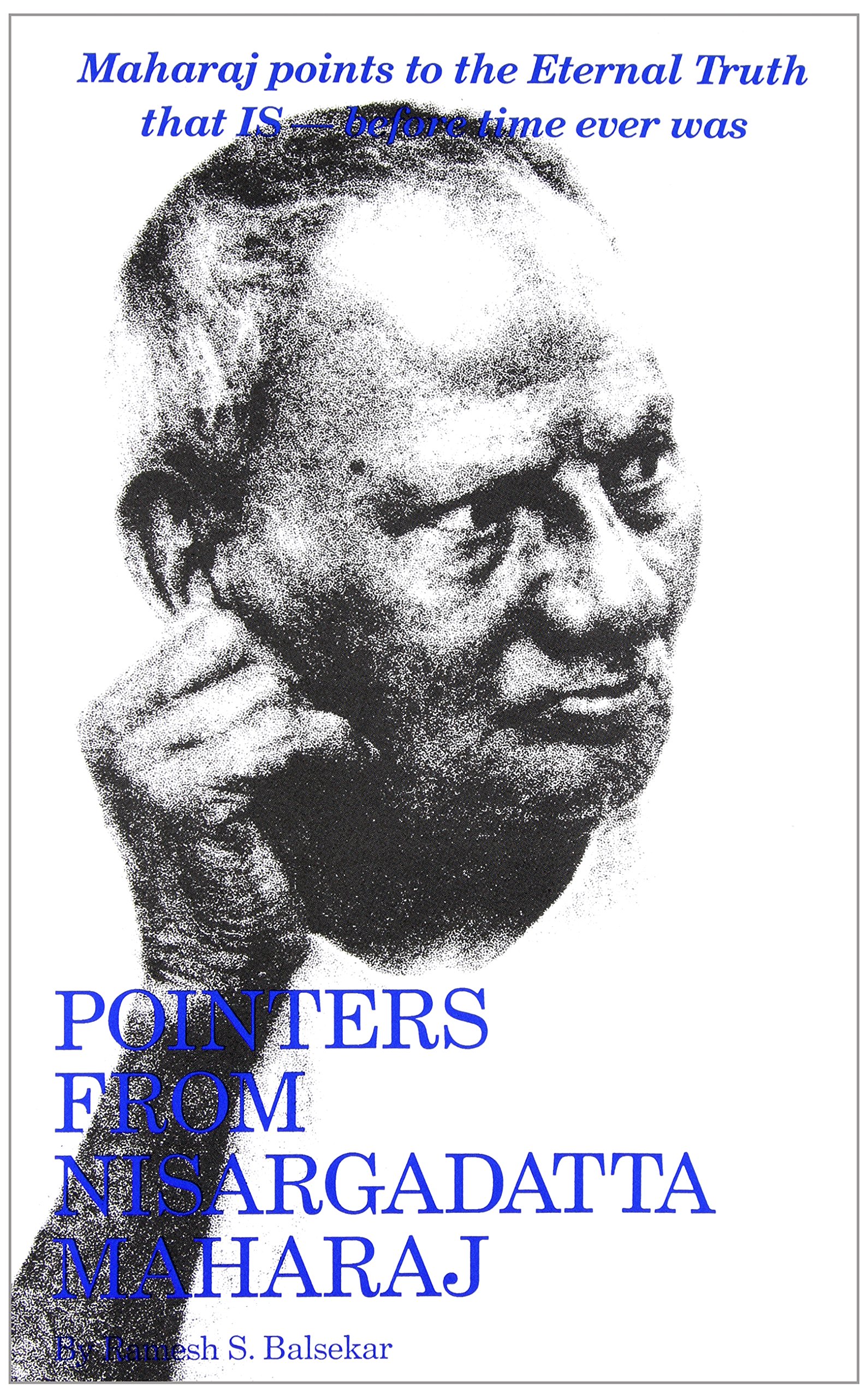
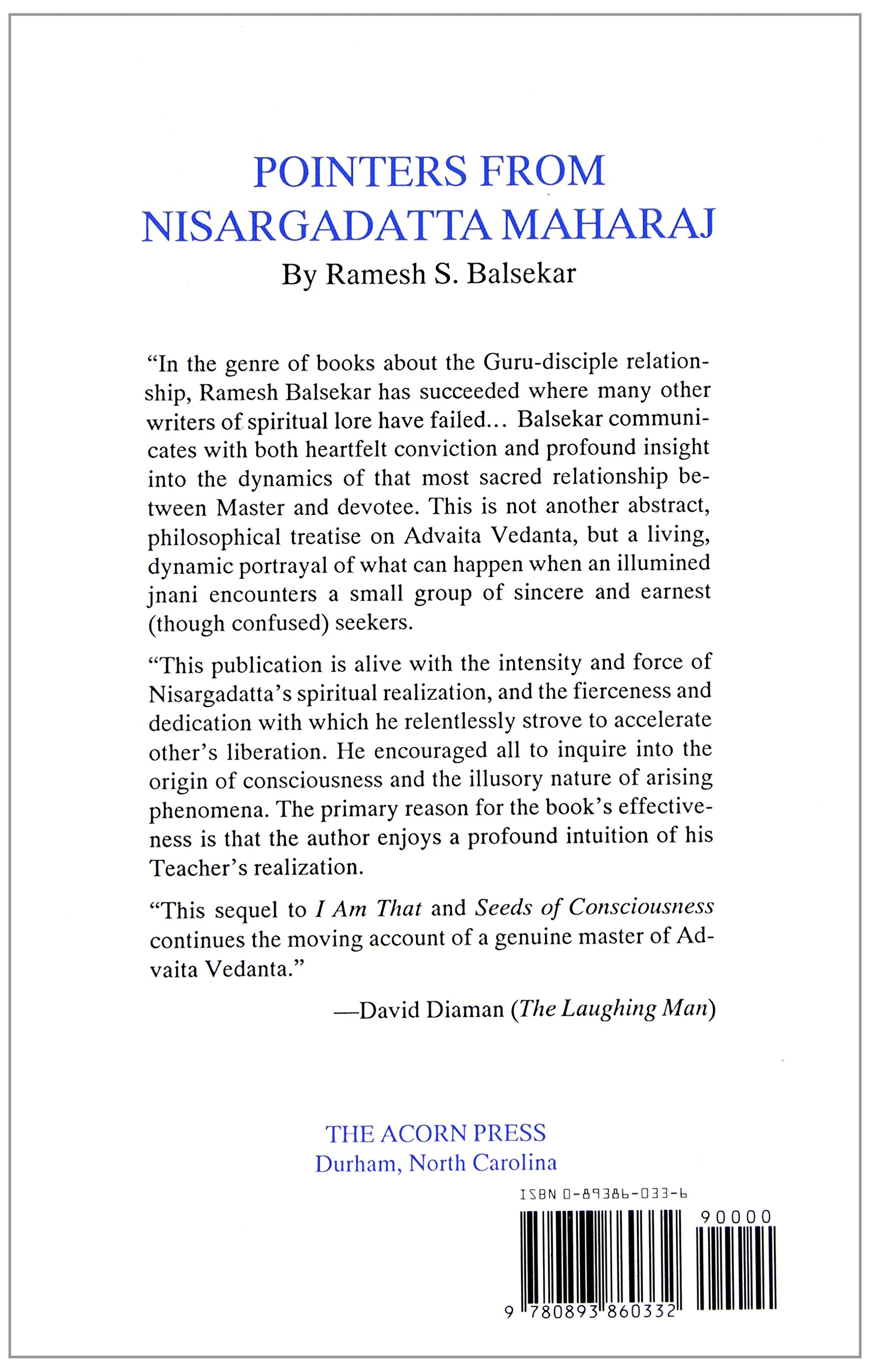
I have two copies of this book, one for work and one for home. This is a book I will probably never finish. Some days I just read one chapter or page over from the day before. Although I have read the first copy for seven years; you know: I pick the book for a few days then leave it, then pick it up again. Besides I have other sources from where I get Nisargadatta's philosophy. But his wisdom is something you can never be done with or think you got it completely. I read and re-read parts and I understand better.The thing with it, it is that we are so used to think the other way. Meaning that there is a duality, that there is this thing called me and out there there is the universe, I am observing entity and actor in this universe. Nisargadatta's point is that this is not the case, that our thinking so is a mirage or an illusion. But the way we have been raised and convinced is that yes,we are separated from the world. There are even people that talk about souls and spirits and lives to live over again (and unfortunately it is the majority). Nisargadatta's arguments are like a life saver from curing that error in our perception.To me, duality/non duality is not just a philosophical debate; meaning it is not an empty, meaningless argument just worth arguing as an intellectual exercise or diversion. His arguments (although not intended for this purpose or any other whatsoever) are at the heart of the survival of the human species and other species. My belief is that if we were to recognize that we are all one and part of the all, we would not need to be so engaged in hoarding resources, money, food, water, metals, fuels, etc. If the majority of us would heed Nisargadatta's doctrine, we would see everyone as part of us, we would be more cooperative and help those in need, instead of building ever harder barriers among ourselves.Thanks to Ramesh S Balseker, this body that I call me has the comforting thoughts of a philosophy that gives me peace and allows me (even if temporarily) to see the world and me as one, to see other beings as energies, collections of atoms. We are just bunches of energy dangling in a little rock around an un-remarkable star amidst the universe. We are lucky to be such savvy, technological apes. Yet we are letting the chance to be more pass us bye.
A**R
This is a mighty book
Clarifying.How could I ever be the same after reading this book?So direct to the point.
J**E
Personality, too.
Lots of nondualist writers insist on no "inside separate self" (Spira). And NM is no different, nor is RB. But Mooji and others add "personality" to the usual "bodymind" conceptual remainder after self-realization. I think this is an important feature. The bodymind remains, of course, even for Ramana, and Adyashanti and Osho. But so does personality...that is "uniqueness"...that is something we can observe as different than the next guy on the bus. It is minor relative to one's inner observation of the dissolution of self, which is why most writers don't mention it. Also, it is a conceptual distraction. (How the hell can ____ be an enlightened being when he is such a butthead?) Well, with the exception of Anandamayi Ma, perhaps, adults usually went through some major conditioning to become a "person" with a "personality" and then had a shift. And that old "little me" self with its quirks doesn't just fold away into some glassy-eyed bliss. Especially with Nisargadatta Maharaj.Which is the major treat in this book, Balsekar's fine summaries notwithstanding. We get a glimpse of fiery Nisargadatta in his responses to a few folks, and his immense compassion elsewhere. Meanwhile, ya gotta love his comment when someone asked him why he smoked: "Do I smoke?, Oh...I was not aware of that."This one belongs on your shelf.
A**R
Delivery time
Fast delivery and the quality of the book condition.
M**N
This book will take you all the way to the Source
This book will lead you all the way to what we in the West call Self-Realization. It is the best book I have read of Nisargadatta's teachings, including I Am That. It is so well written, you will feel as if you are sitting right there in front of the Master.
N**E
The Last Word
This book is brilliant. It is Nisargadatta Maharaj at his most pointed. And his message is conveyed by Ramesh Balsekar, his most able translator. But this book is not for beginners. Do your sadhana first. Read I AM THAT multiple times. Go back to it again and again. Ponder it deeply, patiently. Later, throw yourself into Jean Dunn's books Seeds of Consciousness: The Wisdom of Sri Nisargadatta Maharaj and try your best to get her meaning. Then, when you think that you've at long last caught a glimmer--come here.
M**A
Arguably, one of the most powerful books on advaita you can get today.
This book has an amazing feature, which is that it conveys the spirit and presence of Nisargadatta in such a powerful way not even I AM THAT does. The pointers are absolutely clear and straighforward, and they deal with a wide range of cases. No doubt can remain as to the nature of our true self after the reading of this teaching. In a misterious way, Ramesh was able to be the interpreter of the teaching without interfeering with it in this occasion. This teaching (and the way it is presented in this book) is certainly far superior to anything the same Ramesh could have written of its own.
B**Y
Look no further!
If you are ready this book is all you'll ever need, if not it will certainly plant the seeds of awakening. Not only does Ramesh Balsekar translate the words of Maharaj, but goes on to expand and clarify the wisdom of his Guru as only an enlightened disciple can. This is the perfect follow up for Maharaj's classic, I Am That. But Please don't let your mind be put off by Nisargadatta's gritty approach. Because of the Guru's declining health, this book's tone does sound a bit harsh by ignoring common civilities and going straight to the core of truth. Yet that is exactly what we need to realize.
Trustpilot
1 month ago
3 weeks ago